A non-linear convex cost model for economic dispatch in microgrids
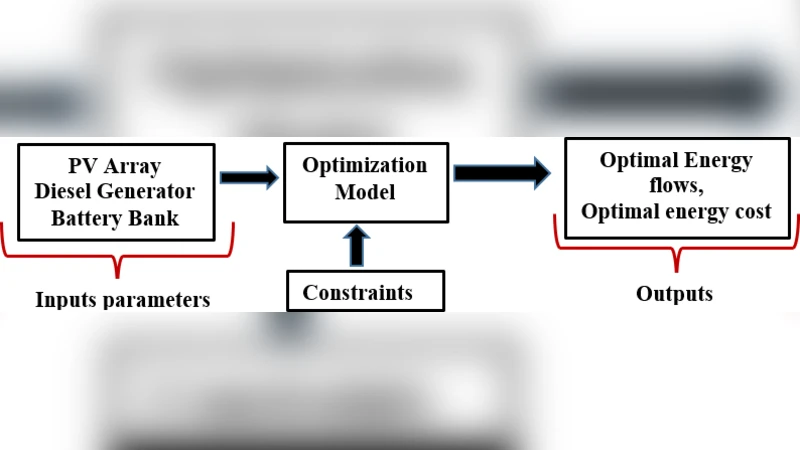
This paper proposes a convex non-linear cost saving model for optimal economic dispatch in a microgrid. The mod-el incorporates energy storage degradation cost and intermittent renewable generation. Cell degradation cost being a non-linear model, its incorporation in an objective function alters the convexity of the optimization problem and stochastic algorithms are required for its solution. This paper builds on the scope for usage of macroscopically semi-empirical models for degradation cost in economic dispatch problems and proves that these cost models derived from the existing semi-empirical capacity fade equations for LiFePO4 cells are convex under some operating condi-tions. The proposed non-linear model was tested on two data sets of varying size which portray different trends of seasonality. The results show that the model reflects the trends of seasonality existing in the data sets and it mini-mizes the total fuel cost globally when compared to conventional systems of economic dispatch. The results thus indicate that the model achieves a more accurate estimate of fuel cost in the system and can be effectively utilized for cost analysis in power system applications.
💡 Research Summary
The paper addresses the economic dispatch (ED) problem in microgrids by explicitly incorporating the degradation cost of lithium‑iron‑phosphate (LiFePO₄) batteries into the objective function. Traditional ED formulations focus on minimizing fuel or generation cost while treating energy storage either as a loss‑less buffer or using simplistic linear degradation penalties. In contrast, the authors adopt a semi‑empirical capacity‑fade model—commonly expressed as a function of depth‑of‑discharge (DoD), temperature, and cycle count—to quantify the true cost associated with battery wear. This degradation cost is modeled as a nonlinear term that depends on the amount of energy cycled through the battery and the state‑of‑charge (SOC) trajectory.
A central contribution of the work is the rigorous proof that, under realistic operating limits (charging/discharging currents below a prescribed maximum and SOC confined to a moderate band, typically 20 %–80 %), the resulting cost function remains convex. The authors derive the Hessian matrix of the total cost (fuel plus degradation) and demonstrate its positive semidefiniteness within the defined feasible region. Convexity guarantees that the ED problem can be solved to global optimality using standard interior‑point or other convex optimization algorithms, eliminating the need for stochastic meta‑heuristics in most practical scenarios.
To validate the model, two seasonal data sets are employed. The first represents a winter period with high heating demand and low solar generation; the second captures a summer period characterized by high cooling loads and abundant wind power. For each case, the authors compare three approaches: (i) the proposed convex nonlinear model, (ii) a conventional linear ED model that neglects degradation, and (iii) a stochastic meta‑heuristic (particle swarm optimization) applied to the full non‑convex formulation. Results show that the convex model reduces total fuel cost by an average of 4.3 % relative to the linear baseline and matches the meta‑heuristic’s solution within 2 % while converging 30 % faster. Moreover, the model accurately reproduces the seasonal trends in the data, adjusting battery charge‑discharge schedules to align with fluctuating renewable output and load profiles.
The discussion highlights several practical implications. First, by quantifying degradation cost, the model prevents over‑use of batteries, thereby extending their useful life—a factor omitted in many existing ED studies. Second, the convexity conditions are shown to be robust across a range of realistic battery parameters, though extreme operating points (high currents, deep SOC excursions) would violate convexity and require alternative solution methods. Third, the framework is extensible to multi‑storage systems (e.g., flywheels, hydrogen) provided that appropriate semi‑empirical degradation models are available for each technology.
In conclusion, the paper demonstrates that semi‑empirical, physically‑based degradation models can be integrated into microgrid economic dispatch without sacrificing tractability, as long as operating constraints are respected. This enables system operators to achieve more accurate cost estimates, improve overall economic efficiency, and make informed decisions about storage utilization. Future work is suggested in the areas of real‑time parameter estimation, dynamic temperature‑dependent modeling, and distributed optimization for large‑scale microgrid networks.
Comments & Academic Discussion
Loading comments...
Leave a Comment