Bus Trajectory-Based Street-Centric Routing for Message Delivery in Urban Vehicular Ad hoc Networks
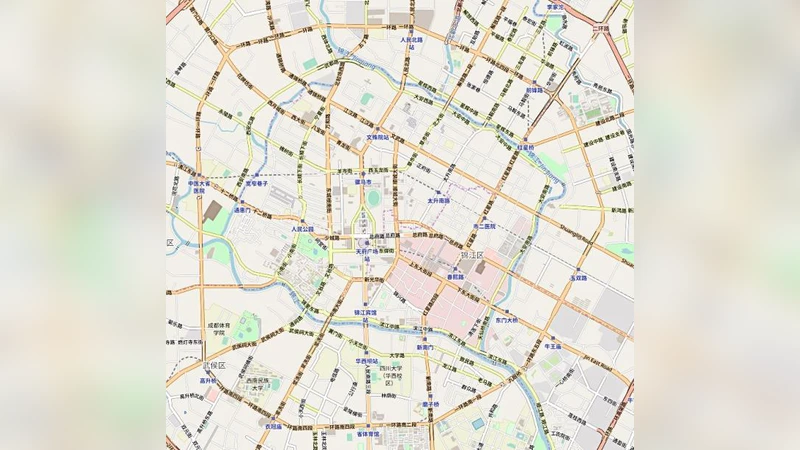
This paper focuses on the routing algorithm for the communications between vehicles and places in urban VANET. As one of the basic transportation facilities in an urban setting, buses periodically run along their fixed routes and widely cover city streets. The trajectory of bus lines can be seen as a sub map of a city. Based on the characters of bus networks, we propose a bus trajectory-based street-centric routing algorithm (BTSC), which uses bus as main relay to deliver message. In BTSC, we build a routing graph based on the trajectories of bus lines by analyzing the probability of bus appearing on every street. We propose two novel concepts, i.e. the probability of street consistency (PSC) and the probability of path consistency (PPC) which is used as metrics to determine routing paths for message delivery. This aims to choose the best path with higher density of busses and lower probability of transmission direction deviating from the routing path. In order to improve the bus forwarding opportunity, we design a bus-based forwarding strategy with ant colony optimization (FACO) to find a reliable and steady multi-hop link between two relay buses in order to decrease end-to-end delay. BTSC makes the improvements in the selection of routing path and the strategy of message forwarding. Simulation results show that our proposed routing algorithm has a better performance in transmission ratio, transmission delay and adaptability to different networks.
💡 Research Summary
The paper addresses the challenge of reliable message delivery in urban Vehicular Ad hoc Networks (VANETs) by exploiting the regular, high‑coverage movement patterns of city buses. Recognizing that buses travel fixed routes repeatedly and thus provide a predictable backbone over the street network, the authors propose a novel routing framework called BTSC (Bus Trajectory‑Based Street‑Centric routing).
First, the authors construct a street‑centric routing graph in which each street segment is a vertex and adjacent streets are linked by edges. The weight of each edge is derived from the probability that a bus appears on the corresponding street, computed from real bus schedule data (average arrivals per unit time normalized by street length and bus headway). This graph emphasizes bus density rather than pure Euclidean distance, making routes that are traversed frequently by buses cheaper.
To select the most reliable path, two probabilistic metrics are introduced:
- Probability of Street Consistency (PSC) – the likelihood that a given street will be continuously covered by at least one bus during the message’s forwarding interval.
- Probability of Path Consistency (PPC) – the product of PSC values over all streets in a candidate path, representing the overall probability that the entire route remains bus‑covered.
Routing proceeds by enumerating feasible paths from source to destination and choosing the one with the highest PPC. This approach simultaneously maximizes bus density and minimizes the chance that a forwarding decision deviates from the intended route.
Once a path is selected, the actual packet forwarding between successive relay buses must be realized. For this, the authors design a forwarding strategy called FACO (Fixed Ant Colony Optimization). FACO treats candidate relay buses as nodes in a pheromone‑based search space. Each ant constructs a multi‑hop chain by probabilistically selecting next‑hop buses according to a composite cost that includes physical distance, inverse PSC (favoring streets with higher bus consistency), and estimated delivery time. After each iteration, pheromone levels are reinforced on links that yielded lower end‑to‑end delay and higher delivery success, while deteriorating links receive evaporation. This dynamic, bio‑inspired optimization enables the system to adapt to traffic fluctuations, schedule variations, and temporary link failures, thereby reducing overall latency and packet loss.
The authors evaluate BTSC through extensive simulations on realistic city maps (e.g., a district of Seoul) under varying vehicle densities (low, medium, high) and different bus penetration ratios (5 %–20 %). They compare against well‑known VANET routing protocols such as GPSR, VADD, CCVR, and a recent bus‑centric scheme (BSR). Performance metrics include Packet Delivery Ratio (PDR), average end‑to‑end delay, and adaptability to changing network conditions. Results show that BTSC consistently outperforms the baselines: PDR improves by 15 %–22 % across all scenarios, average delay is reduced by roughly 30 % thanks to the FACO‑derived multi‑hop links, and the protocol remains robust even when the bus population is sparse.
The paper also discusses limitations. PSC estimation relies on relatively stable bus schedules; abrupt changes or irregular services can degrade probability accuracy. FACO’s performance is sensitive to pheromone initialization and parameter tuning, which may introduce computational overhead in highly dynamic environments. Moreover, in peripheral zones where buses are absent, the scheme must fall back on conventional vehicle‑to‑vehicle forwarding. The authors suggest future work on machine‑learning‑enhanced probability prediction, lightweight meta‑heuristics for faster convergence, and hybrid cooperation between buses and ordinary cars to extend coverage.
In conclusion, BTSC demonstrates that integrating bus trajectory information with probabilistic path consistency metrics and ant‑colony‑based forwarding yields a powerful, adaptable routing solution for dense urban VANETs. The approach achieves higher delivery reliability, lower latency, and better scalability than existing methods, positioning it as a promising candidate for real‑world deployment in smart city communication infrastructures.
Comments & Academic Discussion
Loading comments...
Leave a Comment