Graph Signal Processing: Overview, Challenges and Applications
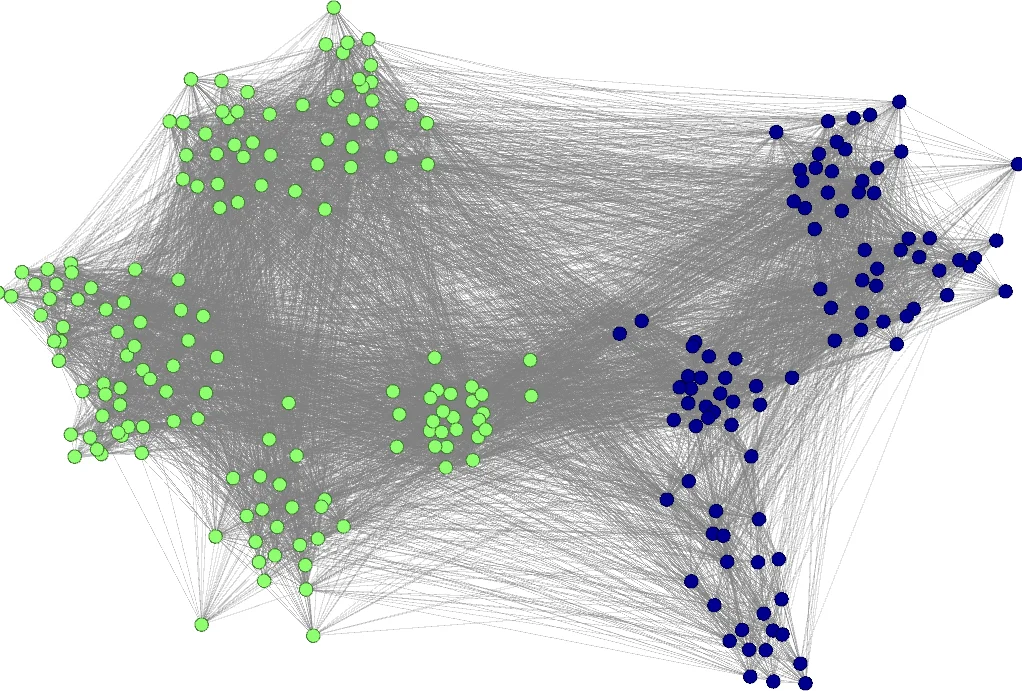
Research in Graph Signal Processing (GSP) aims to develop tools for processing data defined on irregular graph domains. In this paper we first provide an overview of core ideas in GSP and their connection to conventional digital signal processing. We then summarize recent developments in developing basic GSP tools, including methods for sampling, filtering or graph learning. Next, we review progress in several application areas using GSP, including processing and analysis of sensor network data, biological data, and applications to image processing and machine learning. We finish by providing a brief historical perspective to highlight how concepts recently developed in GSP build on top of prior research in other areas.
💡 Research Summary
**
The paper provides a comprehensive overview of Graph Signal Processing (GSP), a field that extends classical digital signal processing (DSP) concepts to data defined on irregular graph domains. It begins by motivating the need for GSP: modern data streams—ranging from social media interactions to sensor measurements—are naturally organized on complex networks rather than on regular time or spatial grids. Traditional DSP tools (signals, filters, Fourier transforms, sampling) rely on the shift operator, which in the time domain corresponds to a simple delay. GSP generalizes this notion by defining a graph shift operator using either the adjacency matrix or the graph Laplacian. This operator enables the construction of graph filters, convolution, and a Graph Fourier Transform (GFT) based on the eigenvectors of the Laplacian (or other shift matrices).
The authors explain how the GFT provides a spectral representation of graph signals, allowing the definition of frequency, smoothness, and bandlimitedness in the graph context. Smooth signals exhibit small variations across edges, which translates to concentration of energy in low‑frequency eigenvectors. This spectral viewpoint underpins several core GSP tools:
-
Sampling Theory – For bandlimited graph signals, a subset of vertices can uniquely determine the whole signal. However, unlike the Nyquist theorem, the selection of sampling vertices depends on the graph’s eigenstructure, making optimal sampling a challenging combinatorial problem. The paper surveys recent heuristic and optimization‑based approaches.
-
Filter Design – Graph filters are expressed as polynomials of the shift operator (e.g., Chebyshev or Lanczos approximations). Polynomial filters enable distributed implementation and avoid costly eigendecompositions. Multi‑band filter banks and dictionary learning are discussed as means to achieve multiresolution analysis on graphs.
-
Graph Learning – When the underlying graph is not directly observable, GSP offers methods to infer it from signal observations. By imposing sparsity, smoothness, or statistical dependence constraints, one can recover adjacency or Laplacian matrices via convex optimization, linking GSP to graphical models and network inference.
The paper then reviews a broad set of applications. In sensor networks, GSP facilitates compression, denoising, and in‑network processing of irregularly placed measurements. In urban mobility, piecewise‑smooth graph models capture large variations at region boundaries (e.g., Manhattan taxi pickups) while preserving smoothness within neighborhoods. Biological networks (brain connectivity, gene expression) benefit from graph‑based spectral analysis and structure learning to uncover functional relationships. Image processing leverages graph representations for segmentation, edge‑aware filtering, and mesh processing, while machine learning integrates GSP with graph neural networks for semi‑supervised learning and representation learning.
A comparative discussion highlights GSP’s relationship to three adjacent fields. Network science focuses on structural properties (degree distribution, centralities) and uses graph spectra mainly for clustering; GSP adds a signal‑processing layer that exploits those spectra for filtering and sampling. Network processes model dynamical phenomena (epidemics, information diffusion) and often rely on mean‑field approximations; GSP provides a spectral framework to analyze such dynamics more precisely. Graphical models treat graphs as probabilistic dependencies; GSP complements them by offering tools for signal reconstruction and graph inference.
Historically, the authors trace GSP’s roots to Algebraic Signal Processing (ASP), which formalized shift‑based signal models, and to spectral graph theory used in Laplacian‑based clustering. Early works on graph‑based wavelets, filter banks, and compression laid the groundwork for modern GSP.
Finally, the paper outlines open challenges: scalable algorithms for large‑scale graph transforms, generalized sampling theory for directed or weighted graphs, robust graph learning under noisy observations, and deeper integration with data‑driven deep learning frameworks. The authors conclude that GSP serves as a unifying bridge between classical signal processing and contemporary data‑centric disciplines, and its continued development will be crucial as graph‑structured data proliferates across science and engineering.
Comments & Academic Discussion
Loading comments...
Leave a Comment