PaaS Cloud: The Business Perspective
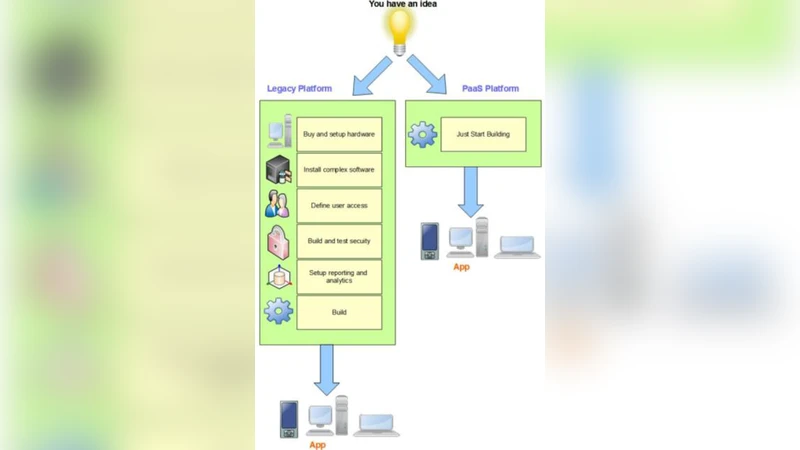
The next generation of PaaS technology accomplishes the true promise of object-oriented and 4GLs development with less effort. Now PaaS is becoming one of the core technical services for application development organizations. PaaS offers a resourceful and agile approach to develop, operate and deploy applications in a cost-effective manner. It is now turning out to be one of the preferred choices throughout the world, especially for globally distributed development environment. However it still lacks the scale of popularity and acceptance which Software-as-a-Service (SaaS) and Infrastructure-as-a-Service (IaaS) have attained. PaaS offers a promising future with novel technology architecture and evolutionary development approach. In this article, we identify the strengths, weaknesses, opportunities and threats for the PaaS industry. We then identify the various issues that will affect the different stakeholders of PaaS industry. This research will outline a set of recommendations for the PaaS practitioners to better manage this technology. For PaaS technology researchers, we also outline the number of research areas that need attention in coming future. Finally, we also included an online survey to outline PaaS technology market leaders. This will facilitate PaaS technology practitioners to have a more deep insight into market trends and technologies.
💡 Research Summary
The paper provides a comprehensive business‑oriented examination of Platform‑as‑a‑Service (PaaS) within the broader cloud computing ecosystem. It begins by positioning cloud technologies as key drivers of competitive advantage and notes that, unlike Software‑as‑a‑Service (SaaS) and Infrastructure‑as‑a‑Service (IaaS), PaaS has not yet achieved comparable market penetration or brand awareness. The authors then enumerate the principal benefits of PaaS: accelerated development cycles, reduced total cost of ownership, rapid time‑to‑market, and automated operational management. Specific features such as multi‑language support, drag‑and‑drop business‑logic builders, and web‑based code repositories are highlighted as enablers that lower the skill barrier for both professional developers and less‑technical users.
A taxonomy of PaaS offerings is presented, distinguishing three major categories: (1) SaaS‑anchored PaaS (e.g., Force.com, Google App Engine), (2) operating‑environment‑anchored PaaS (e.g., AWS Elastic Beanstalk, Microsoft Azure App Service), and (3) open‑source or “open” PaaS platforms (e.g., Cloud Foundry, OpenShift). The paper compares these groups in terms of underlying virtualization (virtual machines versus containers), resource allocation policies, and security models, emphasizing that each approach carries distinct trade‑offs in performance, flexibility, and operational complexity.
The core of the analysis is a SWOT (Strengths, Weaknesses, Opportunities, Threats) assessment. Strengths include heightened developer productivity, cost efficiency through pay‑per‑use pricing, automatic scaling, and tight integration with other cloud‑native services. Weaknesses are identified as vendor lock‑in, lack of standardized APIs, the complexity of multi‑tenant security, and performance overhead associated with virtual machine‑based isolation. Opportunities arise from the growing adoption of hybrid and multi‑cloud strategies, the convergence of PaaS with micro‑services and serverless architectures, the integration of AI and data‑analytics capabilities, and the increasing demand from small‑to‑medium enterprises and startups for cloud‑based development platforms. Threats comprise the rapid expansion of competing SaaS/IaaS offerings, tightening data‑sovereignty regulations, rising cyber‑threat vectors, and price‑performance battles between open‑source PaaS projects and large commercial providers.
Stakeholder analysis identifies four primary groups: PaaS providers (concerned with service reliability, revenue models, and differentiation), enterprise customers (focused on total cost, compliance, and customization), developers (seeking robust toolchains, low learning curves, and productivity gains), and policymakers (interested in standardization, regulation, and data protection). The paper argues that each group has distinct expectations that must be reconciled for successful market growth.
Finally, the authors outline a set of research and practical recommendations. They call for the development of standardized APIs and service‑level agreements, stronger isolation mechanisms for multi‑tenant environments, transparent usage‑based pricing frameworks, and maturity models for DevOps practices built on PaaS. A market survey identifies current leaders—Google App Engine, AWS Elastic Beanstalk, and Microsoft Azure App Service—and suggests that emerging vendors should benchmark these platforms while innovating in niche areas such as industry‑specific runtimes or advanced security features. In sum, the paper articulates the value proposition of PaaS, maps its current challenges, and proposes a roadmap for both academic inquiry and industry strategy to accelerate the adoption and evolution of PaaS technologies.
Comments & Academic Discussion
Loading comments...
Leave a Comment