An Adaptable System to Support Provenance Management for the Public Policy-Making Process in Smart Cities
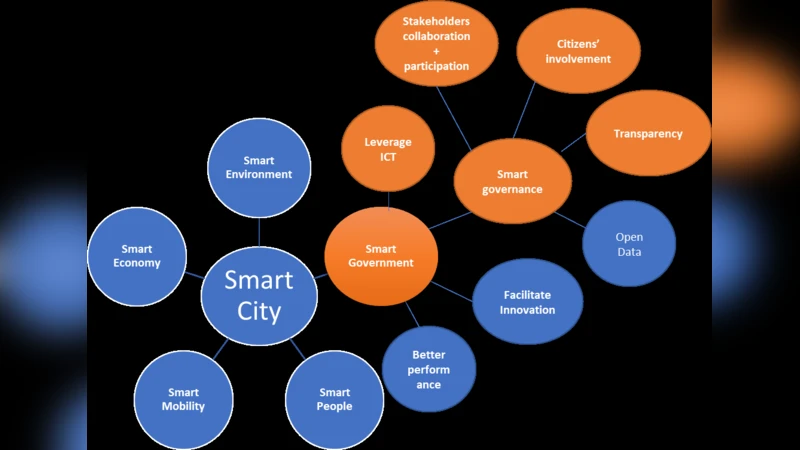
Government policies aim to address public issues and problems and therefore play a pivotal role in peoples lives. The creation of public policies, however, is complex given the perspective of large and diverse stakeholders involvement, considerable human participation, lengthy processes, complex task specification and the non-deterministic nature of the process. The inherent complexities of the policy process impart challenges for designing a computing system that assists in supporting and automating the business process pertaining to policy setup, which also raises concerns for setting up a tracking service in the policy-making environment. A tracking service informs how decisions have been taken during policy creation and can provide useful and intrinsic information regarding the policy process. At present, there exists no computing system that assists in tracking the complete process that has been employed for policy creation. To design such a system, it is important to consider the policy environment challenges; for this a novel network and goal based approach has been framed and is covered in detail in this paper. Furthermore, smart governance objectives that include stakeholders participation and citizens involvement have been considered. Thus, the proposed approach has been devised by considering smart governance principles and the knowledge environment of policy making where tasks are largely dependent on policy makers decisions and on individual policy objectives. Our approach reckons the human dimension for deciding and defining autonomous process activities at run time. Furthermore, with the network-based approach, so-called provenance data tracking is employed which enables the capture of policy process.
💡 Research Summary
The paper addresses the lack of a comprehensive ICT solution for tracking the entire public‑policy creation process, a need that becomes especially acute in the context of smart cities where “smart government” initiatives aim to involve citizens and multiple stakeholders. Recognizing that policy making differs fundamentally from conventional business processes—being highly knowledge‑intensive, non‑deterministic, involving a large and variable set of actors, and often extending over weeks or months—the authors argue that traditional workflow management systems, which require a predefined process model, are ill‑suited to this domain.
To overcome these limitations, the authors propose a novel “network‑ and goal‑based” approach inspired by Internet Protocol (IP) packet switching. In this model, each policy activity is represented as a node in a dynamic network, and the desired policy outcome is expressed as a goal. When a policy maker declares a goal, the system automatically routes the appropriate activity nodes to fulfill it, without needing a static workflow diagram. This “just‑in‑time” orchestration respects the fluid, ad‑hoc nature of policy work while still providing a systematic way to capture provenance data.
The design incorporates two smart‑governance principles: (1) citizen participation (both bottom‑up and top‑down) and (2) facilitation of communication across silos of stakeholders. To operationalize these principles, the system is built on a multi‑agent architecture. Each stakeholder—government officials, external agencies, or citizens—is modeled as an autonomous agent that can declare goals, request tasks, report results, and exchange messages with other agents. All interactions are logged in a centralized provenance repository, enabling later retrieval, audit, and analysis of the decision‑making trail.
The architecture consists of four main modules: (i) Goal Management, which captures and prioritizes policy objectives; (ii) Network Routing, which maps goals to activity nodes and determines execution paths dynamically; (iii) Agent Collaboration, which handles inter‑agent communication, coordination, and citizen‑facing interfaces; and (iv) Provenance Storage & Query, which persistently records the captured metadata and provides APIs for retrieval.
A proof‑of‑concept prototype was implemented using a multi‑agent system (MAS) and tested with policy examples drawn from the Smarticipate project in Bristol. The evaluation demonstrated that the goal‑driven routing could adapt to varying policy scenarios, that provenance records accurately reflected who made which decisions and why, and that the system facilitated stakeholder communication without imposing a rigid workflow.
The authors acknowledge several open challenges: scaling the approach to handle large‑volume data, ensuring security and privacy of sensitive policy information, and refining the user interface to encourage adoption by non‑technical policy makers. They also note that while the prototype captures provenance data, further work is needed to develop retrieval, visualization, and decision‑support tools that exploit this data for policy improvement.
In summary, the paper contributes a fresh perspective on provenance management for public policy making by combining a network‑based, goal‑oriented orchestration with a multi‑agent implementation that respects the human‑centric, knowledge‑driven nature of policy work. It bridges a gap between smart‑city governance aspirations and concrete ICT support, offering a foundation for future research on scalable, secure, and user‑friendly provenance systems in the public sector.
Comments & Academic Discussion
Loading comments...
Leave a Comment