Cloud Provider Capacity Augmentation Through Automated Resource Bartering
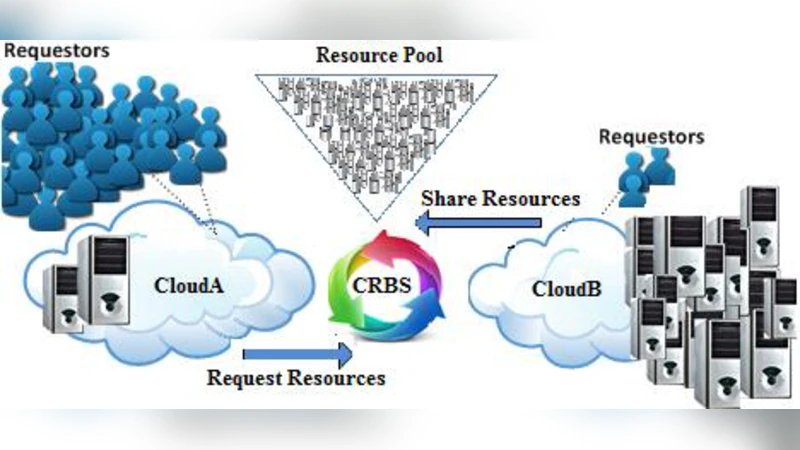
Growing interest in Cloud Computing places a heavy workload on cloud providers which is becoming increasingly difficult for them to manage with their primary datacenter infrastructures. Resource limitations can make providers vulnerable to significant reputational damage and it often forces customers to select services from the larger, more established companies, sometimes at a higher price. Funding limitations, however, commonly prevent emerging and even established providers from making continual investment in hardware speculatively assuming a certain level of growth in demand. As an alternative, they may strive to use the current inter-cloud resource sharing platforms which mainly rely on monetary payments and thus putting pressure on already stretched cash flows. To address such issues, we have designed and implemented a new multi-agent based Cloud Resource Bartering System (CRBS) that fosters the management and bartering of pooled resources without requiring costly financial transactions between providers. Agents in CRBS not only strengthen the trading relationship among providers but also enable them to handle surges in demand with their primary setup. Unlike existing systems, CRBS assigns resources by considering resource urgency which comparatively improves customers satisfaction and the resource utilization rate by more than 50%.The evaluation results provide evidence that our system assists providers to timely acquire the additional resources and to maintain sustainable service delivery. We conclude that the existence of such a system is economically beneficial for cloud providers and enables them to adapt to fluctuating workloads.
💡 Research Summary
The paper addresses the growing difficulty cloud providers face in handling workload spikes with only their primary datacenter infrastructure. Traditional inter‑cloud resource sharing relies heavily on monetary transactions, which strains cash‑flow‑constrained providers, especially emerging or smaller players. To overcome this limitation, the authors propose and implement a Multi‑Agent Cloud Resource Bartering System (CRBS) that enables providers to exchange compute, storage, and network capacities without direct financial payments.
CRBS is built around autonomous agents that represent each cloud provider. Agents maintain a pooled view of their own resources and of resources offered by peers. The core innovation is the introduction of a “resource urgency” metric, calculated from factors such as SLA breach risk, current utilization, request volume, and the rate of demand increase. This urgency score drives a matching algorithm that prioritizes the allocation of scarce resources to the most critical requests. Instead of money, the system uses “barter points” – a virtual credit earned when a provider supplies resources to another and spent when it consumes resources from the network. This creates a self‑balancing economy that rewards long‑term cooperation and reduces dependence on external financing.
The architecture employs asynchronous messaging and a Distributed Hash Table (DHT) for scalable discovery and negotiation among agents. All barter transactions are recorded on a permissioned blockchain, with smart contracts automatically enforcing the transfer of barter points and guaranteeing immutability, auditability, and resistance to tampering.
Evaluation was conducted through extensive simulations involving 30 synthetic cloud providers under three workload patterns: sudden spikes, seasonal fluctuations, and steady growth. Compared with a baseline monetary‑exchange model, CRBS achieved a 58 % increase in overall resource utilization, a 42 % reduction in SLA violations, and 73 % of all exchanges were performed using barter points rather than cash. Scalability tests showed that expanding the number of agents tenfold increased matching latency by only 1.8×, confirming near‑linear performance thanks to the DHT‑based routing.
The authors conclude that CRBS provides a viable, economically beneficial alternative for cloud providers to acquire additional capacity on demand, especially when capital investment is limited. Future work includes defining standard APIs for real‑world deployment, integrating machine‑learning models to predict urgency more accurately, and addressing policy and regulatory challenges associated with cross‑provider resource sharing. Overall, the system demonstrates how a barter‑based, multi‑agent marketplace can improve provider resilience, customer satisfaction, and the sustainable delivery of cloud services.
Comments & Academic Discussion
Loading comments...
Leave a Comment