A Random Matrix Approach to Wide Band Spectrum Sensing: Unknown Noise Variance Case
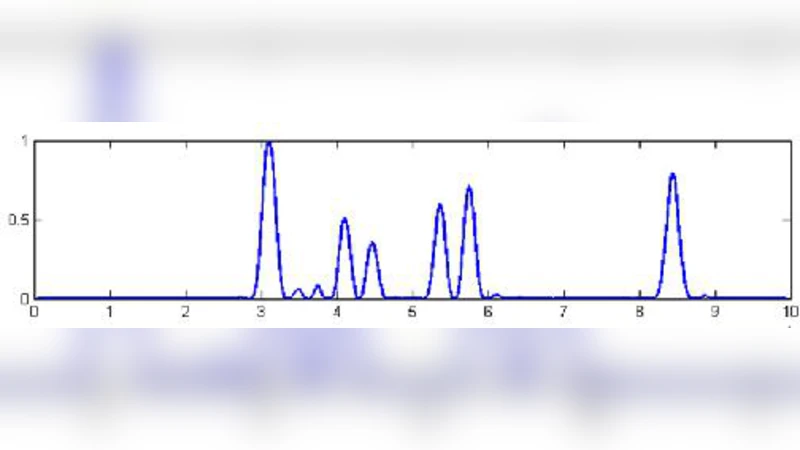
In this paper three different scenarios in wide band spectrum sensing have been studied. While the signal and noise statistics are supposed to be unspecified, random matrixes have been utilized in order to estimate the noise variance. These scenarios are: 1- Number of subbands is specified and there is enough information regarding being used or being unused for each of them. 2- Number of subbands is known but there is no information about usage distribution among them. 3- Number of subbands is unknown. Simulation results showed the superior performance of the proposed scheme. Regarding the number of samples, the proposed method requires less number of samples compared to the cyclo-stationary spectrum sensing algorithms and more samples compared to the energy detection based methods. But, regarding the detection probability, the proposed method is superior compared to both other spectrum sensing methods.
💡 Research Summary
Wide‑band spectrum sensing is a cornerstone of cognitive radio and dynamic spectrum access, yet its practical deployment is hampered by two persistent challenges: (1) the noise variance is rarely known a priori, and (2) the number of sub‑bands and their occupancy status are often uncertain. This paper tackles these challenges by exploiting random matrix theory (RMT) to estimate the noise variance directly from the received data, without any prior statistical knowledge of the signal or noise. Three increasingly ambiguous scenarios are considered.
Scenario 1 – Known sub‑band count and occupancy information
When the total number of sub‑bands K is known and each sub‑band is labeled as either “occupied” (signal + noise) or “idle” (noise only), the authors form an N × M data matrix X from N antenna or frequency samples collected over M time slots. The sample covariance R = (1/M) XXᵀ is computed and its eigenvalues λ₁ ≥ λ₂ ≥ … ≥ λ_N are obtained. Under the assumption that the idle sub‑bands contain pure noise, the smallest K₀ eigenvalues (where K₀ equals the number of idle sub‑bands) follow the Marčenko–Pastur (MP) distribution. By averaging these eigenvalues the noise variance σ̂² is estimated. The estimated σ̂² is then used to set a detection threshold τ = σ̂²·γ, where γ is chosen to meet a target false‑alarm probability. Each sub‑band is finally tested with a conventional energy detector using τ, yielding a detection probability Pd.
Scenario 2 – Known sub‑band count, unknown occupancy
Here K is known but the occupancy pattern is not. The full eigenvalue spectrum is examined, and the authors automatically locate the “elbow” point where the eigenvalue density sharply changes. This point separates the bulk of noise‑only eigenvalues (which obey the MP law) from the outlier eigenvalues caused by signal presence. The bulk eigenvalues are averaged to obtain σ̂². The elbow detection uses a combination of first‑ and second‑order derivative smoothing and a least‑squares fit to the MP theoretical density, providing a data‑driven way to distinguish signal from noise without any side information.
Scenario 3 – Unknown sub‑band count
In the most general case, neither K nor the occupancy pattern is known. The authors adopt an incremental dimensionality approach: they increase the observation dimension N (or equivalently the number of frequency bins) while monitoring the stability of the eigenvalue distribution. When a set of eigenvalues stabilizes within the MP bounds, that set is interpreted as the noise subspace, and the remaining eigenvalues are treated as signal‑related. Model‑order selection criteria derived from AIC/MDL are employed to avoid over‑estimation. The resulting noise eigenvalues yield σ̂², which again feeds the detection threshold.
Theoretical foundation
The MP law describes the asymptotic eigenvalue density of large random covariance matrices when the ratio c = N/M is fixed. For pure white Gaussian noise with variance σ², eigenvalues lie in the interval
Comments & Academic Discussion
Loading comments...
Leave a Comment