5G Control Channel Design for Ultra-Reliable Low-Latency Communications
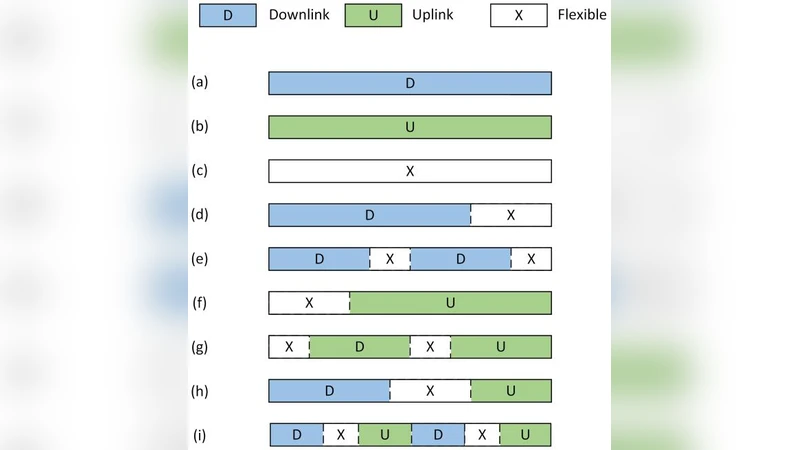
The fifth generation (5G) of wireless systems holds the promise of supporting a wide range of services with different communication requirements. Ultra-reliable low-latency communications (URLLC) is a generic service that enables mission-critical applications, such as industrial automation, augmented reality, and vehicular communications. URLLC has stringent requirements for reliability and latency of delivering both data and control information. In order to meet these requirements, the Third Generation Partnership Project (3GPP) has been introducing new features to the upcoming releases of the cellular system standards, namely releases 15 and beyond. This article reviews some of these features and introduces new enhancements for designing the control channels to efficiently support the URLLC. In particular, a flexible slot structure is presented as a solution to detect a failure in delivering the control information at an early stage, thereby allowing timely retransmission of the control information. Finally, some remaining challenges and envisioned research directions are discussed for shaping the 5G new radio (NR) as a unified wireless access technology for supporting different services.
💡 Research Summary
The paper provides a comprehensive examination of control‑channel design for Ultra‑Reliable Low‑Latency Communications (URLLC) within the 5G New Radio (NR) framework. URLLC services, such as industrial automation, augmented reality, and vehicular networking, demand sub‑millisecond latency and a block error rate on the order of 10⁻⁵ for both data and control information. Meeting these stringent requirements cannot rely on data‑channel enhancements alone; the control plane must be equally robust and fast.
The authors first review the key features introduced by 3GPP in Release 15 and later releases that target URLLC. Central among these is the Flexible Slot Structure, which abandons the traditional fixed‑length slot in favor of a dynamic composition of downlink, uplink, and special control symbols within a single slot. This flexibility enables a UE to detect a failure to receive control information while the slot is still in progress, allowing immediate retransmission of the control payload without waiting for the end of the transmission time interval. Consequently, the latency associated with control‑channel errors is reduced from several tens of milliseconds to a few tens of microseconds.
In the physical layer domain, the paper discusses several reliability‑boosting techniques. The Physical Downlink Control Channel (PDCCH) search space can be dynamically enlarged, and Downlink Control Information (DCI) formats are simplified to lower decoding complexity. Repetition schemes and Multi‑Transmission Points (MTP) are employed to increase signal robustness, while coding rates are reduced to as low as 1/3, dramatically improving error‑correction capability. Simulation results show that these combined measures can drive the Block Error Rate (BLER) for control bits below 10⁻⁵ with only modest increases in transmit power.
However, the authors acknowledge that the flexible slot concept introduces new challenges. Mixing different transmission types within a slot complicates scheduling, requiring the gNB to re‑allocate resources in real time and the UE to scan a rapidly changing search space. This raises CPU load and memory demands on the base station. To mitigate this, the paper proposes research into predictive scheduling algorithms and machine‑learning‑based resource allocation that can anticipate control‑channel needs and pre‑emptively reserve appropriate symbols.
The coexistence of URLLC with other 5G service categories (eMBB and mMTC) creates additional interference management issues. Since control channels are highly sensitive, the authors suggest priority‑based resource isolation and dynamic interference coordination to protect URLLC control transmissions from being corrupted by high‑throughput or massive‑device traffic.
Mobility is another critical aspect. In high‑speed scenarios, handovers can interrupt the delivery of control information, potentially causing a complete service outage. The paper outlines a handover‑specific control channel and a predictive pre‑transmission strategy that proactively sends control data to the target cell before the UE completes the handover, thereby preserving continuity.
Security considerations are also addressed. Control‑channel spoofing or tampering could undermine the reliability guarantees of URLLC. The authors recommend encrypting DCI, adding integrity‑verification tags, and deploying real‑time anomaly‑detection systems to safeguard the control plane.
In conclusion, the authors argue that a successful URLLC implementation hinges on a holistic redesign of the control channel, centered on a flexible slot architecture that enables early error detection and rapid retransmission, complemented by robust physical‑layer coding, intelligent scheduling, interference mitigation, mobility support, and security hardening. Future research directions include the development of AI‑driven frameworks that jointly optimize these dimensions and extensive field trials to validate performance under realistic network conditions.
Comments & Academic Discussion
Loading comments...
Leave a Comment