The long-term spectroscopic misadventures of AG Dra with a nod toward V407 Cyg: Degenerates behaving badly
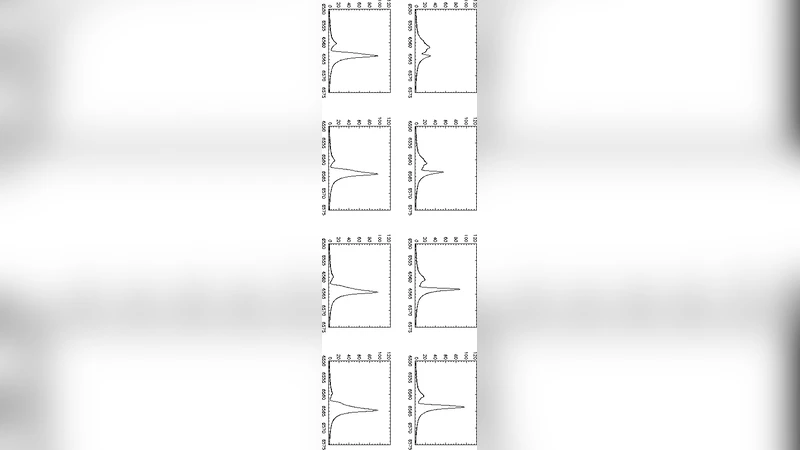
We present some results of an ongoing study of the long-term spectroscopic variations of AG Dra, a prototypical eruptive symbiotic system. We discuss the effects of the environment and orbital modulation in this system and some of the physical processes revealed by a comparison with the nova outburst of the symbiotic-like recurrent nova V407 Cyg 2010.
💡 Research Summary
The paper presents a comprehensive study of the long‑term spectroscopic behavior of the symbiotic binary AG Draconis (AG Dra), spanning roughly three decades, and places these findings in context with the 2010 outburst of the symbiotic‑like recurrent nova V407 Cygni. Using a heterogeneous set of optical spectra obtained from facilities such as Asiago, Loiano, the Telescopio Nazionale Galileo (TNG), Ondřejov, and the Nordic Optical Telescope (NOT), the authors focus on the evolution of Balmer lines (H α, H β, H γ, H δ), neutral and ionized helium lines (He I 6678 Å, He I 7065 Å, He II 4686 Å), and the Raman‑scattered O VI 6825 Å feature.
During the major 2006–2008 outburst, the Balmer equivalent widths (EWs) increased sharply in concert with the continuum brightening, then declined as the system returned toward quiescence. The He I lines display a near‑linear increase with the U‑band magnitude up to U≈9 mag, beyond which a saturation sets in, indicating that the emitting region becomes optically thick or that the mass‑loss rate from the hot component reaches a ceiling. He II 4686 Å, a tracer of the high‑temperature ionizing flux, shows a pronounced surge during “hot” outbursts, while the Raman 6825 Å line, produced by Raman scattering of O VI 1032 Å photons in the neutral wind of the red giant, behaves as an almost instantaneous probe of the far‑UV photon field because it is optically thin and free from self‑absorption.
A striking result is the temporary disappearance of the Raman line at the peak of the 2006 outburst, lasting roughly a week before recovering. The authors interpret this as either a sudden increase in the column density of neutral hydrogen that completely blocks the O VI photons, or a dramatic rise in the optical depth of the O VI resonance lines themselves, possibly due to an enhanced wind from the white dwarf. The recovery pattern is reproducible in subsequent minor outbursts, supporting the notion that the Raman line can be used to distinguish “hot” versus “cold” outbursts: hot events show a rapid rise and fall of the Raman flux, whereas cold events exhibit a prolonged suppression.
Orbital modulation is examined by phasing the He I 6678 Å and Raman 6825 Å fluxes on the ephemeris of Fekel et al. (2000). He I displays clear phase‑dependent variability, with minima near the inferior conjunction of the red giant (phase 0) and maxima near the white dwarf’s inferior conjunction (phase 0.5). In contrast, the Raman feature shows little orbital dependence, consistent with its formation throughout the extended neutral wind. The authors also model the H α profile as a Gaussian emission component partially absorbed by the red‑giant wind, demonstrating how modest orbital velocities (≈10 km s⁻¹) and a β‑law wind can produce the observed phase‑dependent absorption without invoking changes in the intrinsic emission strength.
The comparison with V407 Cyg’s 2010 nova eruption highlights both similarities and differences. V407 Cyg exhibited Balmer line wings extending beyond 3000 km s⁻¹, indicative of a fast shock propagating through the Mira‑type wind and producing highly asymmetric, off‑center profiles. AG Dra shows analogous high‑velocity wings, but at considerably lower velocities and with less pronounced asymmetry, reflecting a less extreme mass‑ejection event. The authors argue that the V407 Cyg case underscores the importance of hydrodynamic interactions, shock deceleration, and time‑dependent photoionization in shaping line profiles, and that similar processes, albeit milder, operate in AG Dra.
Overall, the study demonstrates that long‑term, multi‑epoch spectroscopy of symbiotic binaries can disentangle the interplay between the white dwarf’s variable ionizing output, the red giant’s wind density, and orbital geometry. The Raman O VI line emerges as a powerful diagnostic of the far‑UV flux, while He I and He II lines trace changes in optical depth and mass‑loss rates. The authors conclude that future work should combine dense, high‑resolution optical monitoring with simultaneous UV/X‑ray observations and sophisticated 2‑D/3‑D radiative‑hydrodynamic modeling to fully capture the complex, time‑dependent environment of systems like AG Dra and V407 Cyg.
Comments & Academic Discussion
Loading comments...
Leave a Comment