Merging the Astrophysics and Planetary Science Information Systems
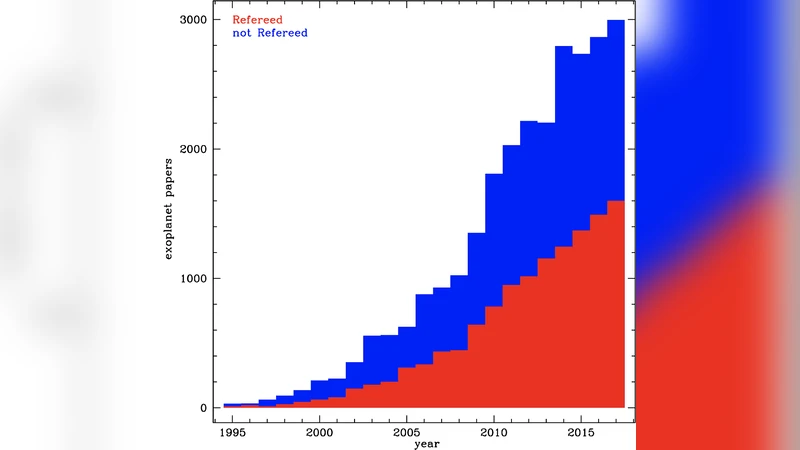
Conceptually exoplanet research has one foot in the discipline of Astrophysics and the other foot in Planetary Science. Research strategies for exoplanets will require efficient access to data and information from both realms. Astrophysics has a sophisticated, well integrated, distributed information system with archives and data centers which are interlinked with the technical literature via the Astrophysics Data System (ADS). The information system for Planetary Science does not have a central component linking the literature with the observational and theoretical data. Here we propose that the Committee on an Exoplanet Science Strategy recommend that this linkage be built, with the ADS playing the role in Planetary Science which it already plays in Astrophysics. This will require additional resources for the ADS, and the Planetary Data System (PDS), as well as other international collaborators
💡 Research Summary
The paper begins by emphasizing that exoplanet research inherently straddles two scientific domains: astrophysics, which provides stellar observations and theoretical frameworks, and planetary science, which supplies models of planetary interiors, atmospheres, and surface processes. Because the field relies on both types of data, researchers need seamless access to literature, observational archives, and simulation outputs across the two disciplines.
In astrophysics, this need is already met by the Astrophysics Data System (ADS). ADS functions as a highly integrated, distributed information hub that links peer‑reviewed articles, pre‑prints, conference proceedings, and a network of data archives (e.g., MAST, IRSA, ESO). Through persistent identifiers, metadata harvesting, and a robust API, ADS enables a user to locate a paper, follow a citation to the underlying data set, and retrieve the data with a single click. This tight coupling underpins reproducibility, citation tracking, and rapid discovery.
Conversely, planetary science’s information infrastructure, centered on the Planetary Data System (PDS), excels at archiving spacecraft, laboratory, and modeling data but lacks a central service that ties those data products directly to the scholarly literature. As a result, planetary scientists often must manually search separate portals, contact data curators, or rely on ad‑hoc links embedded in PDFs. This fragmentation hampers efficiency, reduces metadata consistency, and makes it difficult to assess the impact of data sets through citation analysis.
The authors propose that ADS be extended to serve the same bridging role for planetary science as it already does for astrophysics. The core of the proposal consists of three technical steps: (1) map PDS metadata schemas onto the ADS metadata model, using common persistent identifiers such as DOIs and PDS IDs; (2) generate bidirectional links so that every paper citing a planetary data set displays a direct link to that set, and every PDS data product page lists all associated publications; (3) augment the ADS user interface and API with planetary‑science‑specific filters, visualizations, and search capabilities, allowing a single query to retrieve both astrophysical and planetary data.
Implementing this integration will require additional resources: expanded server capacity for ADS, dedicated staff for metadata harmonization, and development effort on the PDS side to expose standardized metadata feeds. The authors stress that international collaboration is essential. Agencies such as NASA, ESA, JAXA, and regional data centers (e.g., the European Centre for Data in Astronomy) should jointly define standards, share development costs, and adopt common protocols (OAI‑PMH, RESTful APIs).
The expected benefits are substantial. Researchers will no longer need to toggle between disparate portals, thereby accelerating the research cycle and improving reproducibility. A unified citation network will enable quantitative assessment of data impact, informing funding decisions and encouraging data sharing. Standardized metadata will facilitate cross‑disciplinary education, outreach, and citizen‑science projects. Moreover, the integrated system will position the exoplanet community to capitalize on upcoming missions (e.g., JWST, ARIEL, Europa Clipper) that will generate massive, heterogeneous data streams.
Finally, the paper calls on the Committee on an Exoplanet Science Strategy to formally endorse the recommendation, allocate the necessary budget for ADS and PDS enhancements, and establish a governance framework for ongoing maintenance. If adopted within the next five to ten years, the proposed linkage is projected to transform exoplanet research into a truly interdisciplinary enterprise, breaking down historical silos and fostering a new era of discovery.
Comments & Academic Discussion
Loading comments...
Leave a Comment