An Application of Neural Networks to Channel Estimation of the ISDB-TB FBMC System
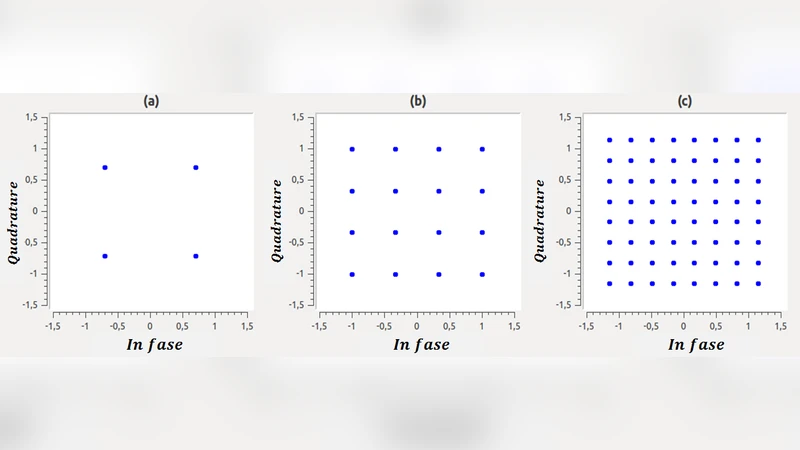
Due to the evolution of technology and the diffusion of digital television, many researchers are studying more efficient transmission and reception methods. This fact occurs because of the demand of transmitting videos with better quality using new standards such 8K SUPER Hi-VISION. In this scenario, modulation techniques such as Filter Bank Multi Carrier, associated with advanced coding and synchronization methods, are being applied, aiming to achieve the desired data rate to support ultra-high definition videos. Simultaneously, it is also important to investigate ways of channel estimation that enable a better reception of the transmitted signal. This task is not always trivial, depending on the characteristics of the channel. Thus, the use of artificial intelligence can contribute to estimate the channel frequency response, from the transmitted pilots. A classical algorithm called Back-propagation Training can be applied to find the channel equalizer coefficients, making possible the correct reception of TV signals. Therefore, this work presents a method of channel estimation that uses neural network techniques to obtain the channel response in the Brazilian Digital System Television, called ISDB-TB, using Filter Bank Multi Carrier.
💡 Research Summary
The paper addresses the challenge of channel estimation in the Brazilian digital television standard ISDB‑TB when the transmission employs Filter Bank Multi‑Carrier (FBMC) modulation, a scheme increasingly considered for ultra‑high‑definition (8 K) video services. FBMC offers superior spectral efficiency and reduced out‑of‑band emissions compared to conventional OFDM because it does not rely on a cyclic prefix (CP). However, the absence of a CP and the use of prototype filters cause significant inter‑carrier interference (ICI), making traditional pilot‑based estimators such as Least‑Squares (LS) or Minimum‑Mean‑Square‑Error (MMSE) less effective.
To overcome this limitation, the authors propose a data‑driven channel estimator based on an artificial neural network (ANN). Specifically, they design a multilayer perceptron (MLP) with an input layer that receives the complex pilot symbols split into real and imaginary components, one or more hidden layers equipped with ReLU activation functions to capture the nonlinear relationship between pilots and the underlying channel frequency response, and an output layer that produces the estimated complex channel gains for each sub‑carrier. Training is performed offline using the back‑propagation algorithm, minimizing the mean‑square‑error (MSE) between the network’s output and the true channel response generated by a known channel model.
The simulation framework follows the ISDB‑TB specifications: the number of sub‑carriers, filter length, and pilot pattern are set according to the standard, and the transmitted data corresponds to an 8 K “SUPER Hi‑VISION” video stream. Channel conditions are modeled using 3GPP‑EPA, EVA, and ETU profiles, which include multipath Rayleigh fading, delay spreads, and Doppler spreads representative of both static and high‑mobility scenarios (up to 120 km/h). The neural‑network estimator is benchmarked against LS and MMSE estimators that use the same pilot configuration. Results show that the ANN‑based approach consistently yields lower bit‑error‑rate (BER) across the entire signal‑to‑noise‑ratio (SNR) range, achieving an SNR gain of approximately 2 dB to 3 dB. The advantage becomes more pronounced in high‑mobility cases where ICI is severe; the ANN’s ability to learn nonlinear compensation enables it to maintain robust performance where linear estimators degrade.
From a computational standpoint, the heavy lifting—network training—is performed offline, so the real‑time estimator only requires a forward pass. This operation reduces to a series of matrix‑vector multiplications, which can be efficiently implemented on FPGA or ASIC hardware with modest memory footprints and power consumption, making the solution attractive for consumer‑grade set‑top boxes and integrated TV receivers.
The authors also discuss practical considerations. They note that the pilot pattern can be further optimized to provide richer information to the network, and that hyper‑parameter tuning (number of hidden layers, neurons per layer, learning rate) could yield additional gains. Moreover, extending the approach to online adaptation—where the network updates its weights during operation—might improve resilience to sudden channel changes.
In conclusion, the study demonstrates that a neural‑network‑based channel estimator can effectively handle the intrinsic difficulties of FBMC‑based ISDB‑TB transmission, delivering measurable BER improvements over classical estimators while keeping implementation complexity within realistic bounds. The results suggest a viable path toward integrating AI‑enhanced signal processing modules into future digital broadcasting standards, especially those targeting ultra‑high‑definition content delivery.
Comments & Academic Discussion
Loading comments...
Leave a Comment