Preservation of Indigenous Culture among Indigenous Migrants through Social Media: the Igorot Peoples
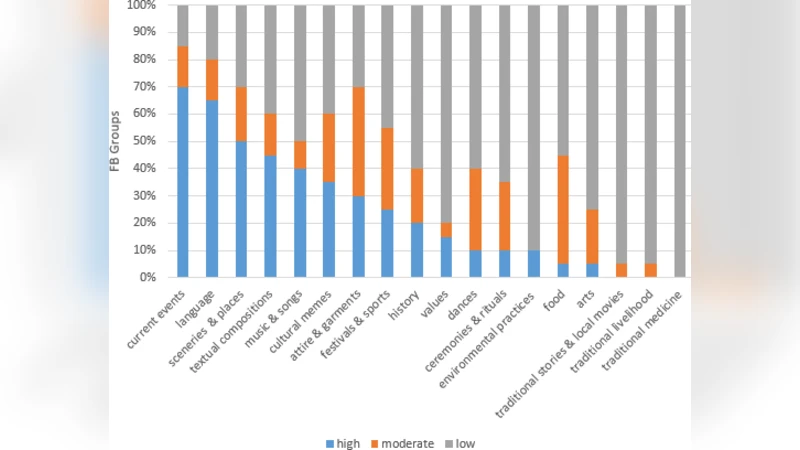
The value and relevance of indigenous knowledge towards sustainability of human societies drives for its preservation. This work explored the use of Facebook groups to promote indigenous knowledge among Igorot peoples in the diaspora. The virtual communities help intensify the connection of Igorot migrants to their traditional culture despite the challenges of assimilation to a different society. A survey of posts on 20 Facebook groups identified and classified the indigenous cultural elements conveyed through social media. A subsequent survey of 56 Igorot migrants revealed that popular social media has a significant role in the exchange, revitalization, practice, and learning of indigenous culture; inciting an effective medium to leverage preservation strategies.
💡 Research Summary
The paper investigates how Facebook groups serve as a conduit for preserving Indigenous knowledge (IK) among Igorot migrants living abroad. Recognizing that Indigenous cultures worldwide face erosion due to assimilation, globalization, and mass‑media dominance, the authors focus on the digital era where information and communication technologies (ICT) have created new avenues for cultural transmission. The study proceeds in two phases. First, the researchers selected twenty active Igorot‑focused Facebook groups and harvested all posts made between April 1 and April 3, 2016, yielding roughly 1,200 entries. Using a coding scheme derived from the literature, each post was classified into six cultural‑element categories: language/oral tradition, traditional ceremonies/festivals, music/dance, clothing/crafts, food/traditional medicine, and land/nature worldview. Frequency analysis showed that posts about ceremonies and music/dance dominated, and visual media (photos, videos) attracted higher engagement than text‑only updates.
In the second phase, an online questionnaire was administered to 56 Igorot migrants (predominantly residing in New Zealand) to assess perceived impacts of group participation. Respondents reported on usage patterns, motivations, changes in cultural identity, and concrete cultural practices (e.g., attending rituals, preparing traditional dishes, wearing indigenous attire). Statistical results revealed that 78 % felt their cultural identity was strengthened through group involvement, while 65 % indicated that the groups encouraged participation in traditional ceremonies. Younger participants (ages 20‑35) reported the greatest learning benefits, suggesting that digital platforms can bridge inter‑generational gaps in knowledge transmission. Moreover, interactive “question‑and‑answer” threads within the groups were identified as effective mechanisms for deepening understanding of cultural concepts.
The authors argue that Facebook functions not merely as an information repository but as a dynamic community‑building tool that fosters identity reconstruction, revitalizes Indigenous practices, and motivates real‑world cultural enactment. By transcending geographic distance and temporal constraints, these virtual communities enable migrants to maintain strong ties to their heritage despite immersion in host societies.
Limitations include the focus on a single platform (Facebook) and a geographically narrow sample (Igorot migrants in New Zealand), which may limit generalizability to other diaspora contexts or social‑media ecosystems (e.g., Instagram, TikTok). The short observation window also precludes assessment of long‑term cultural change. The paper recommends future research that (1) compares multiple social‑media platforms, (2) conducts longitudinal tracking of cultural indicators, and (3) examines synergies between online groups and offline cultural events.
In conclusion, the study provides empirical evidence that popular social‑media groups can play a substantive role in preserving Indigenous culture among migrant populations. The findings offer actionable insights for policymakers, cultural‑heritage organizations, and community leaders seeking to leverage digital tools for sustainable cultural stewardship.
Comments & Academic Discussion
Loading comments...
Leave a Comment