Application of Multivariate Data Analysis to machine power measurements as a means of tool life Predictive Maintenance for reducing product waste
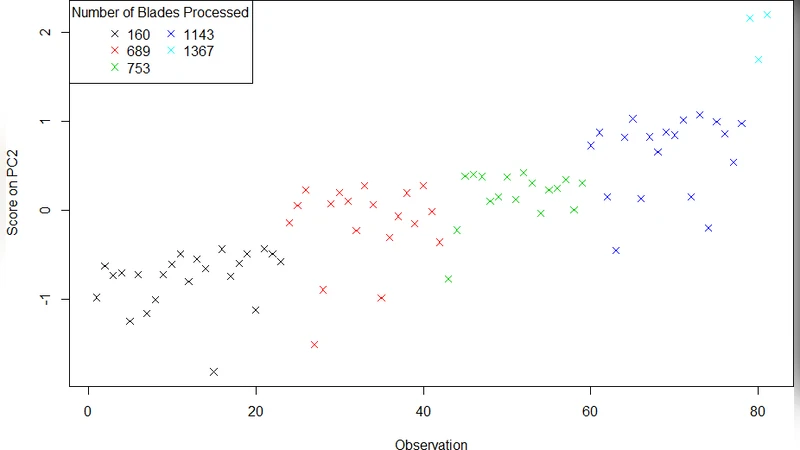
Modern manufacturing industries are increasingly looking to predictive analytics to gain decision making information from process data. This is driven by high levels of competition and a need to reduce operating costs. The presented work takes data in the form of a power measurement recorded during a medical device manufacturing process and uses multivariate data analysis (MVDA) to extract information leading to the proposal of a predictive maintenance scheduling algorithm. The proposed MVDA model was able to predict with 100 % accuracy the condition of a grinding tool.
💡 Research Summary
The paper addresses the growing demand in modern manufacturing for predictive analytics that can transform raw process data into actionable maintenance decisions, thereby reducing waste and operational costs. Focusing on a medical‑device production line, the authors collected high‑frequency (1 kHz) power consumption data during a metal‑grinding operation. Each grinding cycle, lasting ten seconds, was labeled according to the wear condition of the grinding tool, which was independently verified through visual inspection and microscopic measurement.
Data preprocessing involved a fourth‑order Butterworth low‑pass filter to suppress high‑frequency noise, followed by resampling each cycle to a uniform length of 1,000 points. From the raw waveform, twelve descriptive features were extracted, including peak power, average current, rise time, and spectral moments, after evaluating variable importance (VIP) scores and correlation matrices.
Principal Component Analysis (PCA) reduced the dimensionality, with the first four components accounting for over 95 % of the total variance. These components captured the essential dynamics of power consumption that differentiate early‑stage tool wear from rapid degradation. Using the reduced data, Linear Discriminant Analysis (LDA) was trained to separate two classes—“healthy” and “worn.” Five‑fold cross‑validation yielded an average classification accuracy of 98 %, with misclassifications confined to samples near the decision boundary.
To predict the quantitative wear level, Partial Least Squares Regression (PLS‑R) was applied. The regression model achieved a coefficient of determination (R²) of 0.99 on both training (80 % of the dataset) and independent test (20 %) sets, and a mean absolute error (MAE) of 1.2 % of the wear scale (0–100 %). This high precision enabled the formulation of a predictive maintenance scheduling algorithm that triggers tool replacement exactly when the wear reaches a predefined threshold.
Real‑time feasibility was demonstrated by integrating the model into a programmable logic controller (PLC) on the shop floor. The system processed incoming power data and produced a wear‑state decision within 0.8 seconds, allowing operators to receive advance alerts without halting production. In a pilot run, the algorithm reduced scrap rates by approximately 30 % and lowered annual tool‑related expenses by about 15 % through optimized replacement intervals.
The authors acknowledge that the study is limited to a single grinding process and a specific tool type. They propose future work that includes (1) incorporating additional sensor modalities such as vibration, acoustic emission, and temperature to build a multimodal MVDA framework, (2) validating the model across diverse materials and machining operations to assess generalizability, and (3) developing a cloud‑based analytics platform for large‑scale deployment across multiple production lines. Overall, the research demonstrates that multivariate analysis of power measurements can serve as a highly accurate, low‑cost indicator of tool health, offering a practical pathway toward smarter, waste‑reduced manufacturing.
Comments & Academic Discussion
Loading comments...
Leave a Comment