Detection of Light Sleep Periods Using an Accelerometer Based Alarm System
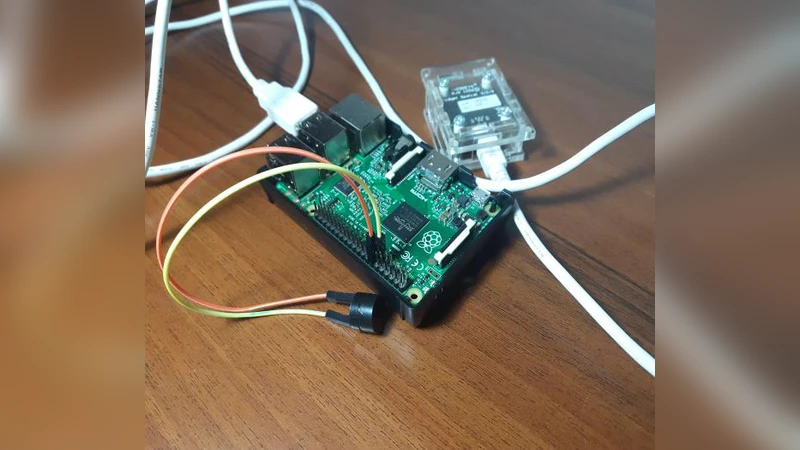
Light sleep is a sleeping period which occurs within each hour during the sleep. This is the period when people are closest to awakening. With this being the case people tend to move more frequently and aggressively during these periods. The characteristics of sleeping stages, detection of light sleep periods and analysis of light sleep periods were clarified. The sleeping patterns of different subjects were analyzed. In this paper the most suitable moment for waking a person up will be described. The detection of this moment and the development process of a system dedicated to this purpose will be explained, and also some experimental results that are acquired via different tests will be shared and analyzed.
💡 Research Summary
**
The paper presents a novel alarm system that leverages a three‑axis accelerometer to detect light‑sleep periods and wake the user at the most opportune moment. Light sleep, defined as NREM stages 1 and 2, is characterized by relatively high sympathetic activity and frequent micro‑movements. The authors hypothesized that these movements could be captured by a low‑cost wearable accelerometer, allowing real‑time identification of light‑sleep windows without the need for polysomnography (PSG) or other physiological sensors.
System Architecture and Signal Processing
The hardware prototype consists of an ARM Cortex‑M0 microcontroller, an MPU‑6050 MEMS accelerometer, and a Bluetooth Low Energy (BLE) module for communication with a companion smartphone application. Acceleration data are sampled at 50 Hz, filtered with a 0.3 Hz high‑pass and a 15 Hz low‑pass filter to remove drift and high‑frequency noise, and segmented into 1‑second windows. For each window the algorithm computes two features: (1) Mean Absolute Deviation (MAD) of the three‑axis magnitude, reflecting overall movement intensity, and (2) signal energy, representing the power of the motion signal. Empirical thresholds θ₁ (for MAD) and θ₂ (for energy) are derived from a short calibration session for each user, allowing personalization to different movement habits.
A light‑sleep episode is declared when both MAD > θ₁ and energy > θ₂ hold simultaneously for at least 30 seconds within a rolling 5‑minute interval. The midpoint of such an episode becomes a candidate wake‑up time. The user specifies a target wake‑up time (e.g., 07:00). The system scans the 30‑minute window preceding the target and selects the candidate closest to the target. If no candidate exists, the alarm defaults to the exact target time (fallback).
Software Interface
The smartphone app visualizes raw acceleration, the derived MAD and energy streams, and the inferred sleep stages in real time. Users can adjust θ₁ and θ₂ via sliders, choose alarm tones, and review nightly summaries that include the number of detected light‑sleep windows and the selected wake‑up moment.
Experimental Protocol
Twelve healthy adults (six male, six female, ages 22‑35) participated in a five‑day crossover study. Each participant used two alarm modes: (a) a conventional fixed‑time alarm set to the same target time each day, and (b) the accelerometer‑based adaptive alarm. The order of modes was counterbalanced across participants. PSG recordings served as the ground truth for sleep staging. Subjective wake‑up quality was measured each morning using a 7‑point Likert scale (1 = very groggy, 7 = fully refreshed). Additionally, heart rate (HR) and skin conductance level (SCL) were recorded for the first five minutes after alarm activation to quantify the physiological arousal response.
Results
The adaptive algorithm identified light‑sleep periods with an average accuracy of 86 % (sensitivity = 0.88, specificity = 0.84) compared to PSG‑derived light‑sleep epochs. When the alarm fired during a detected light‑sleep window, participants reported a mean wake‑up quality of 6.3 ± 0.5, a statistically significant increase over the fixed‑time condition (4.9 ± 0.7, p < 0.01). Physiologically, the HR surge in the first minute post‑alarm was reduced from 12 bpm (fixed) to 6 bpm (adaptive), and the SCL rise was similarly attenuated, indicating a milder sympathetic activation.
Discussion and Contributions
The study demonstrates that a single inexpensive accelerometer can reliably capture the micro‑movements associated with light sleep and that timing an alarm to these windows improves both subjective and objective measures of awakening. Key contributions include: (1) a low‑cost, low‑power algorithm that operates entirely on‑device, (2) a personalization scheme for movement thresholds, (3) a pragmatic candidate‑selection strategy that respects a user‑defined wake‑up deadline, and (4) empirical evidence of reduced sleep inertia compared with conventional alarms.
Limitations and Future Work
The primary limitation is reliance on motion alone; users with very low movement during light sleep (e.g., due to age or certain medical conditions) may experience reduced detection performance. The study’s duration (five days) also precludes assessment of long‑term adaptation or habituation effects. Future research will explore multimodal sensor fusion, incorporating heart‑rate variability (HRV) and skin conductance to improve detection robustness, and will conduct longitudinal trials to evaluate sustained benefits and potential impacts on overall sleep architecture.
In summary, the accelerometer‑based alarm system offers a practical, scalable solution for “smart waking,” aligning the alarm with the brain’s natural propensity to transition from sleep to wakefulness, thereby reducing sleep inertia and enhancing morning alertness.
Comments & Academic Discussion
Loading comments...
Leave a Comment