Role of management information system in time saving
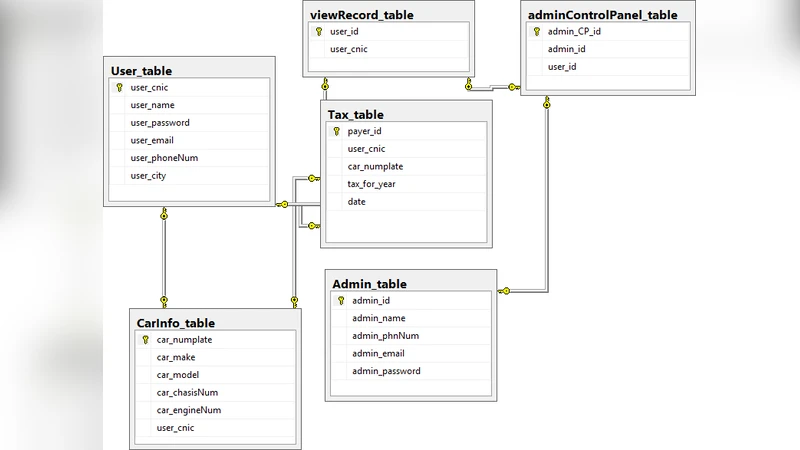
This Case Study will be used in order to investigate and establish the importance of role of Management Information System in time saving during the payment of automobile tax in Sindh through e-filling methods. Moreover it will also highlight the important factors which are involved as barriers and limit the role of MIS in time saving techniques. The approach which is used in this case study is descriptive research type along with the survey. The data used was collected from the specimen of common people working in different environments along with the officers working at Civic Centre (Automobile Tax Collection Branch excise department). The audience included were all well informed by the process and were eligible to give their opinions on the following research. A system design is also proposed along with an Erd which can be useful in the coming future. This research could likewise be expanded to include different of respondents, for example, paid taxpayers and different types of taxpayers. Paid tax payers are given the rights by their clients to prepare their assessment matters. They use the e-filing system for different types of clients and are more frequent users of the e-filing system than taxpayers who file for themselves. It would be interesting to understand which facets of hazard are larger to them. Different types of taxpayers, for example, company authorized cars may deal with more complex exchanges than single car taxpayers, consequently, they may emphasize different hazard facets when filing in the government form frame electronically
💡 Research Summary
The paper “Role of Management Information System in Time Saving: A Case Study of Automobile Tax System in Sindh” investigates how a Management Information System (MIS) can reduce the time required to pay automobile tax in the Pakistani province of Sindh by replacing the traditional, manual, in‑person payment process with an electronic filing (e‑filing) system. The authors adopt a descriptive research design complemented by a survey and direct field observations.
First, the authors contextualize the study within global trends of digitizing public services, noting that despite early adoption attempts in the United States, Canada, and Malaysia, e‑filing systems often remain under‑used due to low public awareness, perceived risk, and lack of trust. They argue that perceived usefulness (PU) and perceived ease of use (PEU) – core constructs of the Technology Acceptance Model – together with perceived risk, shape taxpayers’ willingness to adopt e‑filing.
The background section paints a bleak picture of tax compliance in Pakistan: only about 0.3 % of the population files income tax returns, corruption is pervasive, and automobile tax collection is hampered by bureaucratic delays and informal “bribes.” The authors estimate that roughly 57 million people are of working age, yet only a fraction actually pay any tax. This systemic inefficiency motivates the need for a streamlined, transparent solution.
To illustrate the inefficiencies of the current process, the researcher personally visited two payment points: a National Bank branch and the Civic Centre Excise Department. At the bank, the author experienced a 20‑minute transaction plus an additional 25‑minute wait for the officer to arrive, plus travel time, resulting in a total of 60‑75 minutes. At the Civic Centre, the author observed a queue that would have required at least 1.5 hours, but a local “agent” offered to complete the payment for an extra 300 rupees, highlighting the prevalence of informal service fees. These observations underscore the time‑consuming and corruption‑prone nature of the manual system.
The empirical component consists of a questionnaire distributed to 240 respondents (222 returned, 92.5 % response rate). The survey comprises three sections: demographic data, seven items measuring the impact of MIS on time‑saving, and three items probing barriers to MIS effectiveness. Data were coded and analyzed using SPSS. Results show strong support for e‑filing among respondents, with high scores on PU and PEU, while perceived risk (security, system glitches, data privacy) negatively influences adoption intention.
Based on the findings, the authors propose a web‑based e‑filing portal. The user interface includes login/registration, automatic tax calculation based on vehicle details, secure online payment, and e‑receipt generation. Security is addressed through firewalls, encryption, and multi‑layer network protection. A 24/7 live‑support chat staffed by excise department personnel is also planned. The admin panel, accessible only to authorized excise officials, allows management of user accounts, tax records, and system updates. An Entity‑Relationship Diagram (ERD) is presented, modeling entities such as Vehicle, User, Payment, and CardInfo, and illustrating their relationships to ensure data integrity and facilitate historical record retrieval.
The discussion identifies three primary barriers to MIS adoption in the current context: bureaucratic delays, corruption (informal payments), and lack of system trust. The proposed MIS mitigates these by eliminating physical travel, automating calculations, providing transparent transaction logs, and incorporating robust security measures. The authors argue that such a system would not only save time but also reduce administrative costs, improve revenue collection, and increase public trust.
In conclusion, the study demonstrates that MIS can play a pivotal role in time‑saving, cost reduction, and enhancing transparency in automobile tax collection. The authors recommend further research to compare different taxpayer categories (individuals, corporate‑owned vehicles, tax agents) and to conduct post‑implementation evaluations of user satisfaction, system performance, and actual cost‑benefit outcomes. The paper contributes both empirical evidence and a practical system design that can guide policymakers in Pakistan and other developing nations seeking to modernize tax administration.
Comments & Academic Discussion
Loading comments...
Leave a Comment