Microfluidic methods to form artificial cells and to study basic functions of membranes
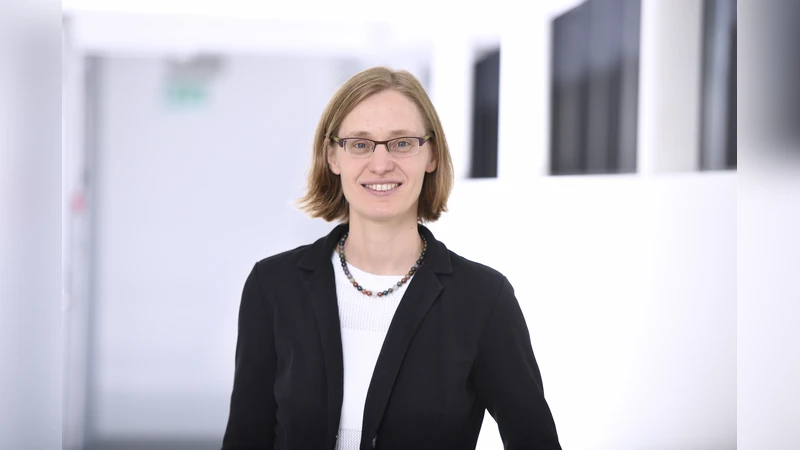
Petra S. Dittrich is associate professor for Bioanalytics at the Department of Biosystems Science and Engineering at ETH Z"urich. Here she describes the microfluidic devices that her lab develops to facilitate comprehensive studies on membranes with high resolution imaging techniques.
💡 Research Summary
The paper presents a comprehensive microfluidic platform developed in Petra S. Dittrich’s laboratory at ETH Zurich for the fabrication of giant unilamellar vesicles (GUVs) – often referred to as artificial cells – and for the systematic investigation of fundamental membrane functions. The authors describe the design, fabrication, and operation of a multi‑layer polydimethylsiloxane (PDMS) chip that integrates micro‑channels, embedded electrodes, and pressure‑driven pumps. By precisely controlling flow rates and pressure differentials, the device generates monodisperse water‑in‑oil droplets that encapsulate defined lipid mixtures. Subsequent solvent exchange within the same chip triggers self‑assembly of a lipid bilayer, producing GUVs with diameters ranging from 10 µm to 100 µm and with highly reproducible composition.
A key innovation is the seamless coupling of the microfluidic chip with high‑resolution imaging modalities, including confocal fluorescence microscopy, Raman spectroscopy, and atomic force microscopy (AFM). Integrated optical traps allow individual vesicles to be immobilized for prolonged observation, enabling real‑time monitoring of membrane dynamics such as lipid diffusion, phase separation, and morphological transformations under controlled stimuli (voltage, pH, temperature). The platform also incorporates an “electro‑pumping” scheme: brief voltage pulses create transient transmembrane potentials that drive the insertion of voltage‑gated ion channels, transporters, or other membrane proteins directly into the pre‑formed GUVs. This method preserves protein native conformation and activity, as confirmed by electrophysiological recordings (I‑V curves), fluorescence‑based ion flux assays, and single‑channel conductance measurements.
To quantify mechanical and chemical properties, the authors employ microfluidic pressure switches that apply calibrated stresses to vesicles, yielding stress‑strain curves from which bending rigidity and area compressibility are extracted. Fluorescence recovery after photobleaching (FRAP) experiments on labeled lipids provide diffusion coefficients, while the combination of optical tweezers and high‑speed imaging enables measurement of vesicle deformation kinetics. These quantitative metrics are benchmarked against theoretical membrane models (Helfrich, spectral analysis) and traditional bulk methods, demonstrating superior precision and reduced sample consumption (10‑100‑fold lower).
The paper outlines several application domains. In synthetic biology, the platform can encapsulate enzymatic cascades, DNA circuits, or minimal metabolic pathways within GUVs, facilitating studies of self‑replication, division, and protocell behavior. In drug delivery research, tailored lipid compositions are screened for fusogenic efficiency with target cell membranes, and release profiles of encapsulated therapeutics are evaluated through rapid microfluidic assays. For membrane protein science, the system offers a versatile testbed for structural‑functional analyses, allowing integration with cryo‑EM, molecular dynamics simulations, and high‑throughput mutagenesis screens.
Importantly, the authors emphasize the modular nature of the hardware and the availability of open‑source control software, which together lower the barrier for other laboratories to adopt the technology. Automated data pipelines perform real‑time image processing, statistical analysis, and cloud‑based storage, supporting large‑scale experiments involving thousands of vesicles. By dramatically improving reproducibility, reducing reagent usage, and enabling simultaneous multi‑parameter measurements, this microfluidic approach represents a significant advance over conventional batch‑wise vesicle preparation and analysis techniques. It opens new avenues for quantitative membrane biophysics, the engineering of artificial cells, and the development of next‑generation therapeutic delivery systems.
Comments & Academic Discussion
Loading comments...
Leave a Comment