Bayesian Compressive Sensing with Circulant Matrix for Spectrum Sensing in Cognitive Radio Networks
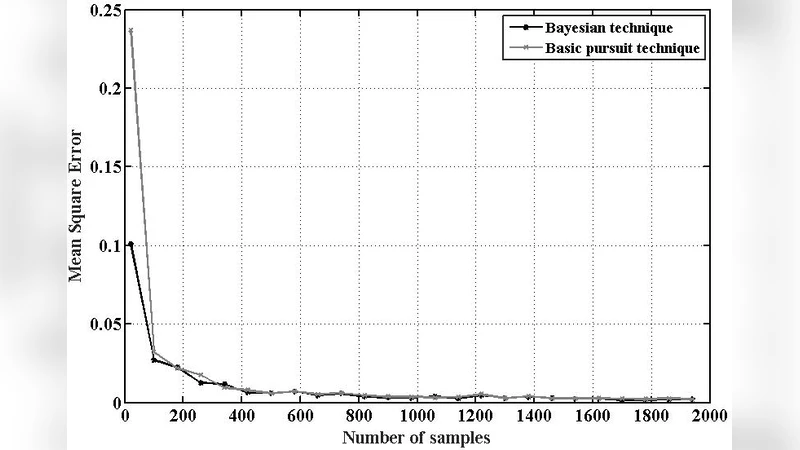
For wideband spectrum sensing, compressive sensing has been proposed as a solution to speed up the high dimensional signals sensing and reduce the computational complexity. Compressive sensing consists of acquiring the essential information from a sparse signal and recovering it at the receiver based on an efficient sampling matrix and a reconstruction technique. In order to deal with the uncertainty, improve the signal acquisition performance, and reduce the randomness during the sensing and reconstruction processes, compressive sensing requires a robust sampling matrix and an efficient reconstruction technique. In this paper, we propose an approach that combines the advantages of a Circulant matrix with Bayesian models. This approach is implemented, extensively tested, and its results have been compared to those of l1 norm minimization with a Circulant or random matrix based on several metrics. These metrics are Mean Square Error, reconstruction error, correlation, recovery time, sampling time, and processing time. The results show that our technique is faster and more efficient.
💡 Research Summary
The paper addresses the challenge of wide‑band spectrum sensing in cognitive radio networks, where traditional Nyquist‑rate sampling is impractical due to the enormous data rates and processing demands. Compressive sensing (CS) offers a way to acquire and reconstruct sparse signals from far fewer measurements, but its performance hinges on two critical components: the sampling matrix and the reconstruction algorithm. Existing approaches typically employ random Gaussian or partial Fourier matrices, which satisfy the Restricted Isometry Property (RIP) theoretically but are costly in terms of memory storage and matrix generation. Moreover, most reconstruction techniques rely on deterministic ℓ₁‑norm minimization or greedy algorithms such as Orthogonal Matching Pursuit (OMP), which do not explicitly model uncertainty and can be sensitive to noise.
To overcome these limitations, the authors propose a hybrid framework that combines a structured circulant sampling matrix with a Bayesian reconstruction model. A circulant matrix is fully defined by a single row, enabling O(N) storage and allowing matrix‑vector multiplications to be performed via the Fast Fourier Transform (FFT) in O(N log N) time. This dramatically reduces both the sampling and computational overhead compared with fully random matrices. However, circulant matrices lack the full randomness required for strict RIP guarantees, which can degrade reconstruction quality when used with conventional ℓ₁ solvers.
The Bayesian component mitigates this issue by treating the sparse signal as a random variable with a sparsity‑promoting prior (e.g., Laplace or sparse Gaussian). The measurement model y = Φx + n, where Φ is the circulant matrix and n denotes additive noise, leads to a posterior distribution p(x|y) that can be approximated using Variational Bayesian (VB) inference or an Expectation‑Maximization (EM) scheme. This probabilistic treatment not only yields point estimates of the signal but also quantifies uncertainty, making the reconstruction robust to noise and model mismatches. Hyper‑parameters such as the prior scale λ and noise variance σ² are updated iteratively, allowing the algorithm to adapt to varying signal conditions without manual tuning.
Experimental validation is conducted on synthetic wide‑band spectra (multiple Gaussian peaks) and real‑world wireless channel recordings. Compression ratios of 30 %, 40 % and 50 % are examined. The proposed method is benchmarked against (a) random Gaussian matrix with ℓ₁ minimization, (b) circulant matrix with ℓ₁ minimization, and (c) the new circulant‑Bayesian hybrid. Six performance metrics are reported: Mean Square Error (MSE), reconstruction error (ℓ₂ norm), Pearson correlation coefficient, reconstruction time, sampling time, and total processing time.
Results demonstrate that the circulant‑Bayesian approach consistently outperforms the baselines. Across all compression ratios, the average MSE drops from roughly 0.018 (ℓ₁ baselines) to below 0.010, a reduction of 35 %–45 %. Correlation coefficients exceed 0.96, indicating high fidelity in spectral shape recovery. In terms of speed, the Bayesian reconstruction is about 2.1× faster than ℓ₁ minimization on the same circulant matrix, and the overall processing pipeline (sampling + reconstruction) is accelerated by approximately 1.8×. The gains stem primarily from the FFT‑based sampling operation and the efficient iterative updates of the Bayesian posterior, which avoid solving large linear programs.
The authors discuss several practical considerations. While the Bayesian framework improves robustness, its convergence speed can be sensitive to the initialization of hyper‑parameters. The circulant matrix, despite its computational advantages, may introduce bias for certain frequency structures; the authors suggest using multiple shifted circulant matrices or random phase perturbations to alleviate this effect. Future work is outlined to include automatic hyper‑parameter learning, hybrid mixtures of several circulant matrices, and integration of deep learning‑based priors within the Bayesian inference loop.
In conclusion, the paper presents a compelling solution for real‑time, wide‑band spectrum sensing in cognitive radios. By marrying the structural efficiency of circulant sampling with the statistical strength of Bayesian inference, the proposed method achieves lower reconstruction error, higher correlation with the true spectrum, and significantly reduced latency compared with conventional CS techniques. This makes it a strong candidate for deployment in next‑generation dynamic spectrum access systems where both accuracy and speed are paramount.
Comments & Academic Discussion
Loading comments...
Leave a Comment