Mitigating Spreadsheet Risk in Complex Multi-Dimensional Models in Excel
Microsoft Excel is the most ubiquitous analytical tool ever built. Companies around the world leverage it for its power, flexibility and ease of use. However, spreadsheets are manually intensive and prone to error, making it difficult for companies to control spreadsheet risk. The following solution is designed to mitigate spreadsheet risk for a set of problems commonly addressed in a spreadsheet defined as “complex multi-dimensional models”. “Complex” referring to certain types of applications that require functionality such as sophisticated algorithms, challenging hierarchies and database write-back (i.e. planning, forecasting, etc.) and “multi-dimensional” referring to providing capabilities such as reporting, data input forms and ad hoc analysis on the different attributes associated with the resulting model. The solution is defined as a “PivotModel” because it works similarly to a PivotTable but is designed to leverage the robust capabilities of the Microsoft Excel platform.
💡 Research Summary
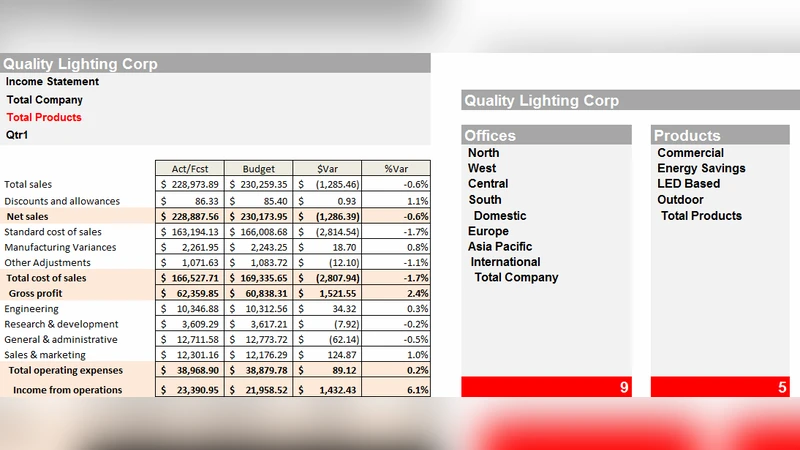
The paper addresses the pervasive problem of spreadsheet risk in complex, multi‑dimensional Excel models that are commonly used for planning, forecasting, and financial reporting. Such models are “complex” because they involve non‑symmetrical hierarchies, allocation algorithms, and manual data entry (e.g., budgets), and they are “multi‑dimensional” because they must slice and dice data across several axes—accounts, time, products, organizations, and scenarios. The authors illustrate the issue with a fictitious global lighting company whose profit‑and‑loss statement requires ragged roll‑ups and cost allocations that cannot be handled efficiently by standard PivotTables. When modeled with traditional worksheets, the combinatorial explosion of dimensions quickly leads to tens of thousands of cells; the authors cite research indicating that up to 90 % of spreadsheets contain errors, with potentially catastrophic financial consequences.
Current mitigation techniques—range names, array formulas, lookup functions, and post‑hoc auditing tools—still rely heavily on manual cell‑level work and therefore do not eliminate the root cause of human error. The paper proposes a novel solution called “PivotModel,” a metadata‑driven, MOLAP‑style engine built entirely within the Excel environment. PivotModel consists of four logical stages:
-
Model Structure Definition – The user defines dimensions (Accounts, Time, Product, Organization, Scenario), their members, and hierarchical relationships. In the example, 14 × 5 × 5 × 9 × 4 = 12,600 cells are generated, encompassing both data and calculations.
-
Rule Logic Creation – Business logic is captured as “rules” rather than cell formulas. Each rule uses native Excel functions (VLOOKUP, SUM, etc.) but is parameterised by dimension members, allowing a single rule to be applied across all relevant cell combinations. The system also lets the user specify rule precedence, preventing contradictory calculations (e.g., double‑counting year‑over‑year variance).
-
Data Loading – Actual and budget data can be imported from disparate sources (ERP extracts, CSV files, etc.) without consolidating them into a single flat table. The model matches incoming rows to dimension keys, eliminating the need for complex SQL joins.
-
Views and Input Forms – Once the model is built, users can create custom views and interactive input forms directly in Excel. The solution supports write‑back, enabling planners to enter forecasts or budget adjustments that are instantly persisted in the underlying model.
Technically, PivotModel pre‑computes the multi‑dimensional cube (MOLAP) for fast query performance, while still allowing the flexibility of Excel’s calculation engine. This hybrid approach overcomes the limitations of pure ROLAP tools (e.g., Tableau) that must query relational stores on the fly, and it extends the capabilities of native PivotTables and Power Pivot by providing a top‑down, rule‑centric design rather than a bottom‑up data‑aggregation approach.
The authors argue that by moving the definition of calculations from individual cells to reusable, auditable rules, the solution dramatically reduces the opportunity for copy‑paste errors, incorrect references, and inconsistent precedence handling. Moreover, because the entire model resides within an Excel workbook, existing user skills are leveraged, and regulatory audit trails can be generated from the rule metadata.
In summary, PivotModel offers a comprehensive framework for building, maintaining, and using complex multi‑dimensional Excel models with far lower risk of human error. It combines the familiarity of Excel with the performance and governance benefits of a MOLAP engine, providing a practical path for organizations to retain Excel as a strategic analytical platform while meeting stringent risk‑management and compliance requirements.
Comments & Academic Discussion
Loading comments...
Leave a Comment