Best Practices for a Future Open Code Policy: Experiences and Vision of the Astrophysics Source Code Library
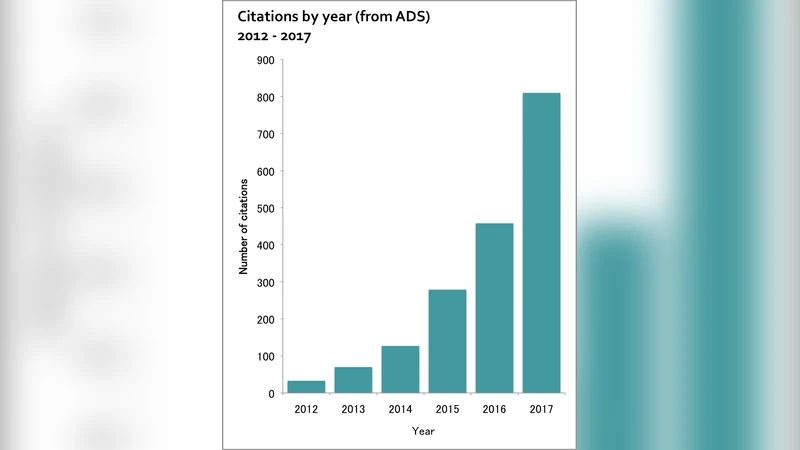
We are members of the Astrophysics Source Code Library’s Advisory Committee and its editor-in-chief. The Astrophysics Source Code Library (ASCL, ascl.net) is a successful initiative that advocates for open research software and provides an infrastructure for registering, discovering, sharing, and citing this software. Started in 1999, the ASCL has been expanding in recent years, with an average of over 200 codes added each year, and now houses over 1,600 code entries.
💡 Research Summary
The paper presents a comprehensive account of the Astrophysics Source Code Library (ASCL), an open‑source software registry that has grown from a modest list in 1999 to a robust, citation‑enabled platform hosting over 1,600 astrophysics codes, with more than 200 new entries added each year. Drawing on the authors’ roles as members of the ASCL Advisory Committee and as its editor‑in‑chief, the manuscript outlines both the practical experience accumulated over nearly three decades and a forward‑looking vision for an open‑code policy that can be adopted by research institutions, journals, and funding agencies.
The authors begin by contextualizing the need for open‑code policies: modern astrophysical research increasingly depends on complex software, yet the community still struggles with fragmented sharing practices, insufficient metadata, and limited recognition for code authors. ASCL’s mission—to register, preserve, discover, and cite research software—directly addresses these gaps.
The core of the paper details the end‑to‑end workflow for code submission. Contributors are required to supply a minimal yet sufficient set of metadata (title, authors, version, license, URL, and a brief description). This information is transformed into a structured JSON schema that aligns partially with the CodeMeta standard, enabling interoperability with other registries. License selection is guided by an automated SPDX recommendation engine that flags potential incompatibilities. Once submitted, the code’s repository (typically on GitHub or GitLab) is linked, and ASCL periodically snapshots the repository to guarantee long‑term preservation.
Citation is treated as a first‑class citizen. Each entry receives a persistent ASCL identifier and a Crossref DOI, allowing the code to appear in the reference list of any scholarly article. The DOI is harvested by Crossref, Scopus, Web of Science, and other citation databases, ensuring that code citations are counted alongside traditional publications. ASCL also integrates with Altmetric, capturing mentions in blogs, news outlets, and social media, thereby providing a richer picture of impact.
Sustainability is addressed through both technical and financial strategies. Technically, the platform has migrated to a container‑orchestrated micro‑service architecture running on Kubernetes, with multi‑region database replication and automated backup pipelines that protect against data loss. Financially, the authors advocate for a diversified funding model: institutional support from universities and research labs, earmarked grants from national science foundations, and direct contributions from open‑science funding programs. This multi‑pronged approach reduces reliance on any single source and enhances long‑term viability.
Community engagement is another pillar of the proposed policy. ASCL runs regular workshops, webinars, and tutorial series that teach best practices for metadata creation, license selection, and sustainable code maintenance. The library has forged partnerships with major astrophysics journals, encouraging—or in some cases mandating—code registration as part of the manuscript submission process. By embedding code review into the peer‑review workflow, journals can improve reproducibility while giving code authors formal recognition.
Looking ahead, the authors outline an ambitious roadmap. They plan to develop AI‑driven code search capabilities that accept natural‑language queries and return ranked code candidates, as well as automated summarization tools that generate concise documentation from source files. Interoperability with other discipline‑specific registries (e.g., for physics, chemistry, and biology) is also on the agenda, creating a meta‑registry that would allow researchers to discover relevant software across fields.
In conclusion, the ASCL experience provides a concrete blueprint for an effective open‑code policy. Key take‑aways include: (1) enforceable metadata standards linked to community‑accepted schemas; (2) DOI‑based citation mechanisms that integrate with existing scholarly infrastructure; (3) resilient, containerized infrastructure coupled with diversified funding streams; and (4) active community education and incentive structures. When adopted collectively, these elements can transform research software from an ancillary by‑product into a first‑class research output, enhancing transparency, reproducibility, and the overall impact of scientific discovery.
Comments & Academic Discussion
Loading comments...
Leave a Comment