Noise Cancellation in Cognitive Radio Systems: A Performance Comparison of Evolutionary Algorithms
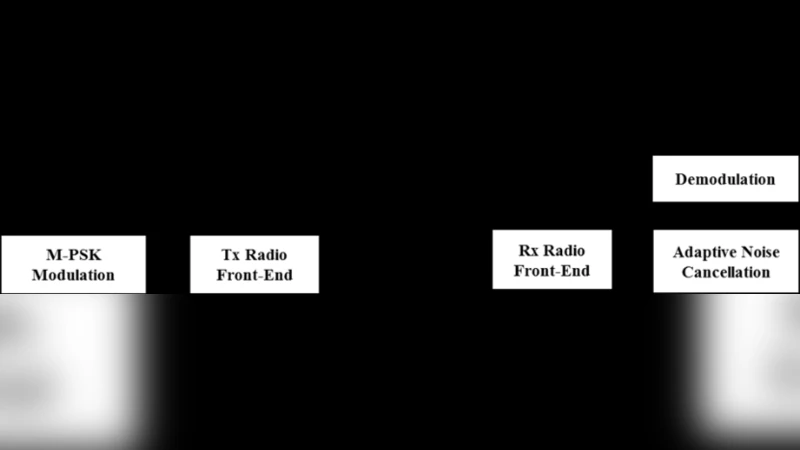
Noise cancellation is one of the important signal processing functions of any communication system, as noise affects data integrity. In existing systems, traditional filters are used to cancel the noise from the received signals. These filters use fixed hardware which is capable of filtering specific frequency or a range of frequencies. However, next generation communication technologies, such as cognitive radio, will require the use of adaptive filters that can dynamically reconfigure their filtering parameters for any frequency. To this end, a few noise cancellation techniques have been proposed, including least mean squares (LMS) and its variants. However, these algorithms are susceptible to non-linear noise and fail to locate the global optimum solution for de-noising. In this paper, we investigate the efficiency of two global search optimization based algorithms, genetic algorithm and particle swarm optimization in performing noise cancellation in cognitive radio systems. These algorithms are implemented and their performances are compared to that of LMS using bit error rate and mean square error as performance evaluation metrics. Simulations are performed with additive white Gaussian noise and random nonlinear noise. Results indicate that GA and PSO perform better than LMS for the case of AWGN corrupted signal but for non-linear random noise PSO outperforms the other two algorithms.
💡 Research Summary
The paper addresses the need for adaptive noise‑cancellation techniques in cognitive radio (CR) systems, where conventional fixed‑hardware filters are inadequate for the highly dynamic spectrum environment. While the Least‑Mean‑Squares (LMS) algorithm and its variants have been the de‑facto standard for adaptive filtering, they are fundamentally linear optimizers and can become trapped in local minima when faced with nonlinear or multi‑modal interference. To overcome these limitations, the authors evaluate two global‑search meta‑heuristics—Genetic Algorithm (GA) and Particle Swarm Optimization (PSO)—as alternatives for real‑time de‑noising in CR receivers.
A simulation framework is built around a QPSK‑modulated transmitter. The received signal is corrupted by either additive white Gaussian noise (AWGN) or a synthetic nonlinear random noise generated by applying a square‑root nonlinearity followed by random perturbations. The three algorithms (LMS, GA, PSO) are tasked with estimating the clean signal, and performance is quantified using Bit Error Rate (BER) and Mean Square Error (MSE). For fairness, each method is run over thousands of independent Monte‑Carlo trials and the averages are reported.
Implementation details are as follows: LMS uses a fixed step size μ = 0.01; GA employs a population of 50 chromosomes, crossover probability 0.8, mutation probability 0.05, and a maximum of 200 generations; PSO uses 30 particles, inertia weight 0.7, and cognitive/social coefficients of 1.5 each. Computational load is also measured in terms of execution time and floating‑point operations (FLOPs).
Results reveal three key findings. First, in the purely linear AWGN scenario, both GA and PSO achieve lower BER and MSE than LMS, confirming that global‑search methods can locate superior filter coefficients even when the problem is convex. GA converges more slowly but ultimately reaches the lowest error floor, whereas PSO converges faster with slightly higher residual error. Second, under nonlinear random noise, PSO outperforms both GA and LMS, demonstrating its ability to adapt quickly to complex error surfaces through collective particle dynamics. LMS, constrained by its linear update rule, suffers a dramatic performance drop. Third, the computational cost hierarchy is LMS < PSO < GA; LMS is orders of magnitude lighter, while GA requires roughly ten times the FLOPs of LMS and PSO about six times. The authors argue that modern DSPs or FPGA‑based accelerators can mitigate this overhead, making GA and PSO viable for real‑time CR applications.
The discussion emphasizes that algorithm selection for CR noise cancellation must balance noise characteristics (linear vs. nonlinear), performance requirements (BER/MSE targets), and hardware constraints (processing power, latency, energy consumption). In environments dominated by nonlinear interference, PSO‑based adaptive filters emerge as the most practical solution. The paper concludes by suggesting future work on hybrid schemes (e.g., GA‑PSO combinations), hardware prototyping, and extension to multi‑antenna (MIMO) cognitive radio scenarios.
Comments & Academic Discussion
Loading comments...
Leave a Comment