Determination of Critical Success Factors Affecting Mobile Learning: A Meta-Analysis Approach
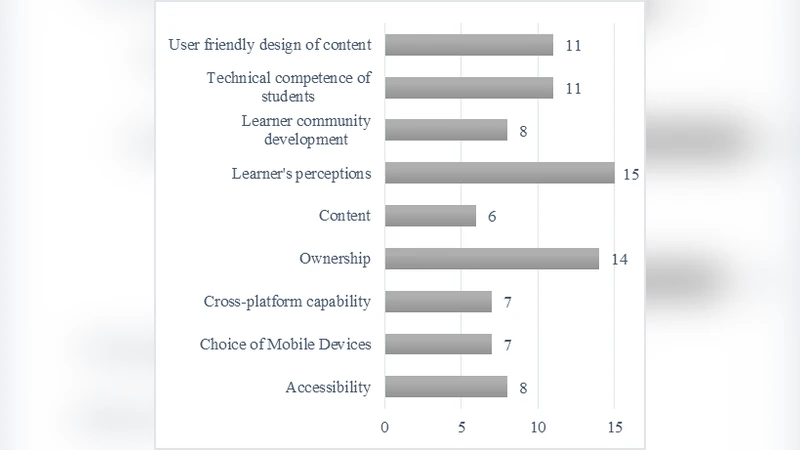
With rapid technological advancements, mobile learning (m-Learning) offers incredible opportunities, especially in the area of higher education. However, while interest in this area has been significant and several pilot studies have been conducted within universities, relatively less is known about how higher educational institutions can make efficient use of the m-Learning platform to support teaching and learning. Although there are numerous studies in the area, the lack of this insight is mostly due to the fact that very little effort has been made to collate these studies and determine a common set of key success factors that affect the acceptance of m-Learning within universities. This study conducts a systematic analysis of several studies conducted in the area of m-Learning to assess the critical success factors, by making use of the meta-analysis technique. Our investigation has shown that the most important perceived advantages of m-Learning, from learner perspectives, are collaboration during studies, the prospect of ubiquitous learning in space and time, and user friendly application design.
💡 Research Summary
The paper “Determination of Critical Success Factors Affecting Mobile Learning: A Meta‑Analysis Approach” addresses the paradox that, despite the near‑ubiquitous penetration of mobile devices worldwide, higher‑education institutions have been slow to adopt mobile learning (m‑Learning) on a large scale. The authors argue that this lag is not due to a lack of technology but to an insufficient understanding of the factors that make m‑Learning successful in university contexts. To fill this gap, they conduct a systematic meta‑analysis of empirical studies that quantitatively examined critical success factors (CSFs) for m‑Learning in higher education.
Scope and Selection Criteria
The meta‑analysis includes only peer‑reviewed quantitative studies published from 2007 onward (the cut‑off year chosen because mobile penetration dramatically increased after this point). Studies must (1) focus on higher‑education settings, (2) report statistical analysis of CSFs, and (3) describe the analytical method clearly. Using these criteria, the authors identified 19 eligible studies, each assigned a Roman numeral for reference.
Methodology
Each study’s reported CSFs were coded as binary variables (present/absent). Effect sizes were derived from reported regression coefficients, standardized path coefficients, or other comparable statistics. Heterogeneity was assessed with Q‑statistics and I², indicating moderate variability across studies; therefore a random‑effects model was applied to compute pooled effect sizes for each factor.
Key Findings
Three factors emerged as the most influential:
-
Collaboration – The ability of learners to interact, share resources, and co‑construct knowledge via mobile devices received the highest pooled effect size. This aligns with the notion that real‑time communication tools (messaging, group chats, shared whiteboards) transform learning from a solitary activity into a socially mediated process.
-
Ubiquitous Learning (anytime/anywhere access) – The flexibility to study regardless of time or location was the second‑strongest factor. It supports self‑directed learning, just‑in‑time information retrieval, and inclusion of remote students, thereby expanding the reach of university courses.
3 User‑Friendly Application Design – Intuitive interfaces, clear navigation, and minimal cognitive load were the third most significant factor. When the mobile learning environment is easy to use, learners experience higher satisfaction and are more likely to persist with the technology.
Secondary factors such as content quality, instructor support, and institutional policy showed modest effects but lacked statistical significance across the pooled sample.
Discussion of Prior Literature
The authors review earlier attempts to identify CSFs, noting that many studies focused narrowly on technical capabilities (e.g., device availability, network connectivity) or on a single overarching factor (e.g., pedagogical integration). UNESCO’s broader framework (affordability, leadership, content, etc.) is acknowledged but critiqued for being too generic for the higher‑education context. The present meta‑analysis therefore contributes a more focused, evidence‑based hierarchy of factors specific to universities.
Limitations
- Geographic Concentration – The majority of included studies originate from Asia and the Middle East, limiting the global generalizability of the results.
- Cross‑Sectional Designs – Most primary studies are short‑term surveys or experiments, preventing conclusions about long‑term learning outcomes or sustainability.
- Binary Coding of Factors – Reducing nuanced qualitative findings to presence/absence may overlook the intensity or quality of each factor.
- Potential Publication Bias – Although not formally tested, the reliance on published quantitative work may skew results toward positive findings.
Practical Implications
University administrators and policymakers are urged to prioritize: (a) building collaborative platforms (e.g., group messaging, shared digital workspaces), (b) investing in robust campus‑wide wireless infrastructure to guarantee ubiquitous access, and (c) commissioning or adopting mobile applications that follow user‑centered design principles. Faculty development programs should include training on designing collaborative mobile activities and evaluating user experience.
Future Research Directions
The authors recommend employing multivariate structural equation modeling to explore interactions among CSFs, conducting longitudinal studies to assess retention and impact on academic performance, and expanding the meta‑analysis to include more diverse geographic contexts. Additionally, qualitative meta‑synthesis could complement the quantitative approach to capture contextual subtleties.
In sum, the paper provides a rigorously derived, prioritized set of success factors for mobile learning in higher education, highlighting collaboration, ubiquitous access, and user‑friendly design as the pillars upon which effective m‑Learning initiatives should be built.
Comments & Academic Discussion
Loading comments...
Leave a Comment