Social Media Attention Increases Article Visits: An Investigation on Article-Level Referral Data of PeerJ
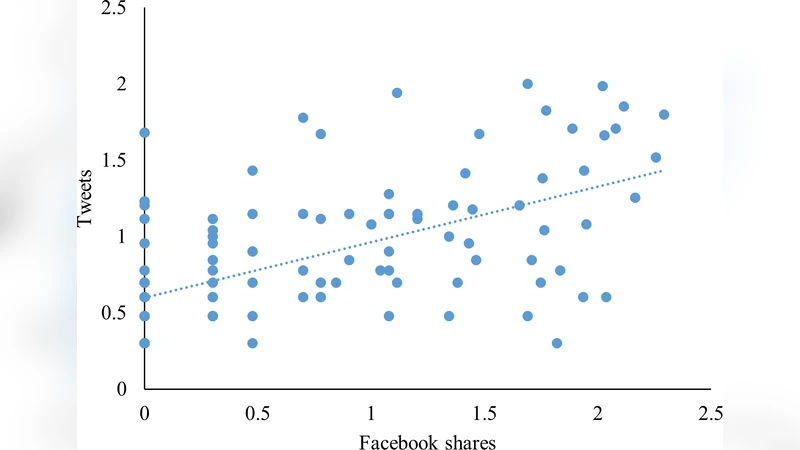
In order to better understand the effect of social media in the dissemination of scholarly articles, employing the daily updated referral data of 110 PeerJ articles collected over a period of 345 days, we analyze the relationship between social media attention and article visitors directed by social media. Our results show that social media presence of PeerJ articles is high. About 68.18% of the papers receive at least one tweet from Twitter accounts other than @PeerJ, the official account of the journal. Social media attention increases the dissemination of scholarly articles. Altmetrics could not only act as the complement of traditional citation measures but also play an important role in increasing the article downloads and promoting the impacts of scholarly articles. There also exists a significant correlation among the online attention from different social media platforms. Articles with more Facebook shares tend to get more tweets. The temporal trends show that social attention comes immediately following publication but does not last long, so do the social media directed article views.
💡 Research Summary
This study investigates how social‑media attention translates into actual article visits by analysing daily referral data from PeerJ for 110 open‑access articles over a 345‑day period. The authors collected three data streams: (1) article‑level referral logs from PeerJ (including source of each visitor), (2) altmetric counts (tweets and Facebook shares) from Plum Analytics (now integrated into Scopus), and (3) basic bibliographic metadata. The sample comprises articles published between 21 January and 18 February 2016, representing about 6.5 % of all PeerJ papers at that time but covering the journal’s full subject range.
Descriptive statistics reveal that every article received at least two tweets; after excluding the journal’s own @PeerJ account, 68.18 % of papers still obtained at least one external tweet. The median total tweets per article is six, and the median number of Twitter‑directed visitors is 11.5. The most shared article on Facebook (196 shares) and the most tweeted article (100 tweets) both belong to health‑related or environmental topics, indicating that socially relevant subjects attract higher social‑media activity.
To assess the relationship between social‑media mentions and article usage, the authors log‑transformed the skewed count data, verified normality with the Shapiro‑Wilk test, and applied Spearman’s rank correlation (appropriate for ordinal or non‑normally distributed data). A strong positive correlation emerged between total article visits and visits originating from social referrals (r = 0.785, p < 0.001). When examined separately, Twitter‑directed visits correlated with tweet counts (r = 0.869, p < 0.001) and Facebook‑directed visits correlated with share counts (r = 0.854, p < 0.001). Moreover, tweet volume and Facebook‑share volume were themselves positively correlated (r = 0.594, p < 0.001), suggesting that articles popular on one platform tend to be popular on the other.
Temporal analysis shows that the vast majority of social‑media activity occurs immediately after publication. Within the first seven days, articles received 95.27 % of all tweets and 72.30 % of Twitter‑directed visitors. One‑way ANOVA confirmed that both tweet counts and Twitter‑directed visitor counts differ significantly between the first week and the period thereafter (p < 0.05). This pattern mirrors earlier findings that social‑media attention is short‑lived: an early surge followed by rapid decay.
The authors conclude that social‑media exposure substantially boosts article visibility, especially in the first week after release, and that Twitter and Facebook act as complementary channels. However, the effect diminishes quickly, implying that sustained impact requires ongoing promotion or community engagement. The study also demonstrates the value of article‑level referral data for altmetrics research, offering a methodological template that can be extended to other journals and platforms to deepen our understanding of how digital communication shapes scholarly impact.
Comments & Academic Discussion
Loading comments...
Leave a Comment