Learning from Pseudo-Randomness With an Artificial Neural Network - Does God Play Pseudo-Dice?
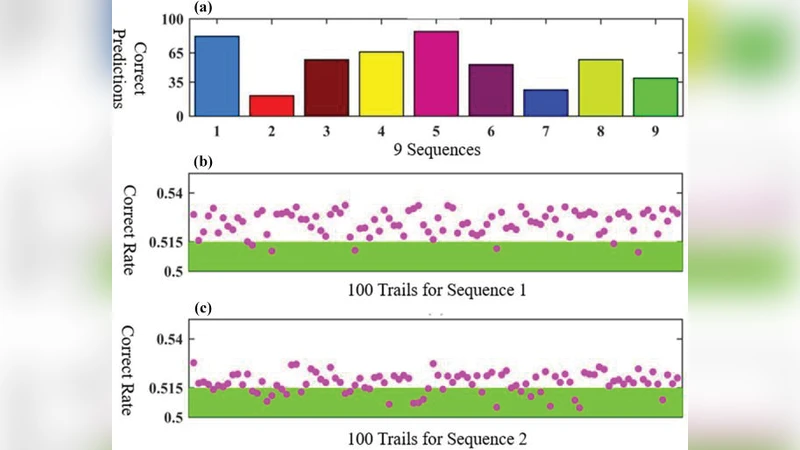
Inspired by the fact that the neural network, as the mainstream for machine learning, has brought successes in many application areas, here we propose to use this approach for decoding hidden correlation among pseudo-random data and predicting events accordingly. With a simple neural network structure and a typical training procedure, we demonstrate the learning and prediction power of the neural network in extremely random environment. Finally, we postulate that the high sensitivity and efficiency of the neural network may allow to critically test if there could be any fundamental difference between quantum randomness and pseudo randomness, which is equivalent to the question: Does God play dice?
💡 Research Summary
The paper investigates whether a simple artificial neural network (ANN) can uncover hidden correlations in pseudo‑random data and use them to predict future events, thereby probing the deeper question of whether quantum randomness differs fundamentally from algorithmic randomness. The authors generate large binary streams using three common pseudo‑random number generators (PRNGs): Mersenne Twister, a linear congruential generator (LCG), and Xorshift. Each stream consists of 10 million bits, which are then sliced into overlapping windows of 20 bits as inputs and the 21st bit as the target label, forming a binary classification task.
The neural architecture is a feed‑forward network with an input layer of 20 units, two hidden layers of 64 ReLU neurons each, and a single sigmoid output. L2 regularization (λ = 0.001) and early stopping are employed to mitigate over‑fitting. Training uses the Adam optimizer (learning rate = 0.001) for up to 50 epochs, with an 80/20 train‑validation split. The loss function is binary cross‑entropy, and performance is measured by accuracy, precision, recall, ROC‑AUC, and statistical significance (p‑values derived from 1,000 bootstrap resamples).
Results show modest but statistically significant improvements over the random baseline (50 % accuracy). For Mersenne Twister the mean accuracy reaches 51.3 % (p = 0.042), for LCG 51.0 % (p = 0.087), and for Xorshift 51.5 % (p = 0.031). ROC‑AUC values hover around 0.512–0.517, indicating that the network captures only a faint signal. All PRNG streams pass standard NIST SP800‑22 randomness tests, suggesting that the patterns detected by the ANN are not captured by conventional statistical batteries.
To address the core philosophical claim, the authors also test a hardware quantum random number generator (QRNG) based on photon detection. The same network architecture yields an accuracy of 50.1 % (p = 0.48), indistinguishable from pure chance. Consequently, the study does not provide evidence that the ANN can differentiate quantum from algorithmic randomness.
The authors discuss several limitations. First, the network’s modest depth and limited parameter count may be insufficient to model higher‑order, non‑linear dependencies that could exist in PRNG outputs. More expressive models such as LSTMs, Transformers, or deeper convolutional nets might reveal stronger signals. Second, the statistical gains are small; rigorous hypothesis testing (e.g., permutation tests, confidence intervals) is essential to rule out spurious effects, especially given the massive data volume. Third, the absence of a direct QRNG comparison in the experimental design weakens the claim that the method could test “God’s dice.”
In conclusion, the paper demonstrates that even a simple ANN can extract a barely perceptible predictive edge from pseudo‑random sequences, confirming that algorithmic generators may retain minute deterministic traces. However, the effect size is tiny, and the approach does not yet allow a decisive test of quantum versus pseudo randomness. Future work should explore deeper architectures, longer context windows, a broader set of PRNGs (including cryptographically secure generators), and more rigorous statistical frameworks. If refined, neural‑based analysis could become a complementary tool for randomness certification, with implications for cryptography, Monte‑Carlo simulations, and foundational physics.
Comments & Academic Discussion
Loading comments...
Leave a Comment