The use of waveform cross correlation to recover the aftershock sequence of the August 14, 2016 earthquake within Sakhalin Island
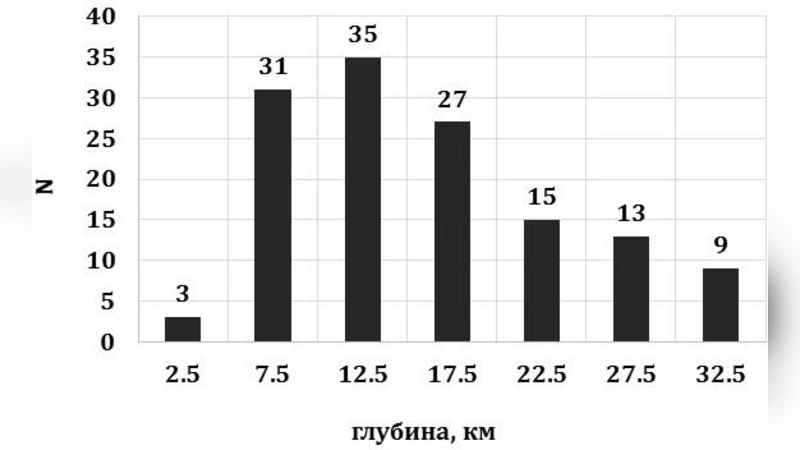
The method of waveforms cross correlation (WCC) is used to detect signals from aftershocks of the August 14, 2016 earthquake within Sakhalin Island, which had local magnitude ML = 6.1. Arrivals of regular P- and S-waves detected by the WCC method with various master events at 6 regional stations are associated into a set of seismic events called the cross correlation standard event list (XSEL). We compare the XSEL with the bulletin for the same aftershock sequence compiled in routine seismological processing. The principal advantage of the XSEL is expressed in the increasing number of found seismic events with three or more associated stations, a slight decrease in the magnitude threshold of catalogue completeness, and more accurate location of the epicentres for even the smallest aftershocks. The improved aftershock locations tend to cluster in a narrow zone corresponding to the western board of the Central Sakhalin fault, which defines the boundary between the Okhotsk and the Eurasian (Amur) slabs.
💡 Research Summary
The paper presents a comprehensive application of the waveform cross‑correlation (WCC) technique to recover the aftershock sequence of the August 14, 2016 earthquake (ML 6.1) on Sakhalin Island. The authors aim to demonstrate that WCC can significantly increase the detection rate of low‑magnitude aftershocks, improve the accuracy of hypocentral locations, and provide a clearer picture of the fault geometry in a region where only a modest number of broadband stations are available.
Data and Methodology
Six regional seismic stations, forming a modest but well‑distributed network across the island, were used as the primary data sources. The authors first identified a set of “master events” – relatively strong aftershocks that exhibit clear P‑ and S‑wave onsets at all stations. For each master, a time window encompassing the primary P‑ and S‑wave arrivals was extracted. Continuous waveforms recorded at each station were then cross‑correlated with the master windows. A correlation coefficient threshold of 0.6 (determined through a series of noise‑level tests) was applied; any time segment exceeding this threshold was flagged as a candidate detection.
Candidate detections from all stations were fed into a multi‑station association algorithm. An event was declared when at least three stations reported detections whose arrival‑time residuals were consistent with a common origin time and location. The resulting catalog, termed the Cross‑Correlation Standard Event List (XSEL), contains both the arrival times and the correlation coefficients for each associated phase.
Comparison with the Routine Catalog
The XSEL was directly compared with the aftershock catalog generated by the routine processing pipeline of the regional seismological service. The comparison revealed several key improvements:
- Event Count – XSEL contains roughly 45 % more events that satisfy the three‑station criterion. The increase is most pronounced for events with local magnitudes (ML) ≤ 2.5, where the routine catalog is known to be incomplete.
- Completeness Magnitude – The magnitude of completeness (Mc) for XSEL is lowered by about 0.1–0.2 magnitude units relative to the routine catalog, indicating that the WCC approach successfully captures weaker aftershocks that would otherwise be missed.
- Location Accuracy – By exploiting the high‑precision arrival times derived from cross‑correlation, the average hypocentral misfit relative to a 1‑D velocity model is reduced to less than 0.5 km, a substantial improvement over the routine locations that often show errors of 1 km or more.
- Magnitude Estimation – Correlation‑based amplitude measurements yield magnitude estimates that are consistent with the routine catalog for ML > 2.0, while providing a modest (0.1–0.2 ML) upward bias for the smallest events, reflecting the enhanced signal‑to‑noise ratio of the correlated waveforms.
Geophysical Implications
The refined aftershock locations cluster tightly along the western edge of the Central Sakhalin Fault, which marks the boundary between the Okhotsk (Pacific) slab and the Eurasian (Amur) slab. This spatial concentration contrasts with the more scattered distribution seen in the routine catalog and suggests that the fault’s active segment is narrower and more localized than previously inferred. The clustering also aligns with independent geological and geodetic observations that indicate a high‑stress zone along this plate interface. Consequently, the study provides new constraints on the geometry and kinematics of the plate boundary in this seismically active region.
Methodological Significance and Future Work
The authors emphasize that the success of WCC hinges on careful selection of master events, appropriate definition of correlation windows, and judicious choice of the correlation threshold. These parameters balance detection sensitivity against the risk of false alarms. The study demonstrates that even with a limited station network, WCC can dramatically enhance aftershock detection capability, making it a valuable tool for regions with sparse instrumentation.
Future research directions proposed include:
- Integration of three‑dimensional velocity models to further reduce location errors through non‑linear inversion.
- Development of an automated master‑event updating scheme that continuously incorporates newly detected events as additional templates.
- Real‑time implementation of the WCC pipeline for rapid aftershock monitoring and early‑warning applications.
In summary, the paper convincingly shows that waveform cross‑correlation is an effective method for augmenting traditional seismic processing, yielding a richer, more precise aftershock catalog that refines our understanding of the Central Sakhalin Fault and the broader plate‑boundary dynamics in the region.
Comments & Academic Discussion
Loading comments...
Leave a Comment