Towards the 1G of Mobile Power Network: RF, Signal and System Designs to Make Smart Objects Autonomous
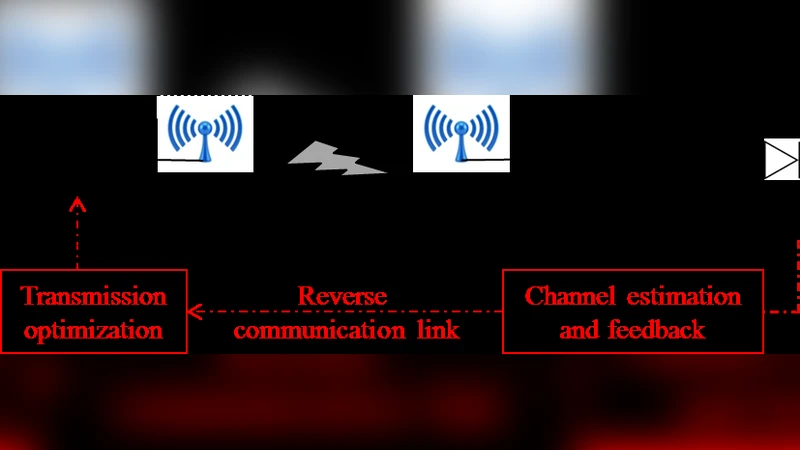
This article reviews some recent promising approaches to make mobile power closer to reality. In contrast with articles commonly published by the microwave community and the communication/signal processing community that separately emphasize RF, circuit and antenna solutions for WPT on one hand and communications, signal and system designs for WPT on the other hand, this review article uniquely bridges RF, signal and system designs in order to bring those communities closer to each other and get a better understanding of the fundamental building blocks of an efficient WPT network architecture. We start by reviewing the engineering requirements and design challenges of making mobile power a reality. We then review the state-of-the-art in a wide range of areas spanning sensors and devices, RF design for wireless power and wireless communications. We identify their limitations and make critical observations before providing some fresh new look and promising avenues on signal and system designs for WPT.
💡 Research Summary
The paper provides a comprehensive review of recent advances that bring wireless power transfer (WPT) closer to practical deployment in mobile environments, positioning the emerging “1 G Mobile Power Network” as a counterpart to the first generation of mobile communications. Unlike most prior surveys that treat RF hardware and signal‑processing aspects in isolation, this article deliberately intertwines the three pillars—RF design, signal design, and system architecture—to expose the interdependencies that dictate overall network efficiency and feasibility.
The authors begin by outlining the engineering imperatives for mobile power: high end‑to‑end conversion efficiency, sufficient transfer distance, compliance with safety regulations (specific absorption rate limits), and seamless coexistence with existing communication spectra. They argue that meeting these goals requires a holistic approach that simultaneously optimizes antenna/rectifier hardware, waveform characteristics, and network‑level protocols.
The review then surveys the state of the art across several domains. At the device level, ultra‑low‑power IoT sensors and wearables are highlighted as the primary beneficiaries of WPT, with emphasis on the need for compact rectennas, energy‑storage elements, and adaptive power‑management circuits capable of operating on harvested microwatts to milliwatts. In the RF domain, the paper examines impedance‑matched rectenna designs, broadband and multi‑band antenna arrays, and high‑gain beamforming structures. The authors discuss how non‑linear diode behavior, voltage‑boosting topologies, and metamaterial‑based antennas can push rectification efficiencies beyond 70 % under ideal conditions, while also addressing SAR constraints that limit transmit power.
On the communication side, the authors compare pure power‑only transmission with simultaneous wireless information and power transfer (SWIPT) schemes. They detail OFDM‑based carriers, power‑centric multi‑tone waveforms, and adaptive spectral allocation strategies that exploit the rectifier’s frequency‑selective response. Channel modeling is treated in depth, covering large‑scale path loss, multipath fading, and the impact of human bodies on propagation. Accurate channel state information (CSI) is shown to be essential for dynamic beam steering and for minimizing inter‑user interference in multi‑device scenarios.
Signal‑processing innovations receive particular attention. The paper reviews waveform optimization techniques—such as multisine designs, high‑peak‑to‑average‑power‑ratio (PAPR) reduction, and non‑linear optimization of the transmitted signal—to maximize the harvested DC power. It also discusses multi‑user scheduling algorithms that balance power fairness with data‑rate requirements, and presents machine‑learning‑driven CSI prediction methods that enable real‑time beam adaptation without excessive feedback overhead.
System‑level considerations are addressed through two contrasting network architectures. In the integrated architecture, power beacons are co‑located with base stations, sharing back‑haul and control planes, which simplifies coordination but raises interference management challenges. In the separated architecture, dedicated power‑transfer nodes operate on exclusive frequency bands, allowing higher transmit powers at the cost of additional infrastructure. The authors propose a hierarchical control framework that orchestrates power‑transfer scheduling, energy‑storage management, and QoS provisioning across these layers.
Finally, the review identifies current bottlenecks—limited end‑to‑end efficiency (typically below 30 %), stringent SAR limits, and the high cost of dense power‑beacon deployments—and outlines promising research directions. These include exploiting terahertz frequencies for ultra‑compact high‑gain antennas, developing next‑generation low‑loss rectifier materials (e.g., graphene‑based diodes), applying non‑convex optimization and reinforcement learning for joint waveform‑beamforming design, and investigating cooperative energy‑sharing among multiple beacons to extend coverage.
In summary, the article convincingly argues that only by tightly coupling RF hardware innovations with advanced signal‑processing algorithms and robust system‑level protocols can a truly mobile, scalable, and safe wireless power network be realized, heralding the advent of a “1 G Mobile Power Network” that will empower the next wave of autonomous smart objects.
Comments & Academic Discussion
Loading comments...
Leave a Comment