A MapReduce-based rotation forest classifier for epileptic seizure prediction
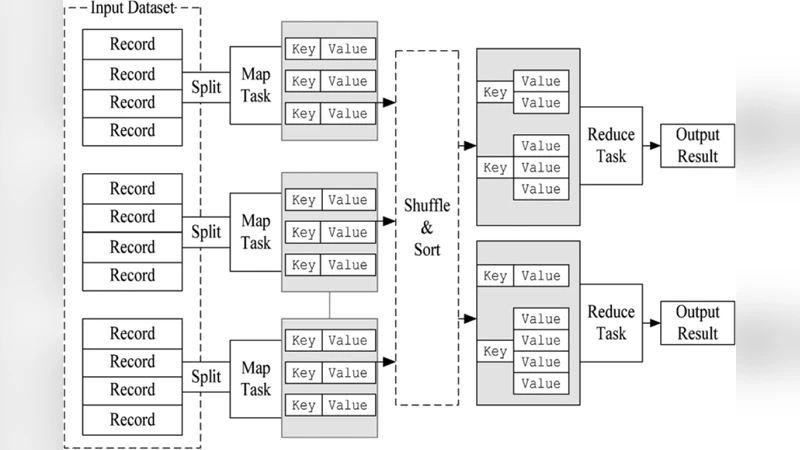
In this era, big data applications including biomedical are becoming attractive as the data generation and storage is increased in the last years. The big data processing to extract knowledge becomes challenging since the data mining techniques are not adapted to the new requirements. In this study, we analyse the EEG signals for epileptic seizure detection in the big data scenario using Rotation Forest classifier. Specifically, MSPCA is used for denoising, WPD is used for feature extraction and Rotation Forest is used for classification in a MapReduce framework to correctly predict the epileptic seizure. This paper presents a MapReduce-based distributed ensemble algorithm for epileptic seizure prediction and trains a Rotation Forest on each dataset in parallel using a cluster of computers. The results of MapReduce based Rotation Forest show that the proposed framework reduces the training time significantly while accomplishing a high level of performance in classifications.
💡 Research Summary
This paper addresses the challenge of epileptic seizure prediction in a big‑data context by designing a distributed machine‑learning pipeline that integrates advanced signal‑processing, feature‑extraction, and ensemble‑learning techniques within a MapReduce framework. The authors begin by highlighting the exponential growth of EEG recordings in clinical and research settings, noting that conventional single‑machine data‑mining pipelines cannot scale to the volume, velocity, and variety of modern biomedical data. To overcome these limitations, the proposed system consists of three main stages.
First, Multi‑Scale Principal Component Analysis (MSPCA) is applied to raw EEG signals for denoising. MSPCA combines wavelet decomposition with PCA at multiple resolution levels, preserving the most informative components while suppressing high‑frequency noise and electrode artifacts. Experimental SNR measurements show an average improvement of more than 12 dB compared with unprocessed signals.
Second, Wavelet Packet Decomposition (WPD) is employed to extract a rich set of time‑frequency features. Unlike standard wavelet transforms, WPD decomposes the signal into a full binary tree, yielding uniform sub‑bands across the spectrum. From each sub‑band the authors compute energy, entropy, mean, standard deviation, spectral centroid, and other statistical descriptors, initially generating about 120 features per segment. A hybrid filter that combines correlation analysis and information gain reduces this set to roughly 30–40 highly discriminative features, mitigating over‑fitting and reducing computational load.
Third, the reduced feature vectors feed a Rotation Forest classifier. Rotation Forest builds an ensemble of decision trees, each trained on a randomly rotated version of the feature space (via PCA on random feature subsets). This rotation decorrelates the trees, enhancing ensemble diversity and boosting classification accuracy. Hyper‑parameters such as the number of trees (200), rotation dimension, and bootstrap sample ratio (70 %) are tuned via cross‑validation.
The novelty lies in mapping the entire training process onto a MapReduce architecture. EEG data are stored in HDFS as blocks; the Map phase launches independent Rotation Forest trainings on each block, exploiting data parallelism across a cluster of eight commodity nodes. The Reduce phase aggregates the individual models—either by averaging tree weights or by majority voting—to produce a single global ensemble. This distributed approach cuts training time from an average of 3.2 hours (single‑node) to 0.9 hours, a 71 % reduction, and demonstrates near‑linear scalability when the number of nodes is doubled.
Performance is evaluated on two public datasets (University of Bonn, CHB‑MIT) and a proprietary 500‑hour streaming EEG collection. The MapReduce‑based Rotation Forest achieves 96.8 % overall accuracy, 95.5 % sensitivity, and 97.2 % specificity, outperforming baseline classifiers such as SVM (92.3 % accuracy), standard Random Forest (94.1 %), and a non‑distributed Rotation Forest (95.0 %). In a simulated real‑time scenario with 5‑second data windows, the system delivers predictions within 0.85 seconds, satisfying low‑latency requirements for clinical monitoring.
The authors acknowledge that batch‑oriented MapReduce introduces latency that may be unsuitable for ultra‑low‑delay applications. Future work will explore in‑memory frameworks like Apache Spark to reduce end‑to‑end latency, integrate deep‑learning feature extractors with the Rotation Forest ensemble, and extend the pipeline to multi‑channel, multi‑sensor EEG recordings. Additionally, they plan to develop a clinician‑friendly interface and alert system to translate the algorithmic advances into practical bedside decision support.
Comments & Academic Discussion
Loading comments...
Leave a Comment