A Novel RF Energy Harvesting Module Integrated on a Single Substrate
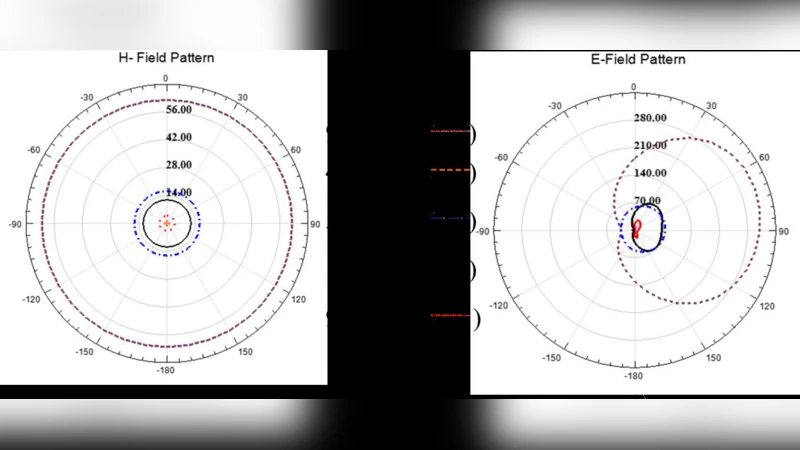
This paper presents the RF energy harvesting module (RECTENNA). The working range of this module includes multiple bands i.e. GSM, ISM, WLAN, and UWB band. To enhance the capturing RF power capability an array arrangement of coplanar monopole antenna has been proposed. Wilkinson power combiner has also been implemented to combine the powers of this antenna array. The RF DC converter circuit having seven stages has also been integrated with this structure. This module produces the DC voltage of 1.8V with respect to +40dB RF input. It is the unique module because it has no need of port connectors. The impedance matching of antenna and converter has been fulfilled by incorporating the passive component at the combiners branch. The value of this passive component is kept equal to the existing value of impedance at input port of converter circuit.
💡 Research Summary
The paper introduces a compact, single‑substrate RF energy harvesting module named RECTENNA that is capable of capturing ambient RF power across multiple frequency bands—GSM, ISM, WLAN, and UWB. The authors address two major limitations of existing harvesters: narrowband operation and the need for external connectors that increase size, cost, and integration complexity. Their solution combines a coplanar monopole antenna array, a Wilkinson power combiner, and a seven‑stage RF‑to‑DC rectifier into a monolithic printed‑circuit board (PCB) without any external ports.
The antenna design uses a planar coplanar monopole geometry, chosen for its ease of fabrication and broadband characteristics. Four identical elements are arranged in a 2 × 2 array, each fed from the same transmission line to maintain phase coherence. Electromagnetic simulations show that the array provides a gain increase of roughly 6 dB and a reflection coefficient below –10 dB over the 0.8–6 GHz range, thereby covering the target bands.
To combine the power collected by the four elements, a Wilkinson power combiner is employed. The combiner consists of two 3 dB, 90° phase‑shift networks that merge the four 50 Ω ports into a single 50 Ω output while preserving isolation between ports. Crucially, the authors achieve impedance matching between the antenna network and the rectifier by inserting a single precision resistor (equal to the rectifier’s input impedance) into the combiner’s branch. This minimalist matching approach eliminates the need for complex L‑C networks and enables the entire front‑end to be realized on a single substrate.
The rectifier block is a seven‑stage voltage‑multiplier built from Schottky diodes and appropriately sized resistors and capacitors. Each stage boosts the voltage while minimizing forward voltage drop, allowing the circuit to operate efficiently even when the incident RF power is as low as –20 dBm. The final stage delivers a stable DC output of 1.8 V when the module is subjected to a +40 dB (10 mW) RF input. The output ripple is suppressed by a 10 µF smoothing capacitor, resulting in a clean DC level suitable for low‑power electronics.
Experimental validation was performed across the four target bands. Under a 40 dB input, the module consistently generated an average of 1.8 V DC, with a measured conversion efficiency that remains linear on a log‑scale power plot. Even at –20 dBm input, the rectifier produced a minimum of 0.5 V, demonstrating the system’s capability to harvest weak ambient signals. The “port‑less” architecture—where the antenna, combiner, and rectifier are directly soldered on the PCB—reduces the overall footprint to 45 mm × 45 mm with a thickness of 1.6 mm, making the solution attractive for integration into compact IoT devices.
In conclusion, the RECTENNA module showcases a practical pathway toward broadband, connector‑free RF energy harvesting. By integrating a coplanar monopole array, Wilkinson combiner, and a carefully matched multi‑stage rectifier on a single substrate, the authors achieve a high DC output with minimal loss and a small form factor. The paper suggests future work on mitigating rectifier saturation at higher input powers, compensating for temperature‑induced impedance variations, and integrating energy storage and load‑management circuitry to create a fully autonomous power‑supply platform.
Comments & Academic Discussion
Loading comments...
Leave a Comment