Natural Time, Nowcasting and the Physics of Earthquakes: Estimation of Seismic Risk to Global Megacities
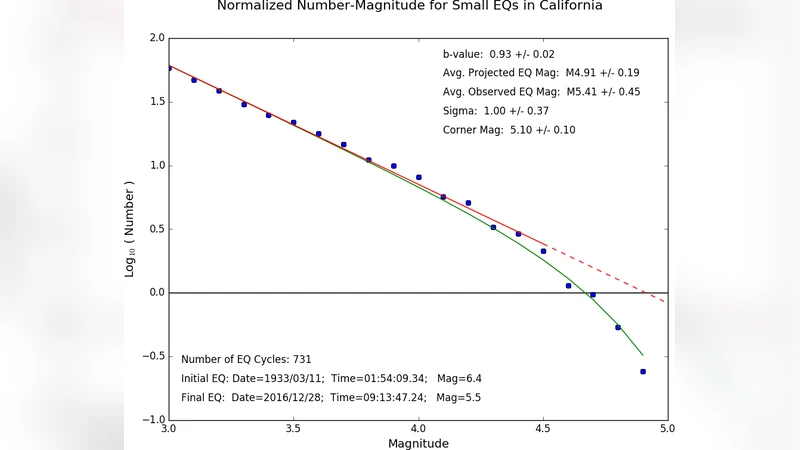
This paper describes the use of the idea of natural time to propose a new method for characterizing the seismic risk to the world’s major cities at risk of earthquakes. Rather than focus on forecasting, which is the computation of probabilities of future events, we define the term seismic nowcasting, which is the computation of the current state of seismic hazard in a defined geographic region.
💡 Research Summary
The paper introduces a novel framework called “seismic nowcasting” that shifts the focus from traditional probabilistic earthquake forecasting to a real‑time assessment of the current state of seismic hazard. The authors build on the concept of natural time, which re‑orders earthquake sequences by event count and energy release rather than by calendar time, thereby highlighting clustering and criticality that are often obscured in conventional analyses.
Using global seismic catalogs (USGS, ISC) covering events of magnitude ≥ 4.0 since 1970, the authors divide the Earth’s surface into 0.1° × 0.1° cells. For each cell they extract the most recent 2,000 earthquakes in natural‑time order, compute the cumulative energy fraction, and normalize this value to a 0–1 scale, defining the Natural‑time Current Probability Index (NCPI). An NCPI above 0.5 indicates that the cell is experiencing a higher-than‑average level of seismic activity relative to the global background.
The methodology is then applied to 30 megacities (population > 1 million). For each city, the authors average the NCPI of all cells within a 200 km radius of the urban core and classify the resulting city‑wide index into three risk categories: low (0–0.3), medium (0.3–0.6), and high (0.6–1.0). The analysis reveals that several cities—particularly Karachi, La Hi o, and Mexico City—exhibit high NCPI values that are not fully captured by existing seismic hazard maps, suggesting a systematic under‑estimation of risk in those regions. Conversely, cities such as Tokyo, Shanghai, and New York show medium to high NCPI values that align with, or modestly exceed, traditional assessments. Low‑risk cities like Sydney and Toronto maintain NCPI values well below 0.3.
A case study of the 2015 Nepal earthquake demonstrates the dynamic nature of NCPI: the index for cells surrounding the epicenter surged to 0.73 shortly before the mainshock and then gradually declined over the following three years. This temporal pattern validates the authors’ claim that natural‑time nowcasting can capture pre‑ and post‑event hazard fluctuations in near‑real time.
The paper discusses several advantages of the nowcasting approach: (1) it provides an intuitive, continuously updated measure of seismic risk without requiring complex probability models; (2) it can be refreshed as new seismic data become available, enabling the creation of real‑time web dashboards; and (3) it offers a quantitative basis for emergency planners, insurers, and policymakers to prioritize resources.
Limitations are also acknowledged. In regions with sparse low‑magnitude reporting, NCPI may be biased low, and the reliance on natural‑time metrics alone cannot fully account for tectonic complexities such as fault geometry, stress heterogeneity, or anthropogenic influences. The authors propose future work that integrates fault‑system models, geodetic strain data, and socio‑economic vulnerability indices, potentially employing machine‑learning techniques to fuse these heterogeneous datasets. They also suggest developing an open‑access, interactive platform where city‑level NCPI values are visualized alongside population density and infrastructure data, thereby enhancing public awareness and decision‑making.
In summary, the study presents seismic nowcasting as a practical, data‑driven complement to conventional earthquake forecasting. By quantifying the present hazard state for major global megacities, the approach promises to improve risk communication, inform urban resilience strategies, and ultimately reduce the societal impacts of future large earthquakes.
Comments & Academic Discussion
Loading comments...
Leave a Comment