Agent-Based Modeling of Host-Pathogen Systems: The Successes and Challenges
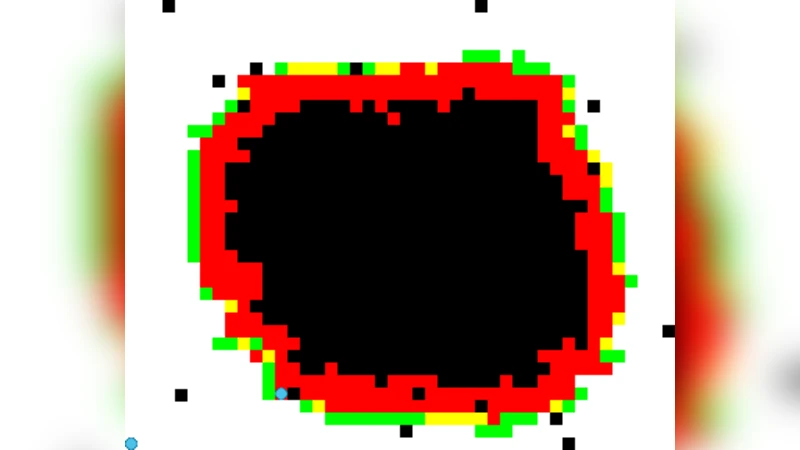
Agent-based models have been employed to describe numerous processes in immunology. Simulations based on these types of models have been used to enhance our understanding of immunology and disease pathology. We review various agent-based models relevant to host-pathogen systems and discuss their contributions to our understanding of biological processes. We then point out some limitations and challenges of agent-based models and encourage efforts towards reproducibility and model validation.
💡 Research Summary
The paper provides a comprehensive review of agent‑based modeling (ABM) as a computational framework for studying host‑pathogen interactions and immune dynamics. It begins by contrasting ABM with traditional ordinary differential equation (ODE) and partial differential equation (PDE) approaches. While ODE models are mathematically tractable and require relatively few parameters, they assume spatial homogeneity and cannot capture the stochastic, asynchronous behavior of individual immune cells. PDE models add spatial resolution but quickly become analytically intractable and computationally demanding. ABM, by representing each cell, virus particle, or molecular entity as an autonomous “agent” governed by simple, local rules, naturally incorporates spatial heterogeneity, time delays, and non‑linear feedback without the need for explicit analytical formulations. The stochastic, event‑driven nature of ABM allows emergent phenomena—such as wave‑like inflammation, localized hot‑spots of lymphocyte proliferation, or tumor‑induced angiogenesis—to arise from the collective dynamics of many simple agents. Moreover, because agents operate independently, ABM implementations are intrinsically parallelizable, making them well‑suited for modern high‑performance computing platforms.
The authors then survey the most widely used ABM platforms in immunology and infectious‑disease research. Immune‑focused simulators such as IMMSIM, SIMMUNE, Reactive Animation, and SIS provide flexible rule‑definition interfaces that let users toggle between humoral and cellular components, adjust cytokine interaction parameters, or even switch among competing mechanistic “running theories.” Disease‑oriented frameworks like CyCells, PathSim, and the MASyV modules (immune and virus) are designed for rapid calibration to specific pathogens (e.g., tuberculosis, influenza, HIV) or to tumor growth scenarios. The review highlights each platform’s strengths—ease of parameter tuning, visualisation capabilities, and community support—and notes that the choice of platform often depends on the scientific question, required spatial resolution, and the expertise of the user.
A particularly valuable section details how experimentalists have embraced ABM. The paper cites the work of Marc Jenkins, who constructed a two‑dimensional, Flash‑based animation of T‑cell, B‑cell, and dendritic‑cell interactions in a lymph node. By directly encoding published motility data and interaction times, the model reproduced the first 50 hours of a primary immune response and demonstrated that random cell movement alone can generate sufficient T‑B encounters, challenging the prevailing assumption that directed chemotaxis is essential. Another example is Dr. Gary An’s agent‑based model of systemic inflammatory response syndrome (SIRS) and multiple organ failure. This model links endothelial injury to a cascade of innate immune activation, cytokine release, and organ dysfunction, and it has been used to run in‑silico clinical trials of anti‑cytokine therapies, reproducing outcomes observed in Phase II trials. These case studies illustrate ABM’s ability to translate detailed experimental observations into executable code, to generate testable hypotheses, and to provide a visual, intuitive bridge between theory and bench work.
Despite these successes, the authors identify several persistent challenges. Parameter estimation remains a major hurdle because many rule‑based interactions are based on literature values, expert opinion, or limited data, leading to high uncertainty. Sensitivity analysis and Bayesian inference are recommended to quantify this uncertainty. Reproducibility is another concern; without standardized code repositories, explicit random seeds, and detailed documentation, independent groups cannot reliably replicate simulations. Validation against experimental or clinical data is still limited, partly because there is no universally accepted framework for comparing ABM outputs (e.g., cell counts, cytokine trajectories) with real‑world measurements. Computational cost also scales steeply with the number of agents and the spatial domain, necessitating efficient parallel algorithms, GPU acceleration, and adaptive time‑stepping schemes.
To address these gaps, the paper proposes a roadmap: (1) develop open‑source model libraries with standardized metadata to enhance transparency and reuse; (2) integrate machine‑learning‑driven parameter optimization and surrogate modeling to reduce calibration effort; (3) establish systematic validation pipelines that couple ABM outputs with high‑throughput imaging, flow cytometry, or clinical biomarker datasets; (4) advance multiscale frameworks that seamlessly link intracellular signaling models, cellular ABMs, and tissue‑level PDEs, thereby capturing phenomena across orders of magnitude. By pursuing these directions, ABM can evolve from a primarily exploratory tool to a predictive platform that informs vaccine design, therapeutic strategies, and public‑health policy.
In summary, the review underscores that agent‑based models have already contributed substantially to our mechanistic understanding of host‑pathogen dynamics, offering unique insights into spatially resolved, stochastic processes that are inaccessible to traditional equation‑based approaches. However, realizing their full potential will require concerted efforts in model standardization, rigorous validation, and computational optimization. The authors’ call for greater reproducibility, data‑driven calibration, and interdisciplinary collaboration sets a clear agenda for the next generation of computational immunology.
Comments & Academic Discussion
Loading comments...
Leave a Comment