InterPSS: A New Generation Power System Simulation Engine
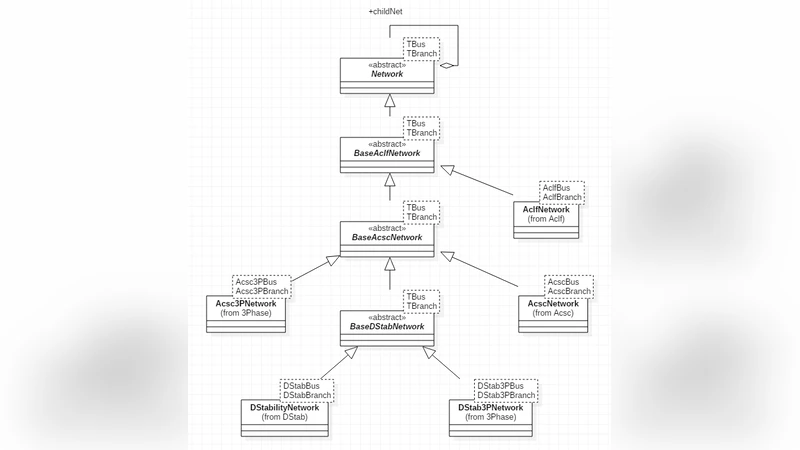
This paper presents the design of InterPSS simulation engine, including its object model, open software architecture, and software development process. Several advanced applications, including an integrated transmission and distribution co-simulation, an electromagnetic transient and phasor domain hybrid simulation, and InterPSS integration with a market simulator, have been developed by either extending InterPSS simulation engine or integrating it with other programs and/or platforms. These advanced applications show that the open architecture combined with the comprehensive modeling and simulation capabilities make InterPSS a very attractive option for the research and the future new power system simulation application development.
💡 Research Summary
The paper introduces InterPSS, a next‑generation power‑system simulation engine designed around an object‑oriented model, an open, modular software architecture, and a disciplined development process. The core of InterPSS is its object model, which encapsulates all traditional network components—buses, lines, transformers, generators, loads, etc.—as Java classes. These objects are linked through a graph‑based topology manager, allowing dynamic reconfiguration, insertion of user‑defined devices, and seamless switching among different analysis modes (steady‑state power‑flow, dynamic, electromagnetic transient).
To support extensibility, the authors adopt a service‑oriented, plug‑in architecture built on the OSGi framework. The engine, data persistence layer, graphical user interface, and external adapters are isolated as independent bundles that can be loaded, unloaded, or replaced at runtime. Standardized service interfaces govern communication between bundles, enabling developers to plug in new solvers, data import/export modules, or communication stacks without altering the core code base.
The software development lifecycle follows a modern continuous‑integration model: requirements are captured from both academic researchers and industry partners, followed by object‑model design, unit‑test creation, integration testing, and automated builds. A comprehensive test suite and code‑review policy ensure high reliability, while all source code, documentation, and example projects are released under an open‑source license on a public repository, fostering community contributions.
Three advanced applications demonstrate the practical power of the platform.
-
Integrated Transmission‑Distribution Co‑simulation – The transmission network is solved in the phasor (steady‑state) domain, while the distribution network runs a detailed, nonlinear load‑flow with time‑varying controls. Data exchange follows IEC 61850 and DNP3 standards, and a hybrid time‑synchronization scheme (fixed step for the transmission side, event‑driven for distribution) guarantees consistent state updates. This approach eliminates the need for separate, tightly‑coupled simulators and provides a unified view of voltage stability, fault propagation, and renewable integration across both layers.
-
Hybrid Electromagnetic‑Transient and Phasor‑Domain Simulation – High‑frequency EMTP‑type transient analysis captures switching surges, lightning strikes, and high‑order harmonics, while a slower phasor‑domain solver evaluates the overall system’s post‑event recovery. InterPSS synchronizes the two solvers through a shared time‑grid and a data‑exchange buffer, allowing the transient solver to feed instantaneous voltage/current snapshots to the phasor solver, which in turn supplies updated network impedances and operating points. This dual‑scale capability enables researchers to study the impact of fast transients on long‑term stability without resorting to full‑scale EMTP runs for the entire system.
-
Integration with a Market Simulator – A RESTful API and a Kafka‑based message bus connect InterPSS with an independent electricity‑market platform. Power‑flow results (line loadings, voltage profiles, constraint violations) are published to the market module, which computes locational marginal prices, dispatch schedules, and settlement outcomes. These market signals are then fed back into InterPSS as boundary conditions for the next simulation interval, creating a closed loop that captures the interplay between physical constraints and economic incentives. The framework supports scenario analysis for high renewable penetration, demand‑response programs, and policy‑driven market reforms.
All three cases rely on standardized data formats (CIM, JSON, IEC 61850) and a robust time‑synchronization mechanism, illustrating how new domains—such as cyber‑security, energy‑storage control, or multi‑energy carrier networks—can be incorporated with minimal effort.
In conclusion, InterPSS combines object‑oriented modeling with a service‑oriented plug‑in architecture to deliver a flexible, high‑performance simulation environment. Its open design, comprehensive testing pipeline, and rich set of example applications make it an attractive foundation for both academic research and industrial development of next‑generation power‑system tools that must handle integrated transmission‑distribution analysis, multi‑time‑scale dynamics, and market‑physics coupling.
Comments & Academic Discussion
Loading comments...
Leave a Comment