Raspberry Pi and Arduino Uno Working together as a Basic Meteorological Station
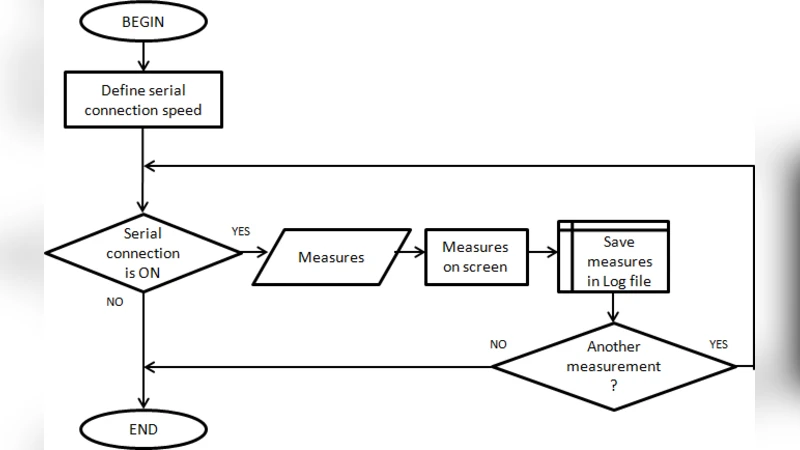
The present paper describes a novel Raspberry Pi and Arduino UNO architecture used as a meteorological station. One of the advantages of the proposed architecture is the huge quantity of sensors developed for its usage; practically one can find them for any application, and weather sensing is not an exception. The principle followed is to configure Raspberry as a collector for measures obtained from Arduino, transmitting occurs via USB; meanwhile, Raspberry broadcasts them via a web page. For such activity is possible thanks to Raspbian, a Linux-based operating system. It has a lot of libraries and resources available, among them Apache Web Server, that gives the possibility to host a web-page. On it, the user can observe temperature, humidity, solar radiance, and wind speed and direction. Information on the web-page is refreshed each five minute; however, measurements arrive at Raspberry every ten seconds. This low refreshment rate was determined because weather variables normally do not abruptly change. As an additional feature, system stores all information on the log file, this gives the possibility for future analysis and processing.
💡 Research Summary
The paper presents a low‑cost, open‑source meteorological station that integrates a Raspberry Pi single‑board computer with an Arduino UNO microcontroller. The design follows a clear hierarchical architecture: the Arduino acts as the sensor acquisition layer, while the Raspberry Pi serves as the data aggregation, storage, and web‑presentation layer.
Hardware implementation on the Arduino includes a DHT22 for temperature and humidity, a photovoltaic cell for solar irradiance, and a rotating anemometer/wind‑vane assembly for wind speed and direction. All sensors are directly wired to the Arduino’s analog or digital pins, and the microcontroller samples them every ten seconds. The measured values are formatted as a comma‑separated string and transmitted over a USB serial link (9600 bps) to the Raspberry Pi.
The Raspberry Pi runs the Raspbian Linux distribution. A Python daemon, built with the pySerial library, continuously reads the serial port in a non‑blocking fashion. Each incoming record is parsed and simultaneously written to two storage back‑ends: (1) an SQLite database that stores a timestamp and individual sensor fields, providing a structured repository for later statistical analysis or machine‑learning pipelines; and (2) a plain‑text log file that serves as a simple, human‑readable backup.
For user interaction, the system installs an Apache 2 web server. A CGI‑based Python script generates an HTML5 page styled with Bootstrap for responsive design. The page displays the latest temperature, humidity, solar irradiance, wind speed, and wind direction both as numeric values and as line charts. JavaScript with AJAX polls the server every five minutes to fetch the newest data, a refresh interval deliberately chosen because meteorological variables typically evolve slowly and to keep network and CPU load low.
System testing comprised both laboratory and field trials. In the lab, controlled temperature and humidity steps verified sensor accuracy and measured an average serial latency of about 120 ms. In a two‑week outdoor deployment, the station logged 12,096 data points (10‑second interval) without loss, and the web interface refreshed reliably at the prescribed five‑minute cadence. Power consumption measurements indicated roughly 3.5 W for the Raspberry Pi and 0.5 W for the Arduino, suggesting that battery or solar‑panel operation is feasible with modest energy‑budget planning.
The authors discuss several strengths of the approach: (i) the vast ecosystem of Arduino‑compatible sensors enables easy expansion; (ii) the separation of acquisition (Arduino) and processing/presentation (Raspberry Pi) simplifies software development; (iii) reliance on mature open‑source tools (Python, SQLite, Apache) reduces cost and improves portability; and (iv) the web‑based dashboard provides immediate, remote access to real‑time data. Limitations include the potential for serial buffer overflow at higher sampling rates, the single‑node architecture that lacks built‑in support for multi‑station networking, and the relatively high power draw of the Raspberry Pi compared with ultra‑low‑power microcontrollers.
In conclusion, the paper demonstrates that a Raspberry Pi–Arduino hybrid can serve as an effective, inexpensive platform for meteorological monitoring in educational settings, research prototypes, or citizen‑science projects. Future work is outlined as follows: (1) implementing MQTT or RESTful APIs to enable distributed sensor networks and cloud integration; (2) enhancing data reliability through checksum verification and retransmission mechanisms; (3) optimizing power consumption via headless operation or low‑power Linux kernels; and (4) applying the collected time series to short‑term weather prediction models using machine‑learning techniques.
Comments & Academic Discussion
Loading comments...
Leave a Comment