A Multi Objective Reliable Location-Inventory Capacitated Disruption Facility Problem with Penalty Cost Solve with Efficient Meta Historic Algorithms
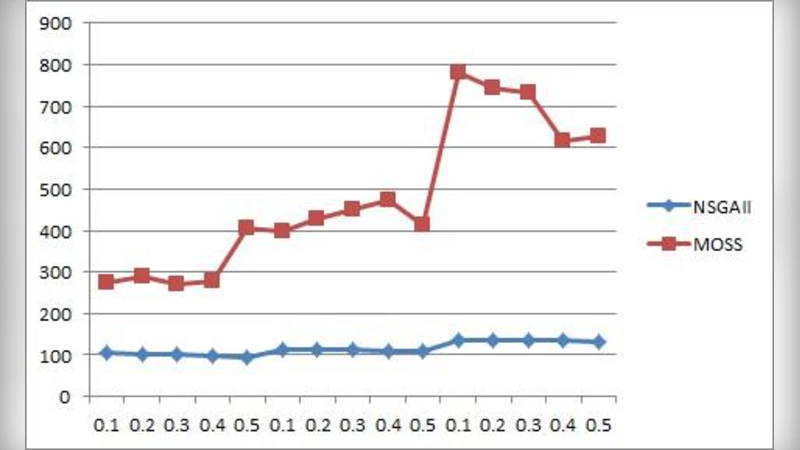
Logistics network is expected that opened facilities work continuously for a long time horizon without any failure, but in real world problems, facilities may face disruptions. This paper studies a reliable joint inventory location problem to optimize the cost of facility locations, customers assignment, and inventory management decisions when facilities face failure risks and do not work. In our model we assume when a facility is out of work, its customers may be reassigned to other operational facilities otherwise they must endure high penalty costs associated with losing service. For defining the model closer to real world problems, the model is proposed based on pmedian problem and the facilities are considered to have limited capacities. We define a new binary variable for showing that customers are not assigned to any facilities. Our problem involves a biobjective model, the first one minimizes the sum of facility construction costs and expected inventory holding costs, the second one function that mentions for the first one is minimized maximum expected customer costs under normal and failure scenarios. For solving this model we use NSGAII and MOSS algorithms have been applied to find the Pareto archive solution. Also, Response Surface Methodology (RSM) is applied for optimizing the NSGAII Algorithm Parameters. We compare the performance of two algorithms with three metrics and the results show NSGAII is more suitable for our model.
💡 Research Summary
The paper addresses a realistic logistics network design problem in which facilities are subject to failure risks and have limited capacities. Traditional location‑inventory models assume continuous operation, but real‑world disruptions such as equipment breakdowns, natural disasters, or labor shortages can render a facility temporarily unavailable. To capture this uncertainty, the authors formulate a bi‑objective, stochastic mixed‑integer program that integrates a p‑median location structure, capacitated facilities, inventory decisions, and a penalty for customers who cannot be reassigned when a facility fails.
Two scenarios are considered: a normal operating scenario and a failure scenario. Decision variables include binary facility‑opening variables, binary customer‑to‑facility assignment variables, continuous inventory level variables, and a newly introduced binary variable that flags customers left unserved after a disruption. If a failed facility’s customers cannot be reassigned to other operational facilities, the model imposes a high penalty cost, thereby encouraging solutions that either maintain sufficient spare capacity or keep inventory levels high enough to mitigate service loss.
The first objective minimizes the sum of fixed facility construction costs and expected inventory holding costs, reflecting overall cost efficiency. The second objective minimizes the maximum expected customer cost across both normal and failure scenarios, representing a service‑level robustness criterion. This dual‑objective structure creates a classic trade‑off between cost reduction and service reliability.
To solve the problem, the authors employ two multi‑objective meta‑heuristics: the Non‑Dominated Sorting Genetic Algorithm II (NSGA‑II) and the Multi‑Objective Scatter Search (MOSS). Because NSGA‑II’s performance is highly sensitive to parameters such as crossover probability, mutation probability, and population size, the authors apply Response Surface Methodology (RSM) to systematically explore the parameter space, fit a regression surface, and identify the parameter combination that maximizes algorithmic performance. MOSS, which combines random solution generation with iterative local improvement, is used as a benchmark due to its simpler parameterization.
Algorithmic performance is evaluated using three widely accepted multi‑objective metrics: hyper‑volume (measuring the size of the dominated objective space), spacing (assessing the uniformity of solutions along the Pareto front), and the epsilon indicator (quantifying how close a set is to a reference Pareto front). Computational experiments are conducted on small, medium, and large instance sets with varying failure probabilities. Results show that, after RSM‑based tuning, NSGA‑II consistently achieves a larger hyper‑volume, better spacing, and superior epsilon values compared with MOSS. This indicates that NSGA‑II provides a more effective balance of exploration and exploitation for the highly constrained, mixed‑integer nature of the problem.
The study contributes several novel elements: (1) a unified bi‑objective formulation that simultaneously accounts for facility reliability, capacity limits, and inventory decisions; (2) the explicit modeling of unserved customers through a binary variable and associated penalty cost; (3) the integration of RSM for systematic NSGA‑II parameter optimization; and (4) a comparative analysis that demonstrates NSGA‑II’s superiority for this class of reliable location‑inventory problems.
In the concluding section, the authors discuss potential extensions, including dynamic estimation of failure probabilities, multi‑tier supply chain extensions (e.g., manufacturer‑warehouse‑retailer), and real‑time re‑optimization mechanisms. They also suggest applying the model to real corporate data for case‑study validation and exploring stochastic programming or robust optimization techniques to further enhance solution reliability under uncertainty.
Comments & Academic Discussion
Loading comments...
Leave a Comment