Estimation and Control over Cognitive Radio Channels with Distributed and Dynamic Spectral Activity
Since its first inception by Joseph Mitola III in 1998 cognitive radio (CR) systems have seen an explosion of papers in the communication community. However, the interaction of CR and control has remained vastly unexplored. In fact, when combined with control theory CR may pave the way for new and exciting control and communication applications. In this paper, the control and estimation problem via the well known two switch model which represents a CR link is considered. In particular, The optimal linear estimator subject to a CR link between the sensor and the estimator is derived. Furthermore, it is shown that in the Linear Quadratic Gaussian (LQG) Control law for a closed-loop system over double CR links is not linear in the state estimate. Consequently, the separation principle is shown to be violated. Several conditions of stochastic stability are also discussed. Illustrative numerical examples are provided to show the effectiveness of the results.
💡 Research Summary
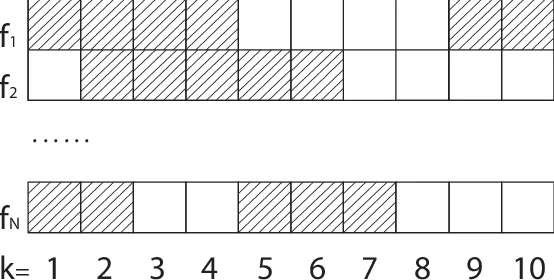
This paper investigates the problem of state estimation and optimal control when the communication links between sensors, controllers, and actuators are realized through cognitive radio (CR) channels. The authors adopt the well‑known two‑switch model, originally introduced for CR systems, to capture the stochastic availability of the spectrum. In this model, a binary variable sₜ represents the secondary transmitter’s (ST) perception of primary user (PU) activity, while sᵣ represents the secondary receiver’s (SR) perception. sₜ is known only at the transmitter, sᵣ only at the receiver, and the two variables may be statistically dependent because the sensing regions of ST and SR can overlap. This dual‑switch representation generalizes the usual single‑loss (packet‑drop) models and more accurately reflects the intermittent nature of CR links.
The plant dynamics are linear time‑invariant: xₖ₊₁ = A xₖ + νₖ, with Gaussian process noise νₖ (covariance V). The observation received over the CR link is yₖ = sᵣₖ · (sₜₖ C xₖ + ωₖ), where ωₖ is Gaussian measurement noise (covariance W). The key statistical quantity is the conditional probability p = P(sₜ = 1 | sᵣ = 1), which captures the likelihood that the transmitter can send when the receiver is ready. By taking expectations conditioned on the σ‑algebra generated by past observations and the known sᵣ variables, the authors rewrite the measurement equation as a linear function of the state plus an effective noise term ω′ₖ = ωₖ + (sₜₖ − p) C xₖ. This effective noise remains zero‑mean with covariance W′ = W + (p − p²) C Xₖ Cᵀ, where Xₖ = E
Comments & Academic Discussion
Loading comments...
Leave a Comment