A Behavioural Perspective on the Early Evolution of Nervous Systems: A Computational Model of Excitable Myoepithelia
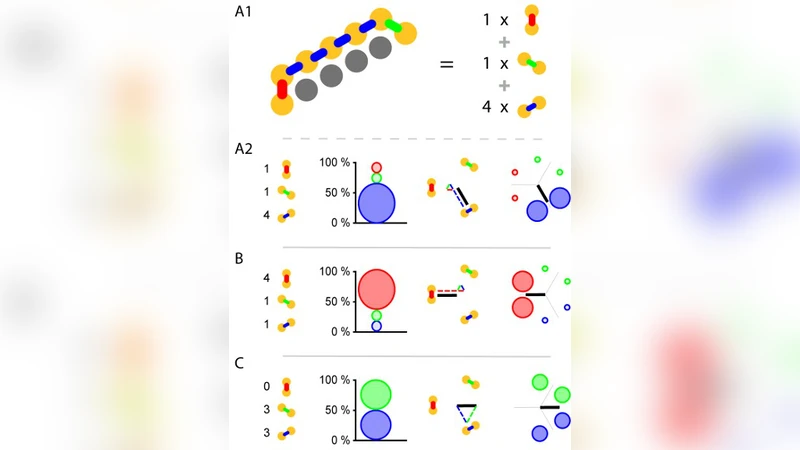
How the very first nervous systems evolved remains a fundamental open question. Molecular and genomic techniques have revolutionized our knowledge of the molecular ingredients behind this transition but not yet provided a clear picture of the morphological and tissue changes involved. Here we focus on a behavioural perspective that centres on movement by muscle contraction. Building on the finding that molecules for chemical neural signalling predate multicellular animals, we investigate a gradual evolutionary scenario for nervous systems that consists of two stages: A) Chemically transmission of electrical activity between adjacent cells provided a primitive form of muscle coordination in a contractile epithelial tissue. B) This primitive form of coordination was subsequently improved upon by evolving the axodendritic processes of modern neurons. We use computer simulations to investigate the first stage. The simulations show that chemical transmission across a contractile sheet can indeed produce useful body scale patterns, but only for small-sized animals. For larger animals the noise in chemical neural signalling interferes. Our results imply that a two-stage scenario is a viable approach to nervous system evolution. The first stage could provide an initial behavioural advantage, as well as a clear scaffold for subsequent improvements in behavioural coordination.
💡 Research Summary
The paper tackles the long‑standing question of how the very first nervous systems originated, focusing not on molecular inventories but on the behavioral function that would have driven early evolution: coordinated muscle contraction for locomotion. Building on the observation that the molecular machinery for chemical neurotransmission predates multicellular animals, the authors propose a two‑stage evolutionary scenario. In stage A, adjacent cells exchange electrical activity via chemical synapses, creating a primitive coordination mechanism within a contractile epithelial sheet (an “excitable myoepithelium”). In stage B, later evolution adds axodendritic processes, giving rise to modern neurons that can transmit signals over longer distances with higher fidelity.
To test the plausibility of stage A, the authors construct a computational model of a tubular sheet of identical cells. Each cell contains voltage‑gated ion channels that generate action‑like spikes when the membrane potential crosses a threshold. Upon spiking, a voltage‑dependent release mechanism ejects a neurotransmitter that diffuses across a tiny extracellular gap and binds to receptors on the neighboring cell, producing a postsynaptic depolarization. The model incorporates stochastic “noise” in transmitter release, variable synaptic conductance, and a fixed propagation delay. By varying the tube’s length and circumference, the authors simulate organisms of different sizes.
The simulations reveal a clear size‑dependence. For small diameters (on the order of 10–30 cells around the circumference), chemical transmission reliably generates a traveling wave that sweeps around the entire tube, causing a coordinated, whole‑body contraction. This wave provides a functional behavioral output: a rapid, global contraction that could be used for escape, feeding, or environmental repositioning. As the diameter increases beyond roughly 50 cells, the stochastic nature of transmitter release accumulates, leading to irregular wave fronts, partial propagation, or complete failure of the wave. In large bodies the primitive chemical coupling cannot sustain coherent body‑scale coordination.
These findings support the authors’ two‑stage hypothesis. The primitive chemically mediated coordination would have conferred a selective advantage to small, simple organisms, establishing a functional scaffold for later improvements. The emergence of axons and dendrites could then extend the effective signaling range, reduce noise, and enable precise timing, thereby allowing larger organisms to retain coordinated movement. The paper discusses several limitations: the model is two‑dimensional, assumes homogenous cell properties, neglects mechanical feedback from muscle contraction, and treats synaptic parameters as static. Nevertheless, the work provides concrete, testable predictions—e.g., that extant basal metazoans with contractile epithelia should exhibit body‑scale chemical waves only in small individuals.
In conclusion, the study demonstrates that a chemically based, non‑axonal signaling system is sufficient to generate useful, whole‑body contraction patterns in small organisms, offering a plausible first step in nervous system evolution. The subsequent evolution of axodendritic neurons can be viewed as an adaptive response to the scaling limitations of this primitive system. By integrating behavioral considerations with computational modeling, the paper adds a valuable perspective to the debate on nervous system origins and outlines a clear pathway for future empirical validation.
Comments & Academic Discussion
Loading comments...
Leave a Comment