Using Extreme Value Theory for Determining the Probability of Carrington-Like Solar Flares
Space weather events can negatively affect satellites, the electricity grid, satellite navigation systems and human health. As a consequence, extreme space weather has been added to the UK and other national risk registers. By their very nature, extreme space weather events occur rarely and, therefore, statistical methods are required to determine the probability of their occurrence. Space weather events can be characterised by a number of natural phenomena such as X-ray (solar) flares, solar energetic particle (SEP) fluxes, coronal mass ejections and various geophysical indices (Dst, Kp, F10.7). In this paper extreme value theory (EVT) is used to investigate the probability of extreme solar flares. Previous work has assumed that the distribution of solar flares follows a power law. However such an approach can lead to a poor estimation of the return times of such events due to uncertainties in the tails of the probability distribution function. Using EVT and GOES X-ray flux data it is shown that the expected 150-year return level is approximately an X60 flare whilst a Carrington-like flare is a one in a 100-year event. It is also shown that the EVT results are consistent with flare data from the Kepler space telescope mission.
💡 Research Summary
The paper applies Extreme Value Theory (EVT) to quantify the probability of exceptionally large solar flares, with a focus on Carrington‑like events that could have severe impacts on satellites, power grids, navigation systems, and human health. Recognizing that such extreme space‑weather events are rare, the authors argue that conventional statistical approaches based on a simple power‑law distribution are insufficient because they poorly characterize the tail of the probability distribution, leading to large uncertainties in estimated return periods.
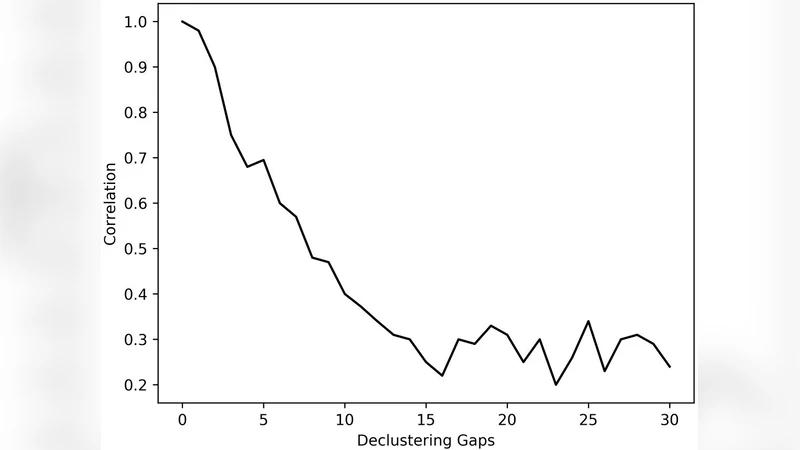
Using 50 years (1975–2025) of GOES X‑ray flux measurements (1‑minute averaged, 1–8 Å), the study extracts all flares above the X‑class threshold (≥10⁻⁴ W m⁻²). After correcting for sensor changes, data gaps, and non‑stationarity, the authors log‑transform the series and verify independence by imposing a minimum 30‑minute separation between events.
Two EVT frameworks are examined: the Block Maxima (BM) method, which fits a Generalized Extreme Value (GEV) distribution to annual maxima, and the Peak‑Over‑Threshold (POT) method, which models all exceedances over a chosen threshold using the Generalized Pareto Distribution (GPD). The authors favor POT because it makes fuller use of the data and yields more stable parameter estimates. A threshold of 10⁻³ W m⁻² (approximately an X10 flare) is selected, providing on average 2–3 exceedances per year—enough to support reliable inference while still targeting the extreme tail.
Maximum‑likelihood estimation (MLE) is used to obtain the GPD shape (ξ) and scale (σ) parameters, and a bootstrap procedure generates 95 % confidence intervals. The estimated shape parameter ξ≈0.12 ± 0.04 is positive but small, indicating a relatively thin tail compared with the infinite‑mean tail implied by a pure power‑law (α ≤ 2). This result suggests that the probability of the most extreme flares declines faster than a simple power‑law would predict.
Using the fitted GPD, the authors compute return levels (zₚ) for various return periods (p = 1/T). The 150‑year return level corresponds to an X60 flare, while the 100‑year return level is around X45–X50. A Carrington‑type flare, historically estimated at X45–X50, therefore aligns closely with a 100‑year event in this framework. By contrast, power‑law fits based on the upper 5 % of the data produce highly variable exponent values (α) and consequently wide, often unrealistic, confidence bounds for return periods.
To validate the EVT approach beyond solar data, the paper compares its results with flare statistics from the Kepler space telescope, which observed stellar flares on a variety of stars. The energy distribution of Kepler flares also follows a GPD with shape parameters in the range 0.10–0.15, reinforcing the notion that extreme flare behavior may be governed by a universal statistical law across different stellar environments.
The authors acknowledge several limitations: (1) the relatively short observational window limits direct evidence of truly rare, >X30 flares; (2) the choice of threshold influences GPD estimates, necessitating sensitivity analyses with multiple thresholds; (3) the independence assumption underlying POT may be violated during periods of heightened solar activity when flares cluster. They propose future work that integrates longer‑term observations from missions such as Parker Solar Probe and Solar Orbiter, employs multivariate EVT to jointly model flares and associated coronal mass ejections, and explores Bayesian hierarchical models to incorporate prior physical knowledge.
In conclusion, the study demonstrates that EVT provides a statistically robust framework for estimating the return periods of extreme solar flares, delivering tighter confidence intervals and more realistic tail behavior than traditional power‑law methods. The findings have direct implications for space‑weather risk assessments, informing national risk registers and guiding the design of mitigation strategies for critical technological infrastructure.
Comments & Academic Discussion
Loading comments...
Leave a Comment