Blockchain-based Smart Contracts: A Systematic Mapping Study
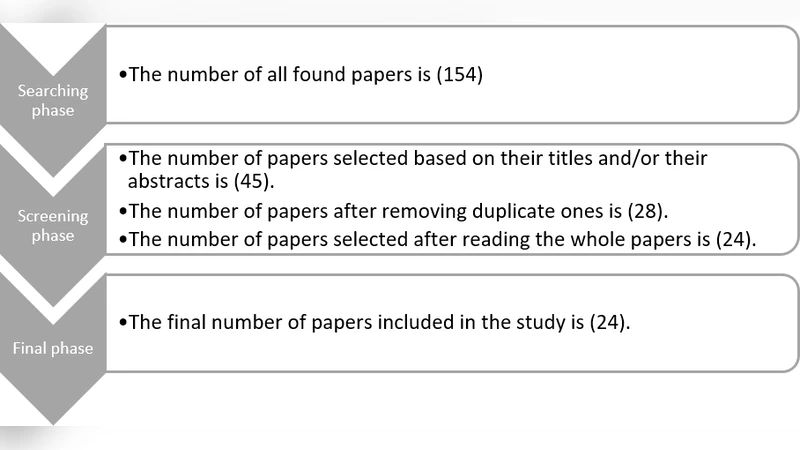
An appealing feature of blockchain technology is smart contracts. A smart contract is executable code that runs on top of the blockchain to facilitate, execute and enforce an agreement between untrusted parties without the involvement of a trusted third party. In this paper, we conduct a systematic mapping study to collect all research that is relevant to smart contracts from a technical perspective. The aim of doing so is to identify current research topics and open challenges for future studies in smart contract research. We extract 24 papers from different scientific databases. The results show that about two thirds of the papers focus on identifying and tackling smart contract issues. Four key issues are identified, namely, codifying, security, privacy and performance issues. The rest of the papers focuses on smart contract applications or other smart contract related topics. Research gaps that need to be addressed in future studies are provided.
💡 Research Summary
The paper presents a systematic mapping study that aims to capture the state‑of‑the‑art technical research on blockchain‑based smart contracts and to identify open challenges for future work. The authors followed the established systematic mapping methodology: they defined two research questions (“What technical topics are being investigated in smart‑contract research?” and “What research gaps exist?”), performed a comprehensive search across four major scientific databases (IEEE Xplore, ACM Digital Library, Scopus, Web of Science) using keywords such as “smart contract” and “blockchain,” and retrieved 312 records published between 2015 and 2023. After applying inclusion criteria (focus on technical aspects of smart contracts, peer‑reviewed, English or Korean language) and exclusion criteria (purely legal, policy, or business‑model papers, duplicate studies, papers dealing only with consensus algorithms), a final set of 24 primary studies was selected for detailed analysis.
For each primary study the authors extracted metadata (research goal, blockchain platform, programming language, evaluation method) and classified the papers along two orthogonal dimensions. The first dimension captures the research topic: (1) coding (language design, formal verification), (2) security (vulnerability detection, mitigation), (3) privacy (data protection, anonymity), (4) performance (gas cost, throughput), (5) applications (finance, supply‑chain, IoT, etc.), and (6) other (standardization, governance). The second dimension reflects the type of contribution: problem definition, solution proposal, experimental evaluation, design/implementation, or review.
The analysis reveals that roughly two‑thirds (≈66 %) of the selected papers concentrate on the first four technical issues, with security being the most represented area (9 papers). Security studies primarily target re‑entrancy attacks, oracle manipulation, and logical bugs, proposing static analysis tools, formal verification frameworks, or runtime monitoring mechanisms. Coding‑focused works address limitations of Solidity and other contract languages, suggesting new domain‑specific languages, stronger type systems, and automated verification pipelines. Privacy research is comparatively scarce; a few papers explore zero‑knowledge proofs, ring signatures, or mixing networks to hide transaction details. Performance studies mainly investigate gas‑optimisation techniques, layer‑2 scaling solutions, and sharding‑aware contract patterns.
Application‑oriented papers constitute less than 20 % of the corpus and typically present case studies in decentralized finance (DeFi), supply‑chain traceability, or IoT device authentication. While these studies often include deployment on testnets or mainnets, they rarely provide long‑term operational metrics such as maintenance cost, upgrade frequency, or real‑world reliability.
From the mapping, the authors identify four major research gaps: (1) a lack of integrated frameworks that jointly address security, privacy, and performance, making it difficult to reason about trade‑offs; (2) insufficient tooling that embeds formal verification or static analysis directly into developers’ IDEs, limiting practical adoption; (3) performance evaluations that are largely confined to simulations and do not reflect the dynamic gas pricing and network latency of live blockchains; and (4) limited work on cross‑chain interoperability and standardization, which hampers the migration of contracts between heterogeneous ledger platforms.
The paper concludes that smart‑contract research is still in an early, problem‑centric phase. Future work should move toward holistic system‑level designs that incorporate security, privacy, and efficiency simultaneously, develop developer‑friendly verification tools, and conduct extensive empirical studies using real‑world blockchain data. Addressing these gaps will be essential for transitioning smart contracts from academic prototypes to robust components of production‑grade decentralized applications.
Comments & Academic Discussion
Loading comments...
Leave a Comment