Quality and Innovation with Blockchain Technology
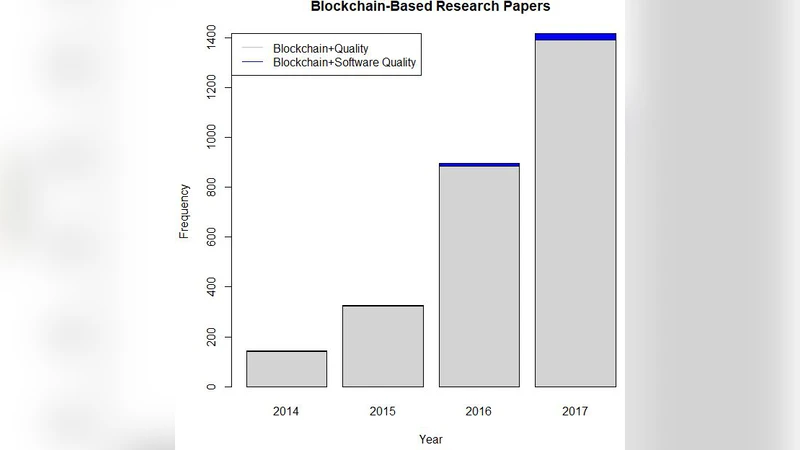
In recent years, hype surrounding the proliferation of blockchain-based technology has been significant. Apart from the creation of bitcoin and other cryptocurrencies, it has been difficult to determine what practical utility might lie in the adoption of blockchain, mainly because there are so few in existence at present. Even so, interest in the technology has increased tremendously. This paper is a primer for software quality professionals. It briefly describes the history of blockchain technology, attempts to define and disambiguate terminology, fosters a general understanding of how blockchain works, and discusses how and why software quality professionals might want to invest time and energy in learning about, implementing, or using blockchain-based technologies in their own organizations – or alternatively, improving the quality of blockchain technology itself.
💡 Research Summary
The paper serves as a concise primer for software quality professionals who are navigating the rapidly evolving landscape of blockchain technology. It begins with a brief historical overview, noting that the concept of a decentralized ledger was introduced with the Bitcoin white‑paper in 2008 and has since expanded far beyond digital currencies into sectors such as supply‑chain management, healthcare, and public administration. While hype has surged, practical utility remains ambiguous because mature, production‑grade blockchain solutions are still relatively scarce.
To lay a solid foundation, the authors systematically define and disambiguate core terminology. “Distributed ledger,” “node,” “consensus algorithm,” “smart contract,” “token,” and “fork” are each explained not only in abstract terms but also in relation to quality assurance concerns. For instance, the choice of consensus mechanism (Proof‑of‑Work, Proof‑of‑Stake, Byzantine Fault Tolerance, etc.) directly influences the system’s security posture, scalability, and energy consumption, thereby shaping the test strategy required to validate it. Smart contracts are highlighted as immutable code that, once deployed, cannot be patched without a network‑wide upgrade, making pre‑deployment formal verification, static analysis, and automated security scanning indispensable.
The paper then walks the reader through the end‑to‑end lifecycle of a transaction: creation, validation, inclusion in a block, cryptographic linking via hash chaining, propagation across the peer‑to‑peer network, and final consensus. At each stage, potential failure modes are identified—such as temporary forks, chain reorganizations, and network latency‑induced inconsistencies—that are rarely captured by traditional unit or integration tests. Consequently, the authors advocate for simulation‑based stress testing, model‑checking, and the operation of dedicated testnets that faithfully replicate real‑world node diversity and network conditions.
Four primary reasons are given for why quality engineers should invest effort in blockchain. First, the immutable nature of blockchain data mandates rigorous upfront quality activities; defects are far more costly after anchoring on the ledger. Second, smart contracts execute autonomously and often handle monetary value, so any vulnerability can lead to immediate financial loss. Third, the network layer’s reliability—encompassing peer discovery, message propagation, and consensus latency—must be validated through mixed‑scenario performance testing and continuous monitoring. Fourth, governance, upgrade mechanisms (hard‑forks/soft‑forks), voting procedures, and audit trails introduce organizational quality processes that differ from conventional software development life cycles and must be integrated into a broader quality management framework.
The authors also discuss the current lack of mature standards and the proliferation of heterogeneous implementations. While ISO/TC 307 and other initiatives are working toward common specifications, practitioners still face interoperability challenges across different protocol stacks, data formats, and API conventions. To mitigate this, the paper recommends employing open‑source compliance suites, conducting cross‑implementation compatibility tests, and adhering to emerging standards for cryptographic primitives, transaction formats, and smart‑contract interfaces.
Finally, a practical roadmap is presented for organizations considering blockchain adoption. It begins with a proof‑of‑concept phase on a controlled testnet, emphasizing functional, security, and performance validation. Development pipelines should integrate formal verification tools and automated security scanners into continuous integration/continuous deployment (CI/CD) workflows for smart contracts. In production, robust monitoring, log analytics, and automated regression testing are essential to maintain system health and respond swiftly to anomalies. Governance structures must be codified, with clear change‑management procedures, regular audits, and compliance checks aligned with regulatory requirements. By following this structured, quality‑centric approach, organizations can harness blockchain’s transformative potential while minimizing risk and ensuring long‑term reliability.
Comments & Academic Discussion
Loading comments...
Leave a Comment