Failures to be celebrated: an analysis of major pivots of software startups
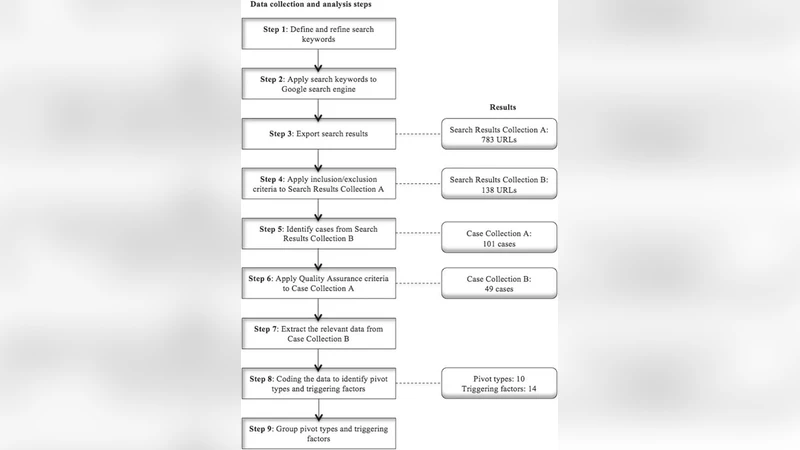
In the context of software startups, project failure is embraced actively and considered crucial to obtain validated learning that can lead to pivots. A pivot is the strategic change of a business concept, product or the different elements of a business model. A better understanding is needed on different types of pivots and different factors that lead to failures and trigger pivots, for software entrepreneurial teams to make better decisions under chaotic and unpredictable environment. Due to the nascent nature of the topic, the existing research and knowledge on the pivots of software startups are very limited. In this study, we aimed at identifying the major types of pivots that software startups make during their startup processes, and highlighting the factors that fail software projects and trigger pivots. To achieve this, we conducted a case survey study based on the secondary data of the major pivots happened in 49 software startups. 10 pivot types and 14 triggering factors were identified. The findings show that customer need pivot is the most common among all pivot types. Together with customer segment pivot, they are common market related pivots. The major product related pivots are zoom-in and technology pivots. Several new pivot types were identified, including market zoom-in, complete and side project pivots. Our study also demonstrates that negative customer reaction and flawed business model are the most common factors that trigger pivots in software startups. Our study extends the research knowledge on software startup pivot types and pivot triggering factors. Meanwhile it provides practical knowledge to software startups, which they can utilize to guide their effective decisions on pivoting
💡 Research Summary
This paper investigates how software startups deliberately embrace project failure as a source of validated learning that can trigger strategic pivots. While prior literature has defined pivots and offered anecdotal examples, there is a paucity of systematic research on the variety of pivot types and the concrete factors that cause failures and consequently prompt pivots. To fill this gap, the authors conducted a case‑survey study using secondary data on major pivots undertaken by 49 software startups. The data were collected from public sources such as news articles, blog posts, interview transcripts, and company reports. Through iterative coding, the researchers identified ten distinct pivot categories and fourteen triggering factors.
The ten pivot types are: (1) Customer‑need pivot, (2) Customer‑segment pivot, (3) Market‑expansion pivot, (4) Market‑contraction pivot, (5) Market‑zoom‑in pivot, (6) Product‑zoom‑in pivot, (7) Product‑zoom‑out pivot, (8) Technology pivot, (9) Complete pivot, and (10) Side‑project pivot. The most frequent pivot is the customer‑need pivot, accounting for 38 % of all cases, followed closely by market‑related pivots (customer‑segment, market‑zoom‑in/out). Product‑related pivots such as zoom‑in, zoom‑out, and technology pivots also appear prominently. Notably, the study uncovers three novel categories—market‑zoom‑in, complete, and side‑project pivots—that have not been widely discussed in earlier work.
Fourteen failure triggers were extracted. The two most common are negative customer reaction (e.g., low usage, high churn) and flawed business models (unclear revenue streams, cost inefficiencies), representing 22 % and 19 % of the cases respectively. Other triggers include technical limitations, insufficient team capabilities, over‑estimation of market size, competitive pressure, funding shortfalls, regulatory changes, partnership issues, product‑quality problems, strategic partner demands, internal decision‑making conflicts, KPI under‑performance, and cultural misalignment.
The authors argue that the prevalence of customer‑need pivots underscores the centrality of continuous, systematic customer feedback in the search for product‑market fit. Market‑related pivots reflect startups’ need to re‑allocate scarce resources in response to shifting market signals, while technology pivots highlight the importance of technical agility and the capacity to adopt emerging platforms. The dominance of negative customer reaction and business‑model flaws as triggers suggests that early‑stage validation of both value proposition and revenue logic is critical to avoid costly missteps.
Practical implications are drawn for entrepreneurial teams: (1) implement rigorous mechanisms for collecting and analyzing quantitative and qualitative customer data; (2) employ tools such as the Business Model Canvas to articulate and test hypotheses continuously; (3) monitor technical feasibility and team skill gaps to anticipate technology pivots; and (4) regularly reassess market size and segmentation to decide on market‑zoom‑in or contraction actions.
Limitations are acknowledged. Reliance on secondary sources may affect data completeness and accuracy, and the sample is skewed toward early‑stage ventures, limiting generalizability to later‑stage or corporate spin‑offs. Moreover, the study does not quantitatively assess post‑pivot performance, leaving open the question of which pivots are most successful. Future research is suggested to adopt longitudinal designs that track financial and market outcomes before and after pivots, and to incorporate survey‑based methods for broader validation of the identified pivot taxonomy and trigger list.
In sum, the paper contributes to the academic understanding of startup dynamics by providing a detailed taxonomy of software‑startup pivots and a empirically grounded set of failure triggers. It also offers actionable guidance for founders and managers seeking to navigate uncertainty through evidence‑based pivot decisions.
Comments & Academic Discussion
Loading comments...
Leave a Comment