Radiative Heat Transfer in Fractal Structures
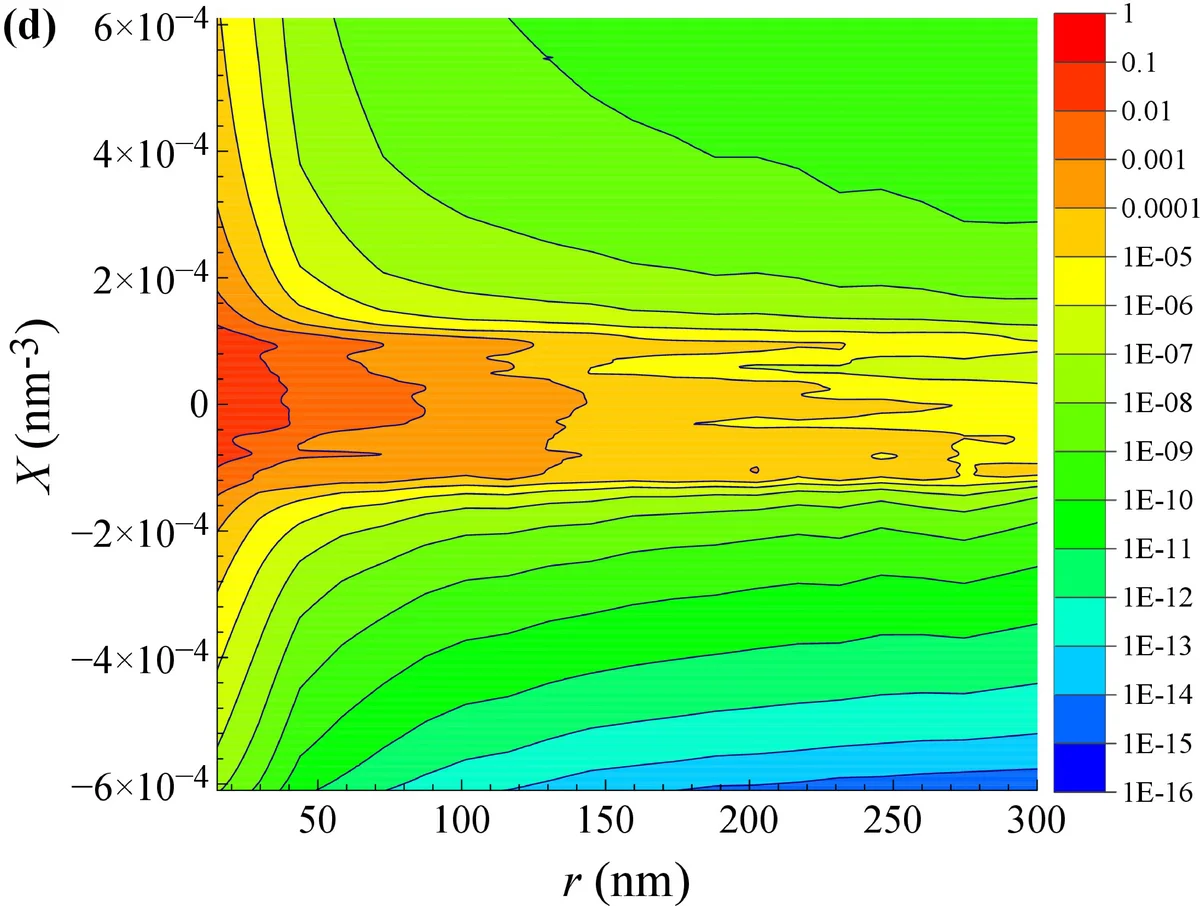
The radiative properties of most structures are intimately connected to the way in which their constituents are ordered on the nano-scale. We have proposed a new representation for radiative heat transfer formalism in many-body systems. In this representation, we explain why collective effects depend on the morphology of structures, and how the arrangement of nanoparticles and their material affects the thermal properties in many-body systems. We investigated the radiative heat transfer problem in fractal (i.e., scale invariant) structures. In order to show the effect of the structure morphology on the collective properties, the radiative heat transfer and radiative cooling are studied and the results are compared for fractal and non-fractal structures. It is shown that fractal arranged nanoparticles display complex radiative behavior related to their scaling properties. we showed that, in contrast to non-fractal structures, heat flux in fractals is not of large-range character. By using the fractal dimension as a means to describe the structure morphology, we present a universal scaling behavior that quantitatively links the structure radiative cooling to the structure gyration radius.
💡 Research Summary
The authors develop a many‑body radiative heat‑transfer formalism based on a dipolar description of identical nanoparticles embedded in a thermal bath. By representing the dipole‑dipole interaction through the free‑space dyadic Green’s tensor, they construct a complex‑symmetric interaction matrix ( \hat W ). The eigenvalues and eigenvectors of ( \hat W ) provide a natural modal basis in which the fluctuating dipoles, local fields, and power exchange can be expressed analytically. This leads to explicit formulas for the monochromatic transmission coefficient ( T_{ij}(\omega) ) between any pair of particles and the self‑cooling coefficient ( T_{ii}(\omega) ).
To explore the influence of morphology, the authors apply the formalism to fractal assemblies generated by the Vicsek model, varying the fractal dimension ( D_f ) between 1.5 and 2.5. Silver spheres are used as a representative material, and the dipolar approximation is retained (particle separations larger than the particle radius). Numerical evaluation reveals that fractal arrangements produce a highly clustered eigenvalue spectrum: strong coupling modes are spatially confined, and heat flux is dominated by short‑range, localized excitations. In contrast, non‑fractal (periodic) lattices exhibit a broad spectrum with many long‑range propagating modes, resulting in larger overall conductance.
A key result is a universal scaling law linking the total radiative cooling power ( \Phi ) of a fractal structure to its gyration radius ( R_g ) and fractal dimension:
\
Comments & Academic Discussion
Loading comments...
Leave a Comment