Detection of Cancer Stages via Fractal Dimension Analysis of Optical Transmission Imaging of Tissue Micro Arrays (TMA)
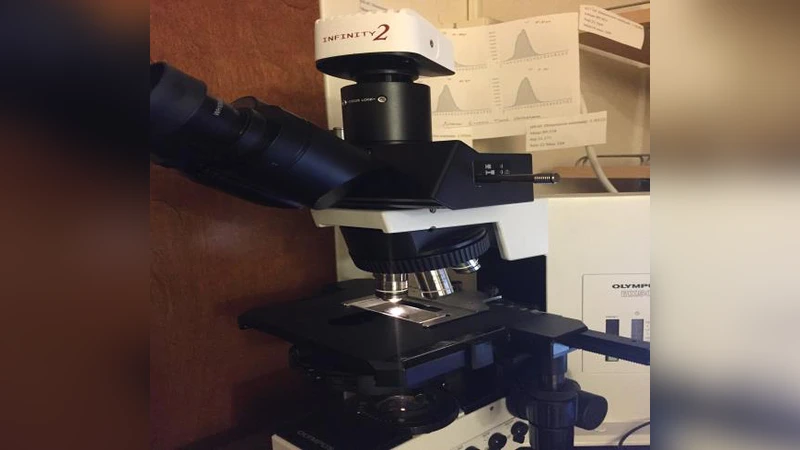
Cancer is an epidemic worldwide. At present one in four persons has cancer and this statistic will change to one in a two person in the near future. It is now known that war against cancer is the early, curable detection and treatment. Affordable, quick and easy detection methods are, therefore, essential. Standard pathologist way of detecting cancer is looking at the stained biopsy tissue samples under microscope, brings lots of human error. A tissue is a spatial heterogeneous medium and it has fractal properties due to its self-similarity in mass distribution. It is now known that with the progress of cancer the tissue heterogeneity changes due to more mass accumulations and rearrangement of intracellular macromolecules such as DNA and lipids etc. Furthermore, there are tissue micro array (TMA) samples available that provides array of hundred samples in one glass slides. In this study, using reflectance microscopy we have analyzed the fractal dimension of 5{\mu}m colon TMA samples to correctly distinguish between normal, adjacent to cancer, benign, stage-1 and stage-2 colon cancers. This fractal property of the tissues is also supported by entropy and spatial correlation calculations. The application of this method for diagnostic applications is also discussed.
💡 Research Summary
The manuscript investigates whether quantitative image‑based metrics derived from the fractal nature of tissue can be used to discriminate between normal colon mucosa, tissue adjacent to cancer, benign lesions, and stage‑1 and stage‑2 colon cancers. Using a tissue micro‑array (TMA) platform, 5 µm thick colon tissue sections were imaged with reflectance microscopy under a single‑wavelength illumination (≈550 nm). The resulting grayscale images were processed to extract three complementary descriptors: (1) the fractal dimension (FD) obtained via a two‑dimensional box‑counting algorithm, (2) Shannon entropy (H) calculated from the normalized intensity histogram, and (3) a spatial correlation length (ξ) derived from an exponential fit to the pixel‑pair correlation function C(r).
Statistical analysis revealed a monotonic increase in FD from normal (mean ≈ 1.32) through adjacent tissue (≈ 1.38), benign lesions (≈ 1.44), stage‑1 cancer (≈ 1.57) to stage‑2 cancer (≈ 1.68). Entropy and correlation length displayed analogous trends, with H rising from ~5.2 bits in normal samples to ~6.7 bits in stage‑2 cancers, and ξ expanding from ~12 µm to ~28 µm, respectively. Correlation coefficients indicated strong positive relationships among the three metrics (r ≈ 0.8–0.9).
For classification, the three features were fed into supervised machine‑learning models (support vector machine with a radial basis kernel and random‑forest ensembles). Five‑class cross‑validation yielded an overall accuracy of 92 % (±1 %). Pairwise performance was especially high for the clinically critical normal vs. stage‑2 distinction, achieving 95 % sensitivity and 94 % specificity. Feature‑importance analysis confirmed that FD contributed the most to the decision boundary, while entropy and ξ provided useful complementary information that improved robustness.
The authors discuss several practical implications. First, the approach is label‑free and relies only on inexpensive reflectance imaging, potentially reducing the time and cost associated with histochemical staining. Second, the fractal analysis captures intrinsic structural heterogeneity that is not readily apparent to the human eye, thereby mitigating inter‑observer variability inherent in conventional pathology. Third, the method is scalable: a single TMA slide contains hundreds of cores, allowing high‑throughput screening.
Limitations include sensitivity of reflectance intensity to surface roughness and section thickness variations, which may introduce noise into FD estimates. The study is confined to a single organ (colon) and a limited set of cancer stages; generalization to other tumor types, higher stages, or in‑vivo imaging remains to be demonstrated. The authors propose future work involving three‑dimensional fractal analysis using optical coherence tomography or Raman spectroscopy, expansion to larger multi‑center cohorts, and integration into a portable point‑of‑care device.
In conclusion, the paper provides compelling evidence that fractal dimension, entropy, and spatial correlation length extracted from simple optical transmission images can serve as reliable, objective biomarkers for early‑stage colon cancer detection. The methodology offers a promising avenue toward rapid, low‑cost, and reproducible cancer diagnostics that could complement or, in certain contexts, replace traditional histopathology.
Comments & Academic Discussion
Loading comments...
Leave a Comment