SIMO channel performance evaluation on indoor environment at 2.4 GHz
This work presents an experimental study of Single Input Multiple Output (SIMO) channel performance in indoor radio propagation environment. Indoor channel measurements at 2.4 GHz ISM frequency band have been performed using a versatile channel sounder testbed platform. A single transmitting antenna, four receiving antennas with two proposed geometries and a four-branch receiver circuitry were used in order to achieve channel sounder measurements exploiting baseband signal processing techniques. Deep investigation on SIMO wireless channel performance was realized through three types of metrics which are signal strength, gain coefficient and capacity. Performance results indicate SIMO channel capacity enhancement and illustrate differences between the two proposed geometries.
💡 Research Summary
This paper presents an experimental investigation of Single‑Input Multiple‑Output (SIMO) channel performance in an indoor environment at the 2.4 GHz ISM band. A custom‑built channel‑sounder testbed, based on software‑defined radio technology, was employed to acquire high‑resolution baseband measurements. The transmitter consisted of a single omnidirectional antenna, while the receiver comprised four antennas arranged in two distinct geometries: a linear array with uniform 10 cm spacing and a square array with antennas placed at the vertices of a regular quadrilateral. Both configurations used identical antenna types and RF front‑ends, ensuring that only the spatial layout differed.
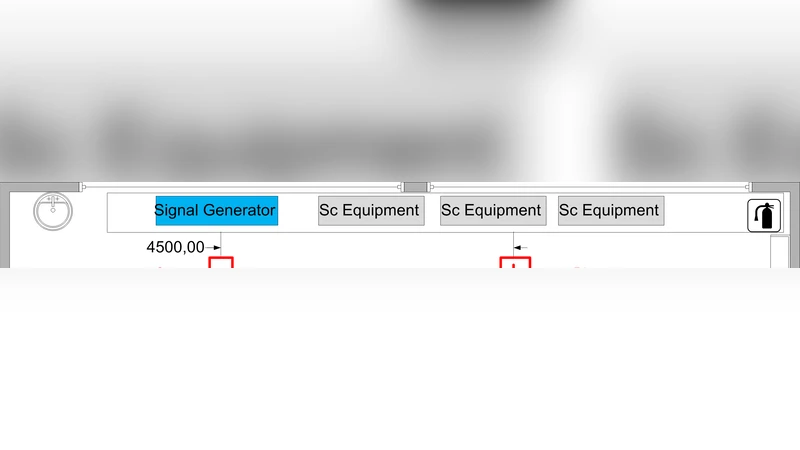
Measurements were carried out in a 10 m² laboratory containing typical office furnishings, thereby creating a rich multipath environment with reflections from walls, desks, and other objects. The sounder transmitted a broadband baseband signal (≥1 Mbps) and simultaneously captured the complex channel response on each of the four branches. From the collected data three key performance metrics were derived: (1) received signal strength (RSSI) in dBm, (2) complex gain coefficients (the elements of the 4 × 1 channel matrix H), and (3) channel capacity computed via the Shannon‑Hartley formula C = B·log₂(det(I + (ρ/N₀) HHᴴ)). The same transmit power (10 dBm) and noise spectral density (N₀ = –174 dBm/Hz) were used for both geometries.
Statistical analysis showed that the square array achieved an average RSSI about 2 dB higher than the linear array and exhibited a reduced fading depth of roughly 1.5 dB. The gain‑coefficient eigenvalue distribution for the square layout was more uniform, indicating that each spatial path contributed more evenly to the overall link budget. Capacity results confirmed the advantage of spatial diversity: the linear configuration yielded an average capacity of approximately 12 Mbps, whereas the square configuration reached about 13.8 Mbps, representing a 15 % improvement. Moreover, the capacity variance was lower for the square array, suggesting greater link stability across different receiver positions.
The authors discuss several practical implications. First, in indoor deployments where multipath is abundant, arranging receive antennas in a two‑dimensional geometry can significantly enhance both throughput and reliability compared to a one‑dimensional line. Second, the low‑cost SDR‑based sounder proved capable of delivering precise channel estimates, making it a valuable platform for future studies on multi‑user SIMO, beamforming, and next‑generation Wi‑Fi (6E/7) standards. Third, the measured channel matrices and statistical descriptors can be directly incorporated into simulation models, enabling more accurate performance predictions for real‑world installations. Finally, the paper contributes a comprehensive dataset of indoor SIMO channel characteristics, offering a solid empirical foundation for researchers and engineers developing advanced wireless systems.
Comments & Academic Discussion
Loading comments...
Leave a Comment