Multitarget search on complex networks: A logarithmic growth of global mean random cover time
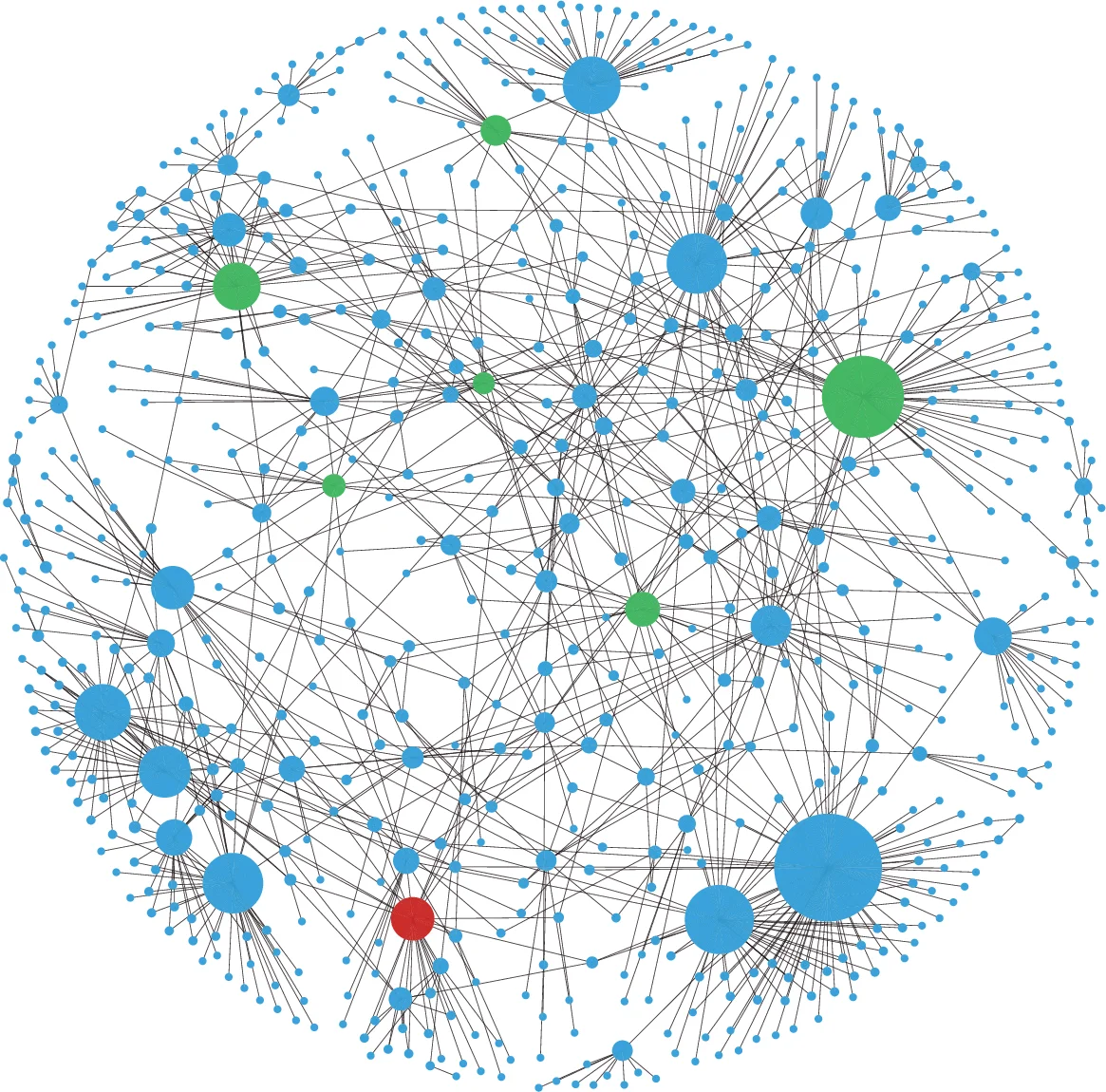
We investigate multitarget search on complex networks and derive an exact expression for the mean random cover time that quantifies the expected time a walker needs to visit multiple targets. Based on this, we recover and extend some interesting results of multitarget search on networks. Specifically, we observe the logarithmic increase of the global mean random cover time with the target number for a broad range of random search processes, including generic random walks, biased random walks, and maximal entropy random walks. We show that the logarithmic growth pattern is a universal feature of multi-target search on networks by using the annealed network approach and the Sherman-Morrison formula. Moreover, we find that for biased random walks, the global mean random cover time can be minimized, and that the corresponding optimal parameter also minimizes the global mean first passage time, pointing towards its robustness. Our findings further confirm that the logarithmic growth pattern is a universal law governing multitarget search in confined media.
💡 Research Summary
The paper addresses the problem of searching for multiple pre‑specified targets on complex networks by a random walker and derives an exact analytical expression for the mean random cover time (MRCT), the expected number of steps required to visit a set of m distinct nodes for the first time. Starting from the simplest case of two targets, the authors express the MRCT in terms of pairwise mean first‑passage times (MFPTs) and then generalize the result to an arbitrary number of targets through a recursive matrix formulation. The key result is Eq. (5), which shows that the vector of MRCTs for the remaining N – m nodes can be obtained by inverting the sub‑transition matrix (\bar P) (the original transition matrix with rows and columns of the already visited targets removed). Because ((I-\bar P)) is always invertible for an irreducible Markov chain, the recursion can be carried out analytically for any network topology.
To assess the scaling of search efficiency at a global level, the authors define the global MRCT (h_T(m)) as the average of the MRCT over all possible source nodes and all possible target sets of size m. Numerical experiments on synthetic Barabási–Albert (BA) and Erdős–Rényi (ER) graphs, as well as on a variety of real‑world networks (Karate club, Chesapeake Bay, Dolphin social network, American college football, C. elegans metabolic network, etc.), reveal a striking logarithmic dependence: \
Comments & Academic Discussion
Loading comments...
Leave a Comment