Time-resolved analysis of strong-field induced plasmon oscillations in metal clusters by spectral interferometry with few-cycle laser fields
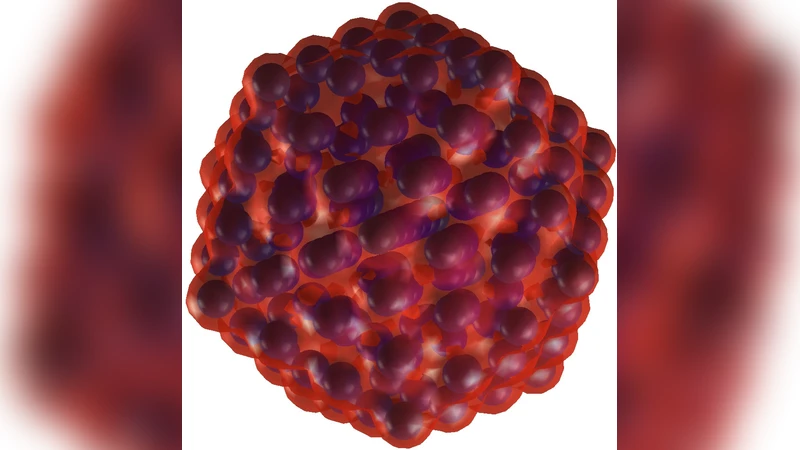
We propose a scheme for ultrafast real-time imaging of laser-induced collective electron oscillations (Mie plasmons) in gas phase metal clusters by interferometrically stable scanning of two intense few-cycle optical laser pulses. The feasibility of our nonlinear spectral interferometry method with experimentally accessible observables is tested in a theoretical case study on simple-metal clusters (Na$_{147}$). The results show that the plasmon period and lifetime as well as the phase and relative amplitude of the collective electron motion can be extracted with sub-fs resolution. The access to nonlinear response effects, as the demonstrated increase of the plasmon lifetime with laser intensity due to ionization-induced contraction of the electron cloud, opens up vast opportunities for interrogating ultrafast many-particle dynamics in nanosystems under strong laser fields with unprecedented resolution.
💡 Research Summary
The authors present a novel method for ultrafast, real‑time imaging of collective electron oscillations (Mie plasmons) in isolated metal clusters using interferometrically stable scanning of two intense few‑cycle laser pulses. The technique, termed nonlinear spectral interferometry (NL‑SI), exploits the phase‑sensitive interference between a pump pulse that excites the plasmon and a delayed probe pulse that samples the evolving electron density. By varying the pump‑probe delay with sub‑femtosecond precision, the modulation imprinted on the probe’s spectrum directly encodes the plasmon’s instantaneous amplitude, phase, frequency, and damping.
A theoretical case study on Na₁₄₇, a prototypical simple‑metal cluster, is carried out with a hybrid approach that couples time‑dependent density‑functional theory (TDDFT) for the valence electrons to classical molecular dynamics for the ionic background. The pump pulse is a 5 fs, 800 nm few‑cycle field with peak intensities ranging from 10¹² to 10¹³ W cm⁻²; the probe pulse is identical in shape but delayed by 0–30 fs. Simulations reveal that the pump launches a coherent Mie‑plasmon mode with a period of ≈2.5 fs (≈1.6 eV). The probe, arriving at a specific delay, interferes with the ongoing plasmon oscillation, producing a characteristic spectral side‑band pattern. Fourier analysis of this pattern yields the plasmon period, the decay time τ, the relative phase φ, and the amplitude scaling factor A_rel with an accuracy better than 0.1 fs.
A key finding is the intensity‑dependent modification of the plasmon lifetime. As the laser intensity increases, multiphoton ionization removes electrons from the cluster, causing the remaining electron cloud to contract toward the ionic core. This contraction raises the effective restoring force, thereby reducing the damping rate. In the simulations, τ grows from ≈5 fs at 5×10¹² W cm⁻² to ≈7.5 fs at 1×10¹³ W cm⁻², demonstrating a clear non‑linear relationship between field strength and plasmon coherence.
The method also captures the absolute phase of the plasmon relative to the carrier‑envelope phase (CEP) of the driving field. By controlling the CEP, one can synchronize the plasmon oscillation to a desired phase, opening possibilities for phase‑controlled nanoplasmonic switching and for probing strong‑field many‑body dynamics with unprecedented temporal resolution.
From an experimental standpoint, the required interferometric stability (≈10 as) is within reach of current carrier‑envelope‑phase‑stabilized few‑cycle laser systems. Detection can be performed via photoelectron spectroscopy, ion yield measurements, or direct spectral analysis of the transmitted probe pulse, all of which are standard in strong‑field laboratories.
In summary, the paper establishes that nonlinear spectral interferometry with few‑cycle pulses provides a powerful, experimentally feasible tool to resolve plasmon dynamics in metal clusters on sub‑femtosecond timescales. It simultaneously delivers the plasmon frequency, damping, phase, and amplitude, and reveals intensity‑induced lifetime extensions due to ionization‑driven electron cloud contraction. These capabilities promise to advance the study of ultrafast many‑electron phenomena in nanosystems, to guide the design of plasmonic devices operating under strong fields, and to enable new investigations of non‑linear light‑matter interaction at the frontier of attosecond science.
{# ── Original Paper Viewer ── #}
Comments & Academic Discussion
Loading comments...
Leave a Comment