📝 Original Info
- Title: Dynamic interplay between tumour, stroma and immune system can drive or prevent tumour progression
- ArXiv ID: 1707.00746
- Date: 2017-09-01
- Authors: Researchers from original ArXiv paper
📝 Abstract
In the tumour microenvironment, cancer cells directly interact with both the immune system and the stroma. It is firmly established that the immune system, historically believed to be a major part of the body's defence against tumour progression, can be reprogrammed by tumour cells to be ineffective, inactivated, or even acquire tumour promoting phenotypes. Likewise, stromal cells and extracellular matrix can also have pro-and anti-tumour properties. However, there is strong evidence that the stroma and immune system also directly interact, therefore creating a tripartite interaction that exists between cancer cells, immune cells and tumour stroma. This interaction contributes to the maintenance of a chronically inflamed tumour microenvironment with pro-tumorigenic immune phenotypes and facilitated metastatic dissemination. A comprehensive understanding of cancer in the context of dynamical interactions of the immune system and the tumour stroma is therefore required to truly understand the progression toward and past malignancy.
💡 Deep Analysis
Deep Dive into Dynamic interplay between tumour, stroma and immune system can drive or prevent tumour progression.
In the tumour microenvironment, cancer cells directly interact with both the immune system and the stroma. It is firmly established that the immune system, historically believed to be a major part of the body’s defence against tumour progression, can be reprogrammed by tumour cells to be ineffective, inactivated, or even acquire tumour promoting phenotypes. Likewise, stromal cells and extracellular matrix can also have pro-and anti-tumour properties. However, there is strong evidence that the stroma and immune system also directly interact, therefore creating a tripartite interaction that exists between cancer cells, immune cells and tumour stroma. This interaction contributes to the maintenance of a chronically inflamed tumour microenvironment with pro-tumorigenic immune phenotypes and facilitated metastatic dissemination. A comprehensive understanding of cancer in the context of dynamical interactions of the immune system and the tumour stroma is therefore required to truly understan
📄 Full Content
Dynamic interplay between tumour, stroma and immune system
can drive or prevent tumour progression
R J Seager1, Cynthia Hajal2, Fabian Spill1,2,*, Roger D Kamm2,* and Muhammad H Zaman1,3,*
1Department of Biomedical Engineering, Boston University, 44 Cummington Mall, Boston MA 02215
2Department of Mechanical Engineering, Massachusetts Institute of Technology, 77 Massachusetts
Avenue, Cambridge, MA 02139
3Howard Hughes Medical Institute, Boston University, Boston, MA 02215
*Correspondence may be addressed to FS (fspill@mit.edu), RDK (rdkamm@mit.edu) or MHZ
(zaman@bu.edu)
Keywords: cancer, microenvironment, mechanical, extracellular matrix, macrophage, T cell, fibroblast
ABSTRACT
In the tumour microenvironment, cancer cells directly interact with both the immune system and the stroma.
It is firmly established that the immune system, historically believed to be a major part of the body’s defence
against tumour progression, can be reprogrammed by tumour cells to be ineffective, inactivated, or even
acquire tumour promoting phenotypes. Likewise, stromal cells and extracellular matrix can also have pro-
and anti-tumour properties. However, there is strong evidence that the stroma and immune system also
directly interact, therefore creating a tripartite interaction that exists between cancer cells, immune cells
and tumour stroma. This interaction contributes to the maintenance of a chronically inflamed tumour
microenvironment with pro-tumorigenic immune phenotypes and facilitated metastatic dissemination. A
comprehensive understanding of cancer in the context of dynamical interactions of the immune system and
the tumour stroma is therefore required to truly understand the progression toward and past malignancy.
Interplay between tumour, stroma, and immune system can affect tumour progression
2
- Introduction
A tumour is composed of more than cancer cells alone. It is in fact a diverse microecosystem including
immune cells, stromal cells, the extracellular matrix (ECM), all of which have an effect on the progression
of the disease. [1].
Cancer cells first interact with their ECM through a combination of mechanical interactions, enzymatic
manipulation of the matrix structure, or signalling interactions, leading to changes in the degree of
inflammation and hypoxia of the tumour microenvironment as well as its levels of intracellular signalling
[2,3]. Cancer cells also directly interact with stromal cells, like fibroblasts, through paracrine signalling and
direct cell-cell contact signalling to create favourable physical or molecular signalling environments for
continued tumour progression [4].
Second, cancer cells interact with the immune system, provoking both pro-tumorigenic and anti-
tumorigenic behaviours [5]. Importantly, the immune system helps maintain a continuous state of
inflammation in the tumour microenvironment, promoting cancer cell growth and metastasis as well as
angiogenesis in the tumour microenvironment [5].
Finally, cancer-associated fibroblasts (CAFs) and other stromal cells can recruit immune cells to the tumour
and influence their behaviour towards cancer cells [6]. Moreover, they are involved in remodelling of the
ECM that can lead to further cancer proliferation and metastatic dissemination, as well as influence immune
cell behaviour.
In this review, we examine this tripartite interaction to demonstrate that the dynamic interplay between
cancer cells, the immune system, and tumour stroma greatly influence the survival, proliferation and
metastasis of cancer cells.
Interplay between tumour, stroma, and immune system can affect tumour progression
3
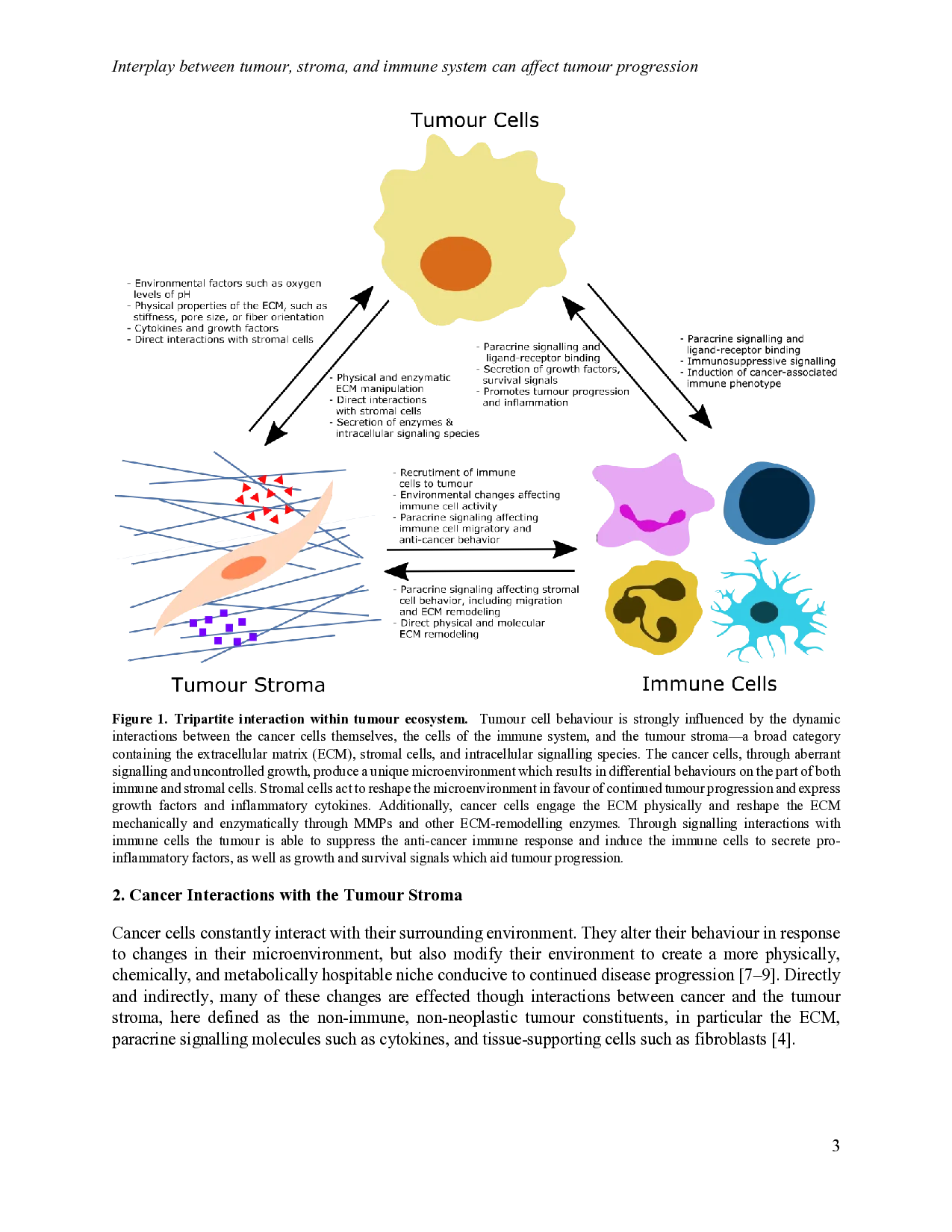
Figure 1. Tripartite interaction within tumour ecosystem. Tumour cell behaviour is strongly influenced by the dynamic
interactions between the cancer cells themselves, the cells of the immune system, and the tumour stroma—a broad category
containing the extracellular matrix (ECM), stromal cells, and intracellular signalling species. The cancer cells, through aberrant
signalling and uncontrolled growth, produce a unique microenvironment which results in differential behaviours on the part of both
immune and stromal cells. Stromal cells act to reshape the microenvironment in favour of continued tumour progression and express
growth factors and inflammatory cytokines. Additionally, cancer cells engage the ECM physically and reshape the ECM
mechanically and enzymatically through MMPs and other ECM-remodelling enzymes. Through signalling interactions with
immune cells the tumour is able to suppress the anti-cancer immune response and induce the immune cells to secrete pro-
inflammatory factors, as well as growth and survival signals which aid tumour progression.
2. Cancer Interactions with the Tumour Stroma
Cancer cells constantly interact with their surrounding environment. They alter their behaviour in response
to changes in their microenvironment, but also modify their environme
…(Full text truncated)…
📸 Image Gallery
Reference
This content is AI-processed based on ArXiv data.