VERITAS: Status and Highlights
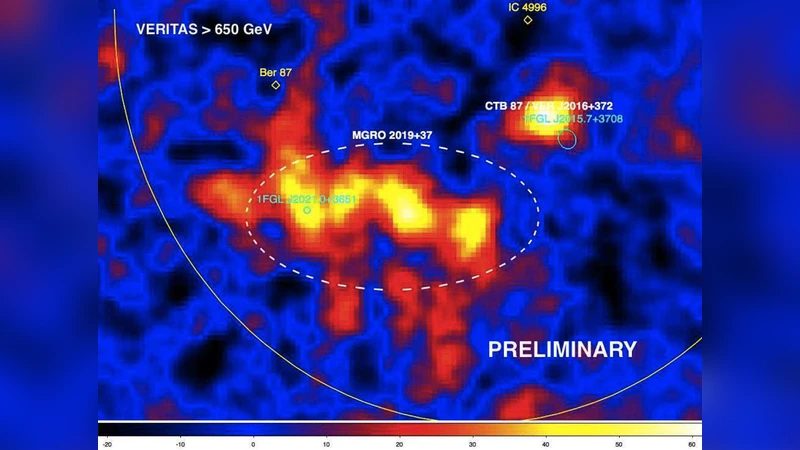
The VERITAS telescope array has been operating smoothly since 2007, and has detected gamma-ray emission above 100 GeV from 40 astrophysical sources. These include blazars, pulsar wind nebulae, supernova remnants, gamma-ray binary systems, a starburst galaxy, a radio galaxy, the Crab pulsar, and gamma-ray sources whose origin remains unidentified. In 2009, the array was reconfigured, greatly improving the sensitivity. We summarize the current status of the observatory, describe some of the scientific highlights since 2009, and outline plans for the future.
💡 Research Summary
The VERITAS (Very Energetic Radiation Imaging Telescope Array System) observatory, located near Tucson, Arizona, consists of four 12‑meter atmospheric Cherenkov telescopes equipped with 499‑pixel photomultiplier‑tube cameras and a 3.5° field of view. Commissioned in 2007, the array underwent a major re‑configuration in 2009 that moved the prototype telescope to a more favorable site and optimized inter‑telescope spacing. This upgrade roughly doubled the instrument’s sensitivity, enabling detection of a source with 1 % of the Crab Nebula flux (Crab‑like spectrum) in about 25 hours of exposure. VERITAS now records roughly 1 000 hours of data per year, including ∼20 % taken under moderate moonlight.
VERITAS operates two complementary scientific programs: extragalactic and Galactic. Approximately two‑thirds of the observing time is devoted to extragalactic targets, which have yielded 21 blazars, the radio galaxy M 87, and the starburst galaxy M 82, bringing the total catalog to 40 very‑high‑energy (VHE) gamma‑ray sources. The blazar program has expanded from the early dominance of high‑frequency‑peaked BL Lac objects to include intermediate‑ and low‑frequency‑peaked BL Lacs, as well as flat‑spectrum radio quasars. Notable results include:
- A spectacular flare from Markarian 421 in February 2010, where the VHE flux peaked at eight times the steady Crab Nebula flux. VERITAS obtained a light curve with 2‑minute time bins, revealing sub‑hour variability and implying particle acceleration in a region ≤10⁻³ pc.
- Spectral measurements of PG 1553+113 that constrain its redshift to z < 0.5 (95 % confidence), providing a valuable probe of extragalactic background‑light (EBL) absorption at large distances.
- The first VHE detection of the high‑frequency‑peaked BL Lac RBS 0413, achieved through a joint Fermi‑LAT/VERITAS target‑selection pipeline that illustrates the power of GeV‑based alerts for TeV observations.
- Detection of a rapid flare from the low‑frequency‑peaked BL Lacertae in June 2011, with the VHE flux dropping from ∼50 % of the Crab to background levels within ∼4 minutes, again highlighting minute‑scale variability.
The Galactic program has identified 17 VHE sources, spanning pulsar wind nebulae (PWNe), supernova remnants (SNRs), binary systems, and several unidentified objects. A highlight is HESS J0632+057, now recognized as a gamma‑ray binary. Multi‑wavelength monitoring with Swift revealed a 321‑day X‑ray period, and VERITAS observed correlated VHE variability, supporting a scenario where a massive Be star (MWC 148) interacts with a compact companion (likely a pulsar or black hole). Other Galactic highlights include:
- Day‑scale variability from the radio galaxy M 87 in 2010, with a peak VHE flux exceeding 10 % of the Crab and a flare lasting roughly one day.
- Detection of VHE emission from the starburst galaxy M 82 after 137 hours of exposure, yielding a flux of (3.7 ± 0.8stat ± 0.7sys) × 10⁻¹³ cm⁻² s⁻¹ above 700 GeV, consistent with hadronic cosmic‑ray interactions in the dense star‑forming core.
- Ongoing GRB follow‑up campaigns: VERITAS can repoint within an average of 240 seconds (often faster) after a satellite alert, enabling rapid searches for TeV photons from Fermi‑LAT and Swift bursts. No definitive TeV detections have yet been reported, but the program remains a high‑priority effort given recent LAT detections of >10 GeV photons from GRBs.
Dark‑matter searches have focused on dwarf spheroidal galaxies, especially Segue I, which is among the most dark‑matter‑dominated systems known. A 48‑hour VERITAS exposure produced 95 % confidence upper limits on the velocity‑averaged annihilation cross‑section ⟨σv⟩ ranging from 10⁻²² to 10⁻²⁴ cm³ s⁻¹, depending on the annihilation channel and particle mass (1–10 TeV). While these limits are still above the canonical thermal relic cross‑section (~3 × 10⁻²⁶ cm³ s⁻¹), they constrain certain supersymmetric and leptophilic models and demonstrate VERITAS’s capability for indirect dark‑matter detection.
Overall, VERITAS has demonstrated steady performance improvements through refined optical alignment, upgraded calibration, and sophisticated analysis pipelines (including machine‑learning classifiers). The array’s ability to capture minute‑scale variability, coordinate with space‑based instruments (Fermi‑LAT, Swift), and conduct deep exposures of faint sources positions it as a leading VHE facility. Future plans include further hardware upgrades (e.g., higher‑efficiency photodetectors), possible array re‑layout to lower the energy threshold toward ∼10 GeV, and close collaboration with the upcoming Cherenkov Telescope Array (CTA) to extend the scientific reach into the next decade.
Comments & Academic Discussion
Loading comments...
Leave a Comment