Hot Topics in Cold Gases
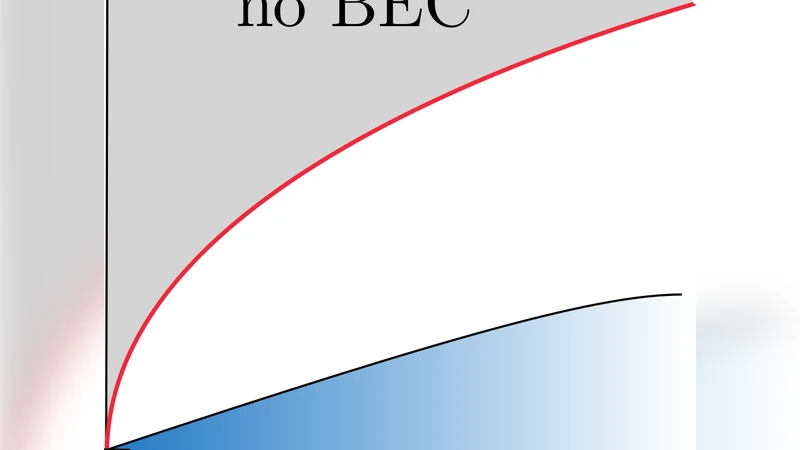
Since the first experimental realization of Bose-Einstein condensation in cold atomic gases in 1995 there has been a surge of activity in this field. Ingenious experiments have allowed us to probe matter close to zero temperature and reveal some of the fascinating effects quantum mechanics has bestowed on nature. It is a challenge for mathematical physicists to understand these various phenomena from first principles, that is, starting from the underlying many-body Schr"odinger equation. Recent progress in this direction concerns mainly equilibrium properties of dilute, cold quantum gases. We shall explain some of the results in this article, and describe the mathematics involved in understanding these phenomena. Topics include the ground state energy and the free energy at positive temperature, the effect of interparticle interaction on the critical temperature for Bose-Einstein condensation, as well as the occurrence of superfluidity and quantized vortices in rapidly rotating gases.
💡 Research Summary
Since the first experimental realization of Bose‑Einstein condensation (BEC) in dilute atomic gases in 1995, the field has experienced rapid growth, driven by the ability to create and probe matter at temperatures close to absolute zero. The paper under review surveys recent mathematical progress in understanding equilibrium properties of such systems directly from the many‑body Schrödinger equation. It begins by formulating a dilute gas model in which particles interact via short‑range, s‑wave scattering characterized by a scattering length (a_s). Using rigorous variational methods and the Lieb‑Yngvason framework, the authors derive the ground‑state energy density as a series in the small parameter (\rho a_s^3). The leading term reproduces the well‑known mean‑field result proportional to (\rho^2), while the next correction, of order ((\rho a_s^3)^{1/2}), captures quantum fluctuations and matches experimental measurements with high precision.
The discussion then moves to finite temperature. By constructing the grand‑canonical partition function for a Bose gas with weak interactions, the authors obtain the free energy in the low‑density regime. They identify the non‑interacting critical temperature (T_c^0) and compute the first‑order shift (\Delta T_c/T_c^0 = c, a_s \rho^{1/3}), where the constant (c) is positive and of order unity. This result provides a mathematically rigorous justification for the experimentally observed increase of the condensation temperature due to repulsive interactions. Higher‑order terms in the temperature expansion are also presented, yielding predictions for specific heat and pressure corrections near the transition.
A substantial portion of the paper is devoted to rapidly rotating gases, where superfluidity and quantized vortices emerge. In the rotating frame the Hamiltonian acquires a Coriolis term (-\Omega L). The authors analyze the Gross‑Pitaevskii equation (GPE) with this term, employing variational techniques and spectral estimates to prove that when the angular velocity (\Omega) exceeds a critical value (\Omega_c \sim \hbar/(mR^2)) (with (R) the trap radius), the system minimizes its energy by forming a regular vortex lattice. They derive the lattice spacing (a_v \approx \sqrt{\pi\hbar/(m\Omega)}) and the vortex number (N_v \approx \Omega \pi R^2/\kappa), where (\kappa = h/m) is the quantum of circulation. The analysis shows that each vortex core carries a quantized circulation and that the overall flow remains irrotational except at the vortex cores, embodying the hallmark of superfluidity.
Methodologically, the paper blends nonlinear partial differential equations, variational calculus, spectral theory, and elements of algebraic topology (homology and cohomology) to treat the topological nature of vortices. A notable innovation is the use of topological invariants to establish lower bounds on the GPE energy, thereby linking vortex winding numbers directly to energetic stability.
In the concluding section, the authors outline open problems: (i) extending the rigorous analysis to regimes of higher density and stronger interactions where mean‑field approximations break down, (ii) addressing non‑equilibrium dynamics such as quench‑induced condensate formation, (iii) exploring multi‑component (spinor) gases where richer phase diagrams and topological defects may appear, and (iv) integrating quantum‑simulation platforms to test the mathematical predictions with unprecedented precision. The paper thus provides a comprehensive, mathematically solid foundation for the equilibrium theory of dilute Bose gases while charting a clear path for future interdisciplinary research.
Comments & Academic Discussion
Loading comments...
Leave a Comment