On the topology effects in wireless sensor networks based prognostics and health management
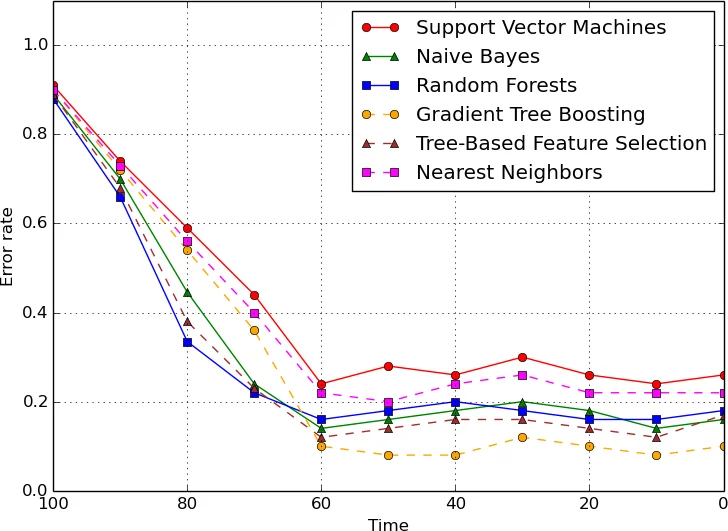
In this work, we consider the usage of wireless sensor networks (WSN) to monitor an area of interest, in order to diagnose on real time its state. Each sensor node forwards information about relevant features towards the sink where the data is processed. Nevertheless, energy conservation is a key issue in the design of such networks and once a sensor exhausts its resources, it will be dropped from the network. This will lead to broken links and data loss. It is therefore important to keep the network running for as long as possible by preserving the energy held by the nodes. Indeed, saving the quality of service (QoS) of a wireless sensor network for a long period is very important in order to ensure accurate data. Then, the area diagnosing will be more accurate. From another side, packet transmission is the phase that consumes the highest amount of energy comparing to other activities in the network. Therefore, we can see that the network topology has an important impact on energy efficiency, and thus on data and diagnosis accuracies. In this paper, we study and compare four network topologies: distributed, hierarchical, centralized, and decentralized topology and show their impact on the resulting estimation of diagnostics. We have used six diagnostic algorithms, to evaluate both prognostic and health management with the variation of type of topology in WSN.
💡 Research Summary
The paper investigates how wireless sensor network (WSN) topologies affect the performance of Prognostics and Health Management (PHM) systems. Recognizing that PHM relies on continuous, accurate data to predict Remaining Useful Life (RUL) and schedule maintenance, the authors highlight that the inherent constraints of WSNs—limited battery life, link failures, and data loss—can jeopardize PHM reliability. Consequently, the study focuses on four widely used WSN topologies: distributed, hierarchical, centralized (star), and decentralized (cluster‑based), and evaluates their impact on energy consumption, Quality of Service (QoS), data fidelity, and ultimately on diagnostic accuracy.
To assess these effects, the authors simulate a network of 300 sensor nodes, equally divided among temperature, pressure, and humidity measurements. Each node starts with a battery capacity of 300 units and generates data following time‑varying Gaussian distributions that shift dramatically under fault conditions. Sensor failures are modeled by a Poisson process whose rate increases with system age, and broken sensors output fixed sentinel values (2 for temperature, 1 for pressure, 3 for humidity). Six machine‑learning classifiers—Support Vector Machines, Naïve Bayes, Random Forests, Gradient Tree Boosting, Tree‑Based Feature Selection, and Nearest Neighbors—are employed to classify the sensed data into normal or abnormal states.
The simulation results reveal distinct trade‑offs for each topology. The centralized (star) architecture yields low initial transmission latency and high early‑stage diagnostic accuracy because all nodes communicate directly with a single sink. However, the sink becomes a single point of failure; once its battery depletes, the entire network collapses, causing a sharp drop in PHM performance. The purely distributed topology offers strong fault tolerance—nodes can re‑route around failures—but suffers from longer multi‑hop paths, higher cumulative energy consumption, and consequently lower overall diagnostic accuracy (5‑7 % below the best case). The hierarchical (tree) topology balances the two extremes: data aggregation at intermediate levels reduces the number of transmissions, extending network lifetime relative to the distributed case, yet the upper‑level nodes become bottlenecks whose energy exhaustion limits scalability. Finally, the decentralized (cluster‑based) topology combines local aggregation with multiple cluster heads, mitigating the single‑point‑of‑failure issue while keeping transmission distances short. This configuration achieved the highest average diagnostic accuracy, improving it by 8‑12 % over the centralized and distributed alternatives, and also prolonged network lifetime.
A key insight concerns data aggregation: while aggregating reduces traffic and saves energy, it also smooths out subtle variations that may signal early faults, thereby increasing the false‑negative rate of PHM diagnostics. The authors suggest that adaptive aggregation strategies—preserving high‑variance features or transmitting raw data for critical parameters—could alleviate this problem. Moreover, the selection and rotation of cluster heads emerge as pivotal factors; optimizing these decisions can further enhance both energy balance and data integrity.
In conclusion, the study demonstrates that WSN topology is not a peripheral design choice but a central determinant of PHM effectiveness. The authors advocate for cluster‑based architectures in industrial PHM deployments, given their superior balance of energy efficiency, resilience, and diagnostic precision. They also outline future work, including real‑world field trials, dynamic cluster‑head election algorithms, and the incorporation of security and privacy mechanisms to protect the integrity of PHM data streams.
Comments & Academic Discussion
Loading comments...
Leave a Comment