Network Community Detection: A Review and Visual Survey
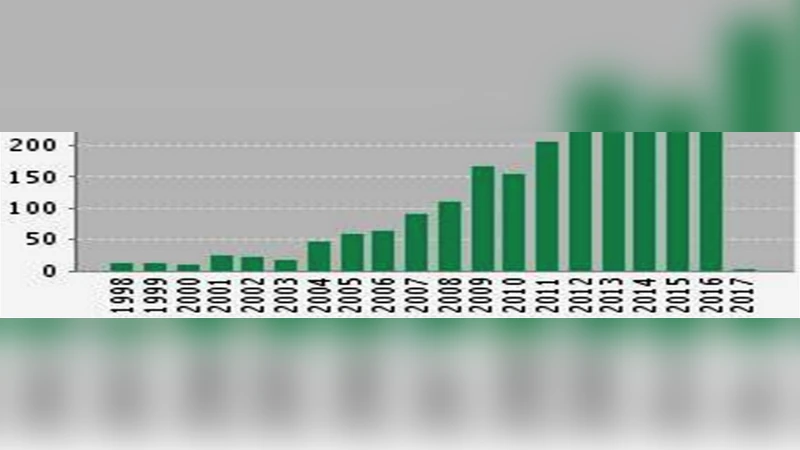
Community structure is an important area of research. It has received a considerable attention from the scientific community. Despite its importance, one of the key problems in locating information about community detection is the diverse spread of related articles across various disciplines. To the best of our knowledge, there is no current comprehensive review of recent literature which uses a scientometric analysis using complex networks analysis covering all relevant articles from the Web of Science (WoS). Here we present a visual survey of key literature using CiteSpace. The idea is to identify emerging trends besides using network techniques to examine the evolution of the domain. Towards that end, we identify the most influential, central, as well as active nodes using scientometric analyses. We examine authors, key articles, cited references, core subject categories, key journals, institutions, as well as countries. The exploration of the scientometric literature of the domain reveals that Yong Wang is a pivot node with the highest centrality. Additionally, we have observed that Mark Newman is the most highly cited author in the network. We have also identified that the journal, “Reviews of Modern Physics” has the strongest citation burst. In terms of cited documents, an article by Andrea Lancichinetti has the highest centrality score. We have also discovered that the origin of the key publications in this domain is from the United States. Whereas Scotland has the strongest and longest citation burst. Additionally, we have found that the categories of “Computer Science” and “Engineering” lead other categories based on frequency and centrality respectively.
💡 Research Summary
The paper presents a comprehensive scientometric review of the community detection literature using CiteSpace to map the evolution of the field across the Web of Science (WoS) database. By extracting all records that contain the keyword “community detection,” the authors assembled a corpus of roughly two thousand publications spanning several decades. They then constructed a citation network in which nodes represent papers, authors, institutions, countries, journals, and subject categories, while edges denote citation or co‑citation relationships. The network is sliced temporally, allowing the authors to observe dynamic changes in structure and to detect emerging trends through burst detection and betweenness centrality analysis.
Key findings include the identification of Yong Wang as the most central “pivot” node, meaning his work bridges multiple sub‑communities and facilitates knowledge flow. Mark Newman emerges as the most highly cited author, confirming his seminal contributions to modularity and stochastic block models. The journal “Reviews of Modern Physics” exhibits the strongest citation burst, indicating that it has recently become a preferred venue for high‑impact theoretical advances in community detection. In terms of subject categories, “Computer Science” leads in publication volume, whereas “Engineering” attains the highest centrality, reflecting the field’s shift toward algorithmic implementation and practical applications. Geographically, the United States dominates in sheer output, while Scotland shows the longest and most intense citation burst, suggesting a concentrated period of influential work.
The authors also analyze institutional contributions, revealing a pattern of international collaboration rather than dominance by a single research center. By visualizing the network, they expose clusters of research topics—such as overlapping community detection, dynamic networks, and multilayer structures—and trace how these clusters have merged or diverged over time. The burst analysis highlights recent surges in topics like “graph neural networks for community detection” and “large‑scale streaming community detection,” pointing to future directions.
Methodologically, the study demonstrates the power of combining complex‑network analysis with scientometrics to uncover hidden structures in a rapidly expanding literature base. The visual maps generated by CiteSpace serve as intuitive roadmaps for newcomers, helping them locate seminal works, active research groups, and emerging sub‑fields. The paper concludes that community detection research is moving toward greater interdisciplinarity, larger data sets, and real‑time analytics, and it calls for continued development of scalable algorithms and benchmark datasets to support these trends.
Comments & Academic Discussion
Loading comments...
Leave a Comment