Young astronomer in Denmark 1946 to 1958
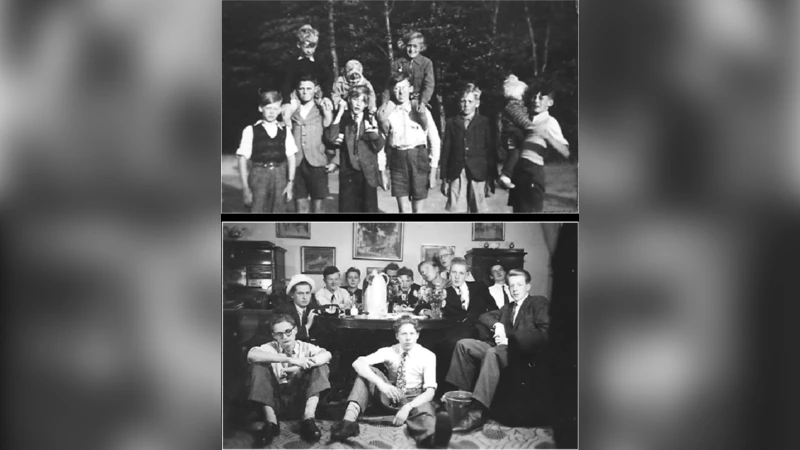
This is a personal account of how I became an astronomer. Fascinated by the stars and planets in the dark sky over Lolland, an island 100 km south of Copenhagen, the interest in astronomy was growing. Encouraged by my teachers, I polished mirrors and built telescopes with generous help from the local blacksmith and I observed light curves of variable stars. Studies at the Copenhagen University from 1950 gradually led me deeper into astronomy, especially astrometry (the astronomy of positions), guided by professor Bengt Str"omgren and my mentor dr. phil. Peter Naur. I was lucky to take part in the buildup of the new observatory at Brorfelde during the first difficult years and the ideas I gathered there have contributed to the two astrometry satellites Hipparcos and Gaia launched by the European Space Agency (ESA) in respectively 1989 and 2013.
💡 Research Summary
The paper presents a first‑person narrative tracing the author’s development from a rural youth on the Danish island of Lolland to a professional astronomer between 1946 and 1958. Inspired by the dark night sky, the author began polishing mirrors and constructing small reflecting telescopes with the assistance of a local blacksmith. Using these homemade instruments, he recorded light curves of variable stars, learning early photometric techniques and data‑logging methods.
In 1950 he entered the University of Copenhagen, where he was drawn to astrometry—the precise measurement of celestial positions. Under the guidance of Professor Bengt Strömgren, he worked in a laboratory focused on high‑precision instrumentation, while Dr. Peter Naur introduced him to emerging computational approaches for data reduction and error analysis. This mentorship combined classical observational skills with nascent computer science, a synthesis that would later prove essential for space‑based astrometry.
During his university years the author joined the construction of the new Brorfelde Observatory. The project, launched in the early 1950s, aimed to replace older facilities with modern optical telescopes and electronic detectors. The author participated in site preparation, telescope mounting, and the integration of early photometers and digital recording devices. He faced technical conflicts between traditional mechanical measurement methods and the innovative electronic systems, learning to reconcile and harmonize the two.
These hands‑on experiences formed the technical and conceptual foundation for the European Space Agency’s astrometric missions. The Hipparcos satellite, launched in 1989, relied on high‑precision optics and data‑processing algorithms that echoed the Brorfelde work on instrument stability and error correction. The later Gaia mission (2013) built upon Hipparcos, employing even finer optics and more sophisticated onboard processing—both directly benefiting from the author’s early exposure to precision engineering and computational techniques.
Overall, the paper illustrates how a sequence of personal mentorships, community collaborations, university training, and large‑scale observatory construction collectively shaped a generation of astronomers capable of pioneering space‑based astrometry. It underscores the importance of integrating practical craftsmanship with theoretical insight, and it demonstrates how localized efforts in mid‑20th‑century Denmark contributed to the global advancement of celestial measurement technology.
Comments & Academic Discussion
Loading comments...
Leave a Comment