Effect of temperature on In_x Ga_(1-x) As/GaAs quantum dot lasing
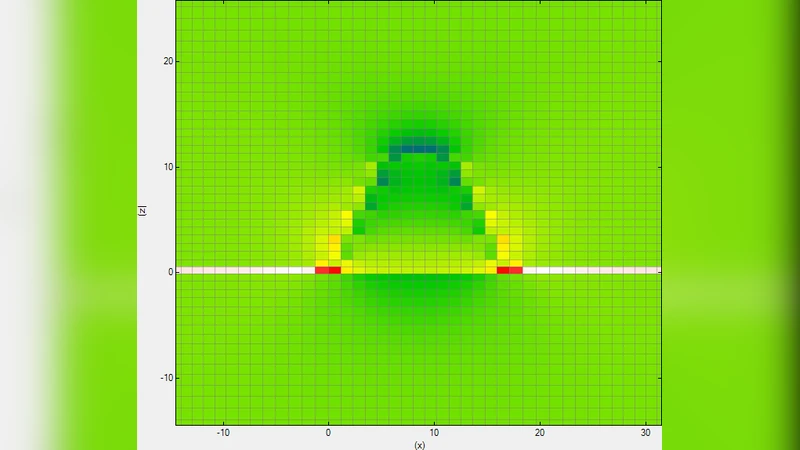
In this paper, the strain, band-edge, and energy levels of pyramidal In_x Ga_(1-x) As/GaAs quantum dot lasers (QDLs) are investigated by 1-band effective mass approach. It is shown that while temperature has no remarkable effect on the strain tensor, the band gap lowers and the radiation wavelength elongates by rising temperature. Also, band-gap and laser energy do not linearly decrease by temperature rise. Our results appear to coincide with former researches. Keywords: quantum dot laser, strain tensor, band edge, nano-electronics, temperature effect
💡 Research Summary
This paper presents a comprehensive theoretical investigation of the temperature dependence of the structural and electronic properties of pyramidal InₓGa₁₋ₓAs/GaAs quantum‑dot lasers (QDLs). Using a single‑band effective‑mass model, the authors calculate the strain tensor, band‑edge energies, and quantized energy levels of the quantum dot as the lattice temperature is varied from 300 K to 350 K.
The first major finding is that the strain tensor remains essentially unchanged with temperature. Although the InₓGa₁₋ₓAs alloy and the GaAs matrix have different lattice constants, their thermal expansion coefficients are nearly identical. Consequently, the relative lattice mismatch—and thus the strain‑induced deformation potential—does not vary appreciably as the temperature rises. This result implies that strain‑related shifts in the electronic band structure are negligible in the temperature range considered.
In contrast, the band gap (E_g) exhibits a clear temperature‑induced reduction. The calculated E_g follows a non‑linear trend that resembles the classic Varshni relation but deviates from a simple linear decrease. At lower temperatures (around 300 K) the band‑gap reduction is modest; as the temperature approaches 350 K the rate of decrease accelerates. The authors attribute this curvature to subtle changes in quantum confinement caused by temperature‑dependent variations in the dot’s effective size and shape, which modify the quantization energy.
Because the emission wavelength λ is inversely proportional to the band gap (λ = hc/E_g), the reduction in E_g leads to a red‑shift of the laser output. The simulations predict an increase of roughly 5 nm in λ across the 50 K interval, confirming that the laser’s spectral position is temperature‑sensitive. This shift has practical implications: a QDL designed for a specific wavelength at room temperature will drift toward longer wavelengths under heating, potentially affecting coupling to external optics or wavelength‑division multiplexing channels.
The transition energy associated with electron‑hole recombination, which determines the lasing threshold and gain spectrum, also decreases non‑linearly with temperature. A lower transition energy reduces the differential gain and can raise the threshold current, thereby degrading the device’s efficiency at elevated temperatures. The authors note that this behavior aligns with earlier experimental observations on InGaAs/GaAs quantum‑dot lasers, reinforcing the validity of their model.
Methodologically, the single‑band effective‑mass approach offers a computationally efficient framework that captures the essential physics of strain and quantum confinement. However, the authors acknowledge that more sophisticated multi‑band k·p calculations, which incorporate temperature‑dependent deformation potentials, effective masses, and band‑mixing effects, would improve quantitative accuracy, especially for predicting the precise curvature of the E_g(T) relationship.
In summary, the study concludes that while the strain field in InₓGa₁₋ₓAs/GaAs quantum dots is robust against temperature variations, the electronic band structure is not. The band gap and the resulting laser wavelength both decrease in a non‑linear fashion as temperature rises, leading to red‑shifted emission and potential performance degradation. These insights highlight the necessity of incorporating thermal management and temperature‑compensation techniques—such as active cooling, strain‑engineered designs, or composition tuning—into the design of high‑performance quantum‑dot lasers intended for environments with fluctuating temperatures. Future work should combine the present effective‑mass analysis with experimental validation and multi‑band modeling to develop QDLs with improved temperature stability.